
Mexican Purslane
Portulaca mexicana
Portulaca mexicana is a low-growing succulent plant native to numerous states across Mexico. First described …
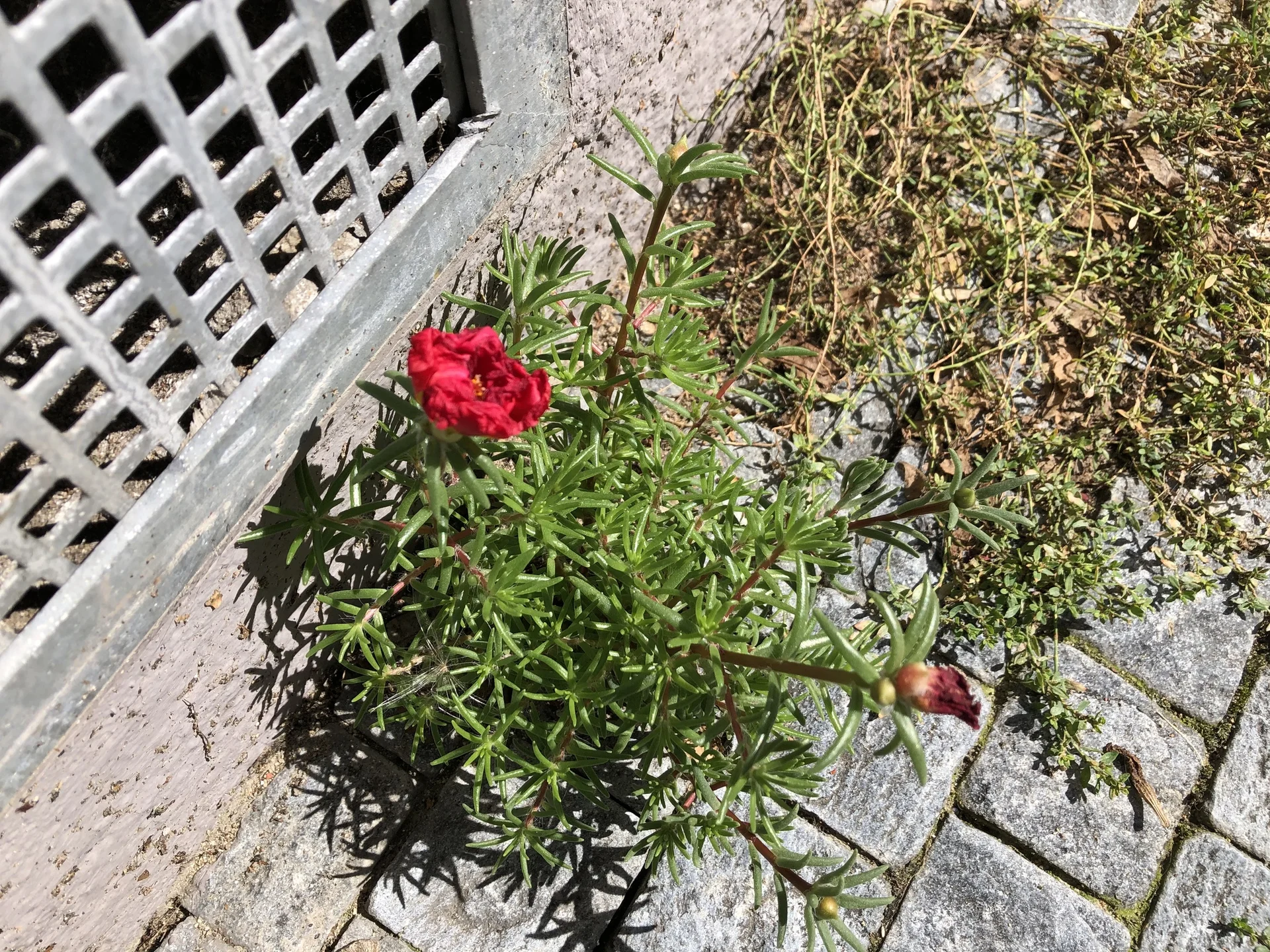

Native to the sandy soils of Argentina, southern Brazil, and Uruguay, this resilient succulent transforms harsh, sun-baked landscapes into a vibrant carpet of jewel-toned blossoms. Known for its remarkable ability to thrive in poor soils, it brings effortless color to extreme summer heat.
Portulaca grandiflora is beloved by gardeners worldwide for its sprawling, dense growth habit that suppresses bare ground. Despite its delicate, rose-like appearance, this fast-growing annual requires very little maintenance, making it an ideal choice for effortless cultivation.
Portulaca grandiflora is a small but rapidly growing herbaceous succulent that typically reaches up to 30 centimeters in height. Its trailing, reddish stems are thick and fleshy, branching out extensively near the base to form a dense mat.
The leaves are alternately arranged, nearly cylindrical, and measure up to 2.5 centimeters long. Small clusters of whitish, woolly hairs are often present in the leaf axils, providing a distinctive texture to the foliage.
The striking flowers range from 2.5 to 4 centimeters in diameter and feature five brightly colored, obovate petals. At the center of the bloom lies an ovary topped with four to nine whitish stigmas, surrounded by approximately 50 stamens.
Blooms continuously from late spring through the first frost of autumn.
Requires ample, direct sunlight to thrive and open its flowers properly.
Highly drought-tolerant; water sparingly only when the soil is completely dry.
Thrives in intense summer heat; highly frost-sensitive and grown as an annual in temperate zones.
Prefers low to moderate humidity; susceptible to rot in overly damp or humid conditions.
Not edible due to its bitter taste; contains soluble calcium oxalates which can be toxic to dogs and cats if ingested.
In landscape design, this sprawling succulent is widely utilized as a vibrant ground cover in rock gardens, along pathways, and in dry borders. Its versatility makes it suitable for various horticultural uses:
While its relative, common purslane, is often eaten, Portulaca grandiflora is not used in culinary applications due to its distinctly bitter taste. It is strictly grown for its ornamental value rather than agricultural harvest.
One of the most fascinating features of this plant is its responsiveness to light and time. This unique characteristic has led to several interesting botanical and cultural observations:
Numerous cultivars have been selectively bred to produce double or semi-double flowers with extra petals. 'Margarita' is a popular series known for its compact growth and abundant, semi-double blooms in a wide array of colors.
The 'Samba' and 'Cupido' varieties are prized for their exceptionally large, vividly colored flowers. Other modern hybrids have been developed to keep their blooms open longer into the late afternoon, overcoming the natural tendency to close early.
Taxon Synonyms: Portulaca immersostellulata, Portulaca fluvialis
Portulaca mexicana
Portulaca mexicana is a low-growing succulent plant native to numerous states across Mexico. First described …

Portulaca rubricaulis
An annual succulent herb characterized by distinctive reddish stems and solitary yellow flowers, found across …

Portulaca rotundifolia
An annual succulent plant species of the Portulacaceae family, native to South America.

Portulaca villosa
Portulaca villosa, commonly known as hairy purslane or 'ihi, is a rare, prostrate succulent endemic …