
Mexican Purslane
Portulaca mexicana
Portulaca mexicana is a low-growing succulent plant native to numerous states across Mexico. First described …
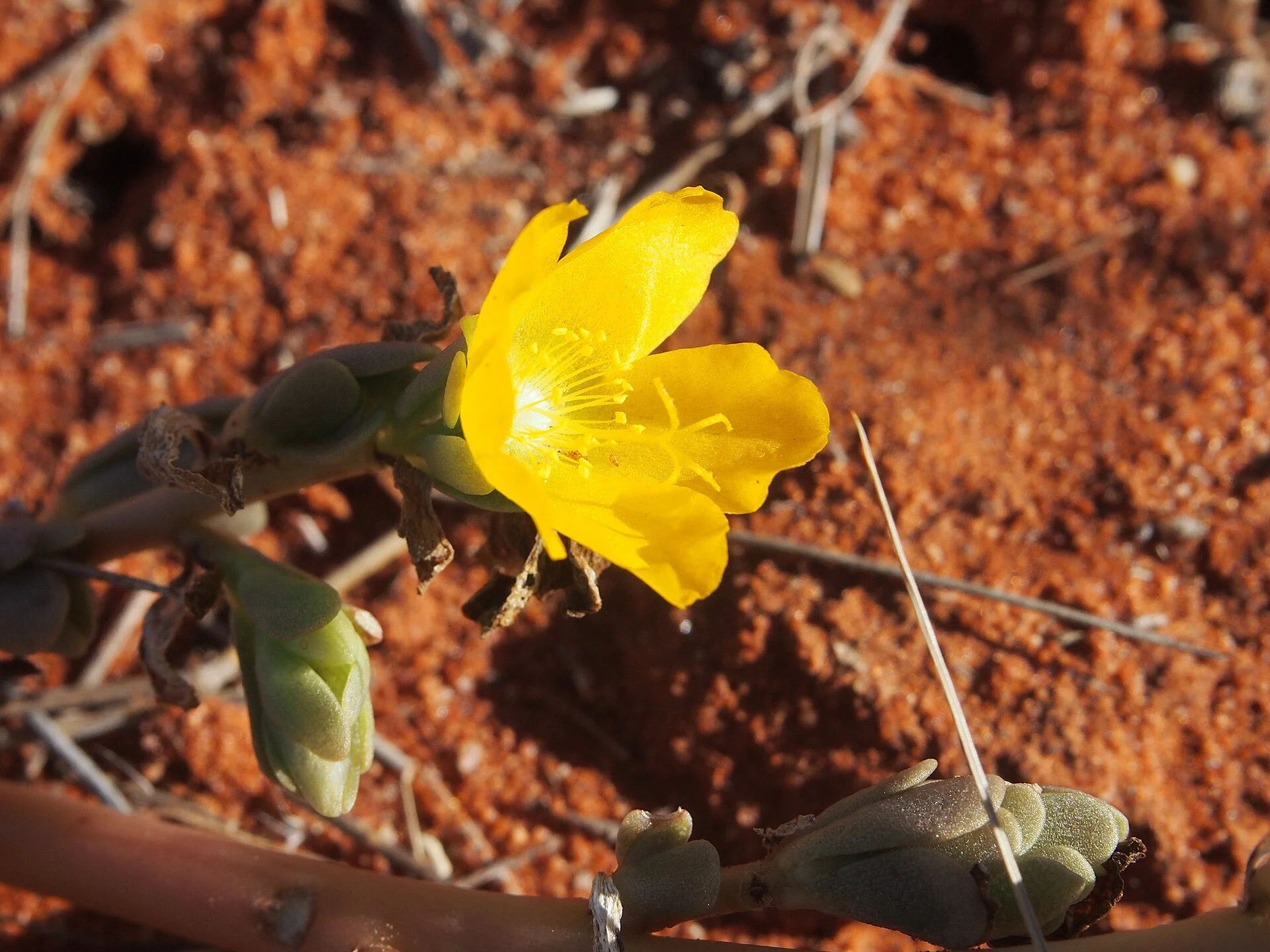
Thriving in the harsh, arid environments of central Australia, Portulaca intraterranea demonstrates remarkable adaptations to extreme desert conditions. This robust succulent herb, commonly known as the large pigweed, plays a significant role in the local ecology and indigenous culture. Its sprawling growth habit allows it to maximize moisture retention while covering sandy soils.
The plant features thick, fleshy leaves that store water to survive prolonged droughts. Vivid, cup-shaped flowers measuring up to 3.5 centimeters across bloom vibrantly against the dusty landscape. Below the ground, it develops a substantial, tuberous taproot that serves as an essential nutrient and moisture reservoir.
Aboriginal Australians have traditionally utilized the thick taproot as a valuable food source. When cooked, the root is reported to possess a texture and flavor reminiscent of potatoes. The seeds and succulent leaves also hold potential for traditional foraging practices.
Despite its delicate-looking flowers, this species is a highly specialized survivor capable of enduring some of the hottest and driest climates on the continent. Its ability to quickly bloom and set seed after rare desert rains is a testament to its evolutionary success.
Taxon Synonyms: Portulaca oleracea var. grandiflora
Portulaca mexicana
Portulaca mexicana is a low-growing succulent plant native to numerous states across Mexico. First described …

Portulaca rubricaulis
An annual succulent herb characterized by distinctive reddish stems and solitary yellow flowers, found across …

Portulaca hirsutissima
A succulent plant endemic to Brazil, characterized by its prominent hairy morphological traits and described …

Portulaca giuliettiae
A rare succulent plant species in the purslane family, naturally endemic to the Bahia region …