
Mexican Purslane
Portulaca mexicana
Portulaca mexicana is a low-growing succulent plant native to numerous states across Mexico. First described …
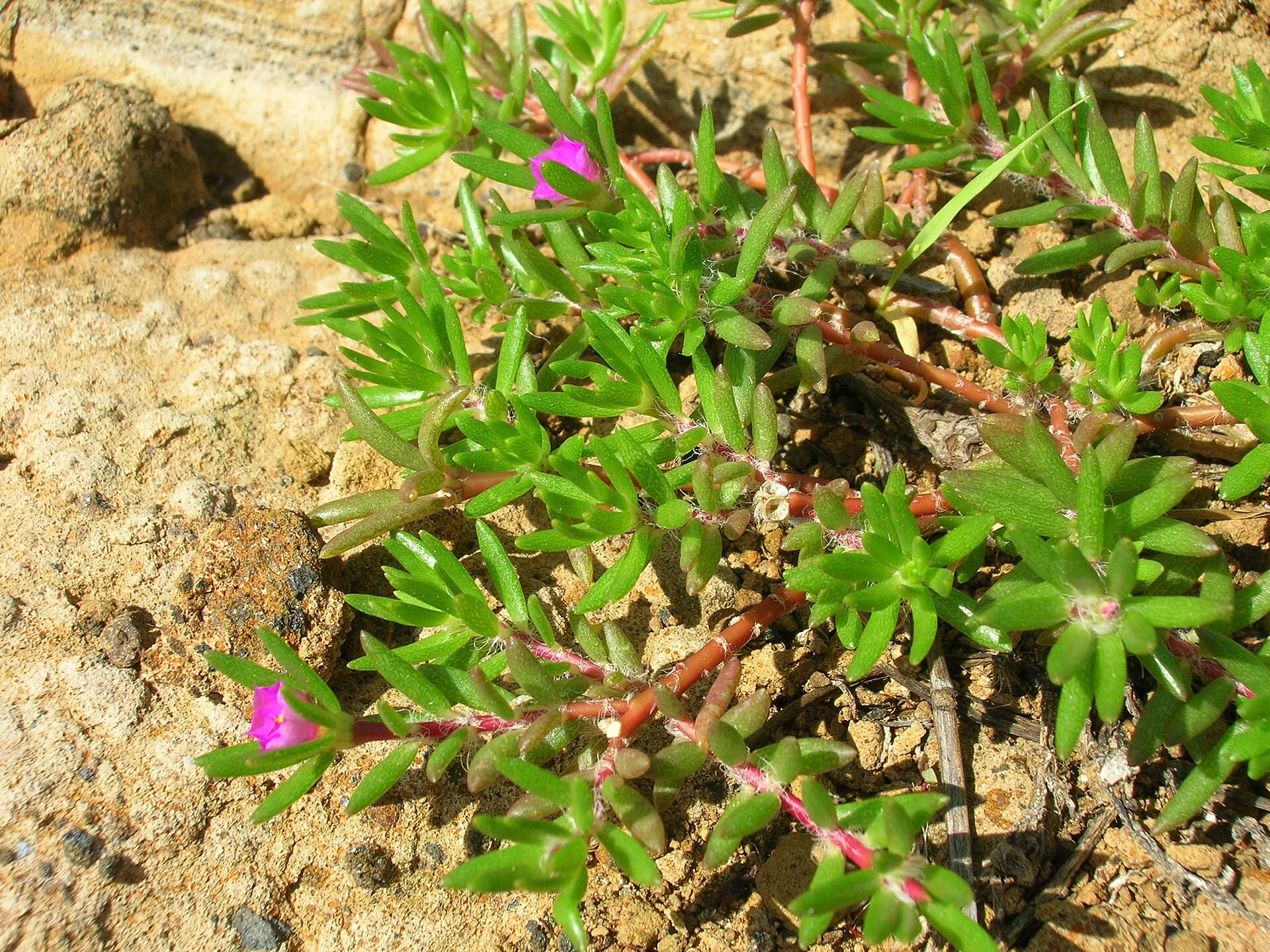
Vibrant pink blooms and distinctively hairy stems characterize Portulaca pilosa, a fascinating succulent known by lively common names such as pink purslane and kiss-me-quick. This adaptable member of the Portulacaceae family boasts a vast natural range, stretching from the southern United States through the Caribbean and extending as far south as Brazil. The plant demonstrates remarkable phenotypic plasticity, altering its physical growth habits in direct response to varying environmental conditions. Its extraordinary ability to thrive in dry, rocky soils, as well as disturbed habitats, has allowed it to establish a pantropical presence.
Portulaca pilosa features a highly variable morphology that is strongly influenced by its immediate environment. The root system ranges from fibrous to semi-fleshy, supporting branching stems that typically grow between 3 and 25 centimeters in length. The foliage exhibits significant developmental changes; immature plants develop wider, flatter leaves, whereas mature specimens display narrower, linear to oblong-lanceolate leaves that are nearly hemispheric in cross-section.
A defining characteristic of this species is the presence of obvious trichomes (long, soft hairs) located at the stem nodes and within the inflorescences. The density of these hairs correlates directly with environmental aridity, becoming most pronounced in very dry habitats. The delicate flowers, measuring 0.5 to 1.2 centimeters in diameter, showcase obovate petals that range in color from dark pink to deep purple. Following the bloom, the plant produces small oval capsules containing microscopic, glossy black seeds.
Late spring to early fall
In traditional practices across South America, particularly in Brazil, extracts from Portulaca pilosa have been utilized as natural remedies. Historical accounts suggest its application in promoting diuresis, reducing fever, and providing pain relief. Scientific studies have investigated these traditional uses, observing that the plant extracts can influence renal function by increasing potassium excretion in animal models.
Taxon Synonyms: Portulaca remota, Portulaca pilosa subsp. pilosa, Portulaca napiformis, Portulaca halimoides var. brevipilosa, Portulaca microsperma, Portulaca cyanosperma, Portulaca ehrenbergii, Portulaca mundula
Portulaca mexicana
Portulaca mexicana is a low-growing succulent plant native to numerous states across Mexico. First described …

Portulaca rubricaulis
An annual succulent herb characterized by distinctive reddish stems and solitary yellow flowers, found across …

Portulaca hirsutissima
A succulent plant endemic to Brazil, characterized by its prominent hairy morphological traits and described …

Portulaca giuliettiae
A rare succulent plant species in the purslane family, naturally endemic to the Bahia region …