Wingpod Purslane (Portulaca umbraticola)

Wingpod portulaca
#242A04
#737324
#4E5A0A
#969634
#D89154

Portulaca umbraticola (Wingpod Purslane) Care & Info

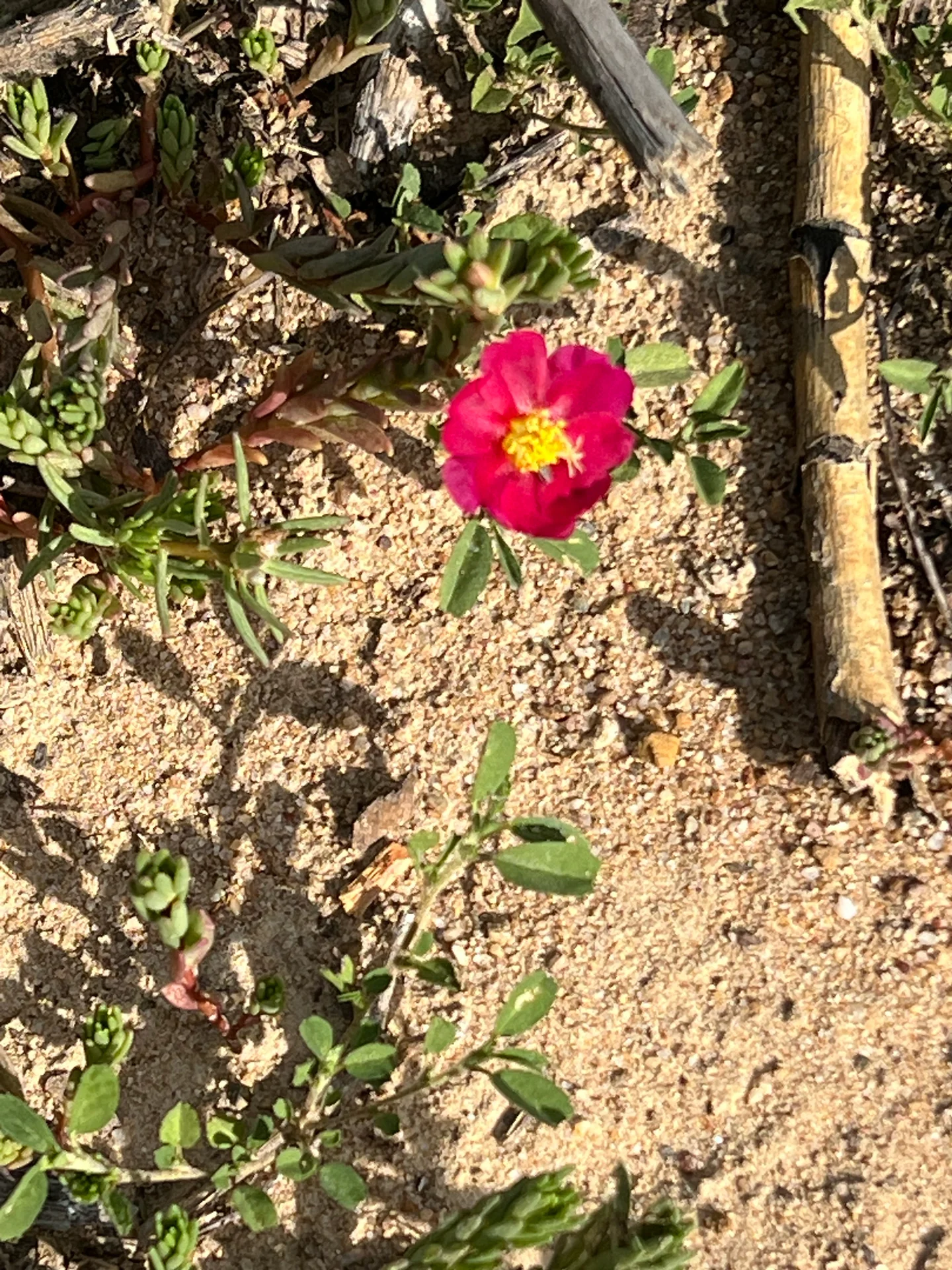
Basking in the intense heat of open landscapes from the southern United States to Argentina, Portulaca umbraticola unfurls its brilliant blooms only when the sun is at its brightest. Often called the wingpod purslane, this resilient succulent thrives where many other garden plants would wither, storing precious moisture within its fleshy stems and foliage.

Though it shares a genus with the common purslane, this species is distinguished by its dramatically larger, brightly colored flowers and the unique winged edge along its seed capsules. Whether trailing from a hanging basket or blanketing a sun-drenched rockery, the vibrant display of Portulaca umbraticola provides a continuous flush of summer color that responds dynamically to the day's changing light.

Taxonomy

  • ∟ царство Plantae
  • ∟ division Tracheophytes (Vascular Plants)
  • ∟ subdivision Spermatophytes (Seed plants)
  • ∟ Angiosperms
  • ∟ mesangiosperms (Core angiosperms)
  • ∟ eudicots
  • ∟ core eudicots
  • ∟ Superasterids
  • ∟ order Caryophyllales
  • ∟ подотряд / подпорядок Portulacineae
  • ∟ family Portulacaceae (Purslane family)
  • ∟ genus Portulaca (Purslane genus)
  • ∟ species Portulaca umbraticola (Wingpod Purslane)

Living Pulse

Morphology

Portulaca umbraticola is a fleshy, ascending or erect herbaceous plant that typically reaches 11 to 28 centimeters in height. Its succulent nature allows it to store water in its stems and foliage, adapting well to arid environments.

  • Leaves: The alternate, flattened leaves are spatulate to oblong or oblong-obovate. They measure 1.2 to 2.7 centimeters in length and 0.3 to 1.3 centimeters in width, with rounded to obtuse apices.
  • Flowers: Borne in terminal clusters of one to six, the vibrant flowers span 2.5 to 3 centimeters across. They feature five petals in brilliant shades of yellow, pink, or orange, surrounding approximately 20 stamens.
  • Fruit and Seeds: The fruit is an oblate-globose capsule, 4 to 5 millimeters in diameter. It is uniquely margined on its upper edge by a persistent wing, which gives the plant its common name. The tiny gray seeds are covered in spiny tubercles.

Flowering season

Blooms profusely throughout the warm summer months, from late spring to early autumn.

Jan
Feb
Mar
Apr
May
Jun
Jul
Aug
Sep
Oct
Name
Dec

Care parameters

Light

Full sun. Requires high light intensity to trigger blooming; flowers close on cloudy days or in shade.

Watering

Low to moderate. Highly drought-tolerant once established. Allow the soil to dry completely between waterings to prevent root rot.

Temperature

Thrives in heat and temperatures above 25°C (77°F). Extremely frost-sensitive and grown as an annual in cooler climates.

Humidity

Prefers low to moderate humidity. Requires excellent air circulation to avoid fungal issues in damp environments.

Toxicity

Non-toxic and entirely edible for humans. Safe for pets, though overconsumption may cause mild stomach upset.

Applications

The versatility of Portulaca umbraticola extends from ornamental landscaping to culinary uses, making it a valuable addition to summer gardens.

  • Ornamental Landscaping: Thanks to its exceptional heat and drought tolerance, it is widely planted in rockeries, dry borders, and hanging baskets. Its sprawling habit makes it an excellent ground cover that suppresses weeds while providing a carpet of color.
  • Culinary Uses: The entire plant is completely edible. The fleshy stems, leaves, flowers, and even roots can be consumed. Similar to common purslane, the foliage adds a crisp texture and a slightly tart flavor to fresh salads, or it can be cooked as a leafy vegetable.
  • Pollinator Attractor: The bright, pollen-rich flowers are highly attractive to bees, butterflies, and other beneficial insects, enhancing local garden biodiversity.

Interesting facts

Beyond its striking appearance, Portulaca umbraticola possesses several fascinating physiological and historical characteristics.

  • Light-Driven Blooms: The plant's blooming cycle is strictly regulated by light and temperature. Flowers open early in the morning and close by the afternoon. Full petal expansion requires bright sunlight and temperatures exceeding 25°C.
  • Photosynthetic Shapeshifter: It is typically a C4 plant, which is already an efficient photosynthetic pathway. However, under extreme drought stress, it has the remarkable ability to switch to Crassulacean Acid Metabolism (CAM), allowing it to minimize water loss by opening its stomata only at night.
  • Taxonomic Journey: For many years, horticulturalists confused it with varieties of Portulaca oleracea or Portulaca grandiflora. Recent molecular phylogenetic studies have confirmed that Portulaca umbraticola belongs to a distinctly separate lineage within the genus.

Varieties and cultivars

While the wild species is highly attractive, commercial cultivation has led to numerous variations and identified subspecies.

  • Subspecies: Botanists officially recognize three naturally occurring subspecies: Portulaca umbraticola subsp. coronata, subsp. lanceolata, and the nominate subsp. umbraticola.
  • Horticultural Hybrids: Many of the vibrant plants sold in nurseries under this name are actually complex intra- and inter-specific hybrids. Breeders have crossed it with species like P. oleracea and P. villosa to produce larger, sometimes double-petaled flowers in an expanded palette of colors including pure white, vivid red, and bicolored patterns.

Geography of distribution

  • United States
  • Argentina

Technical Information

Taxon Synonyms: Portulaca umbraticola subsp. coronata, Portulaca coronata, Portulaca umbraticola var. lanceolata, Portulaca denudata, Portulaca umbraticola subsp. lanceolata, Portulaca umbraticola subsp. umbraticola

External Databases: GBIF, POWO, Tropicos

See also

Mexican Purslane

Mexican Purslane

Portulaca mexicana

Portulaca mexicana is a low-growing succulent plant native to numerous states across Mexico. First described …
Red-Stemmed Purslane

Red-Stemmed Purslane

Portulaca rubricaulis

An annual succulent herb characterized by distinctive reddish stems and solitary yellow flowers, found across …