
Mexican Purslane
Portulaca mexicana
Portulaca mexicana is a low-growing succulent plant native to numerous states across Mexico. First described …
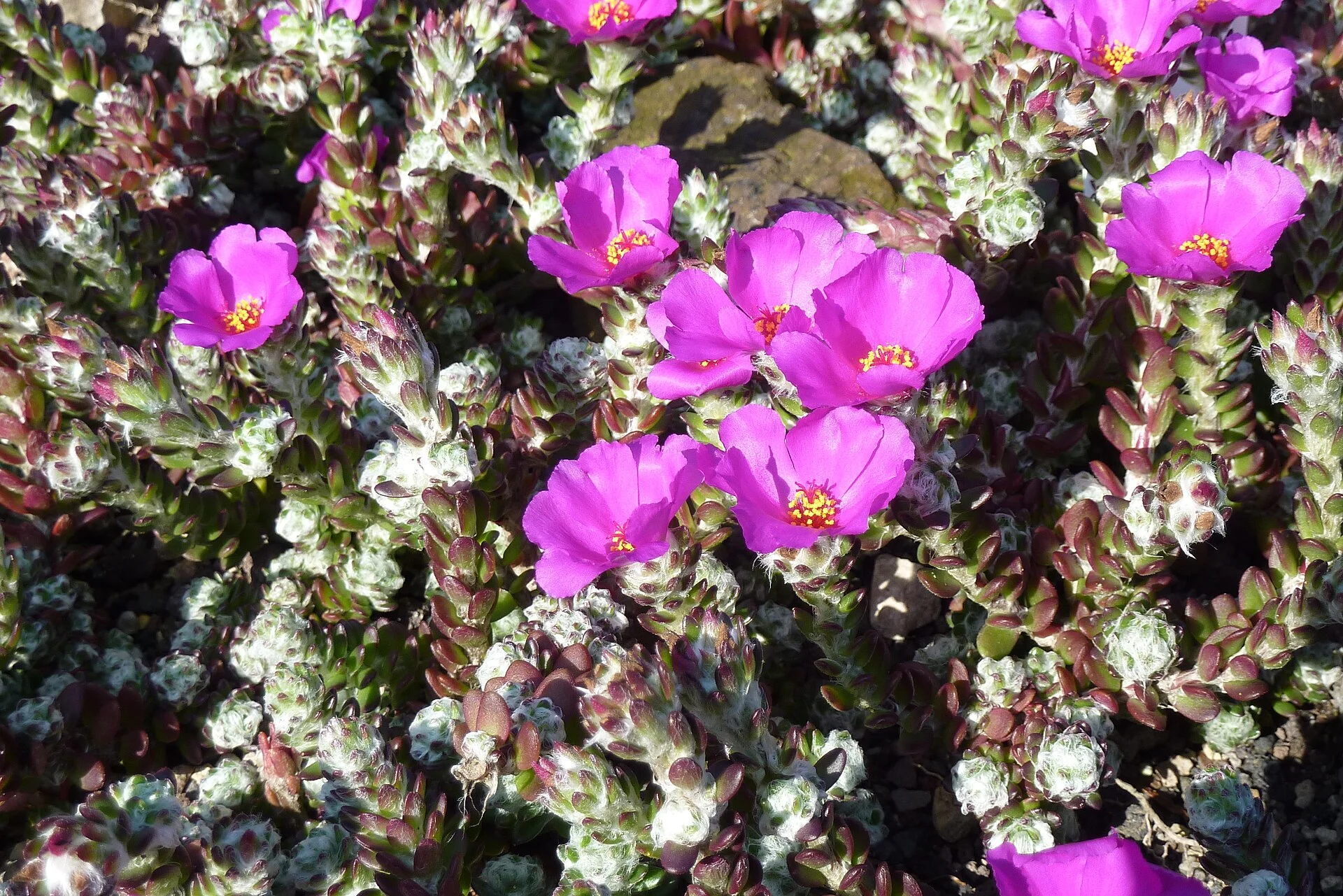
Endemic to the arid landscapes of northeastern Brazil, particularly within the state of Bahia, Portulaca werdermannii thrives as a highly specialized botanical specimen. This succulent species was first formally documented and described by the botanist Karl von Poellnitz. Adapted to survive in challenging, dry environments, it has evolved specific mechanisms for water storage, making it a subject of significant interest for ecological researchers.
The morphological structure of Portulaca werdermannii is characteristic of many desert-dwelling succulents, featuring fleshy tissues explicitly designed for water conservation. Its leaves are small and thick, a crucial adaptation to minimize transpiration rates under intense solar radiation. The stems tend to be prostrate, allowing the plant to spread effectively across the dry substrate. During its reproductive cycle, it produces delicate flowers typical of the genus, which are optimized for local pollinators.
The specific epithet werdermannii was chosen to honor Erich Werdermann, a distinguished German botanist who dedicated much of his career to the study of cacti and other succulents. Like numerous other species adapted to arid environments, this plant utilizes specialized photosynthetic pathways to keep its stomata closed during the hottest parts of the day, thereby drastically reducing moisture loss.
Portulaca mexicana
Portulaca mexicana is a low-growing succulent plant native to numerous states across Mexico. First described …

Portulaca rubricaulis
An annual succulent herb characterized by distinctive reddish stems and solitary yellow flowers, found across …

Portulaca rotundifolia
An annual succulent plant species of the Portulacaceae family, native to South America.

Portulaca digyna
A species of Portulaca native to the northern and western regions of Australia.