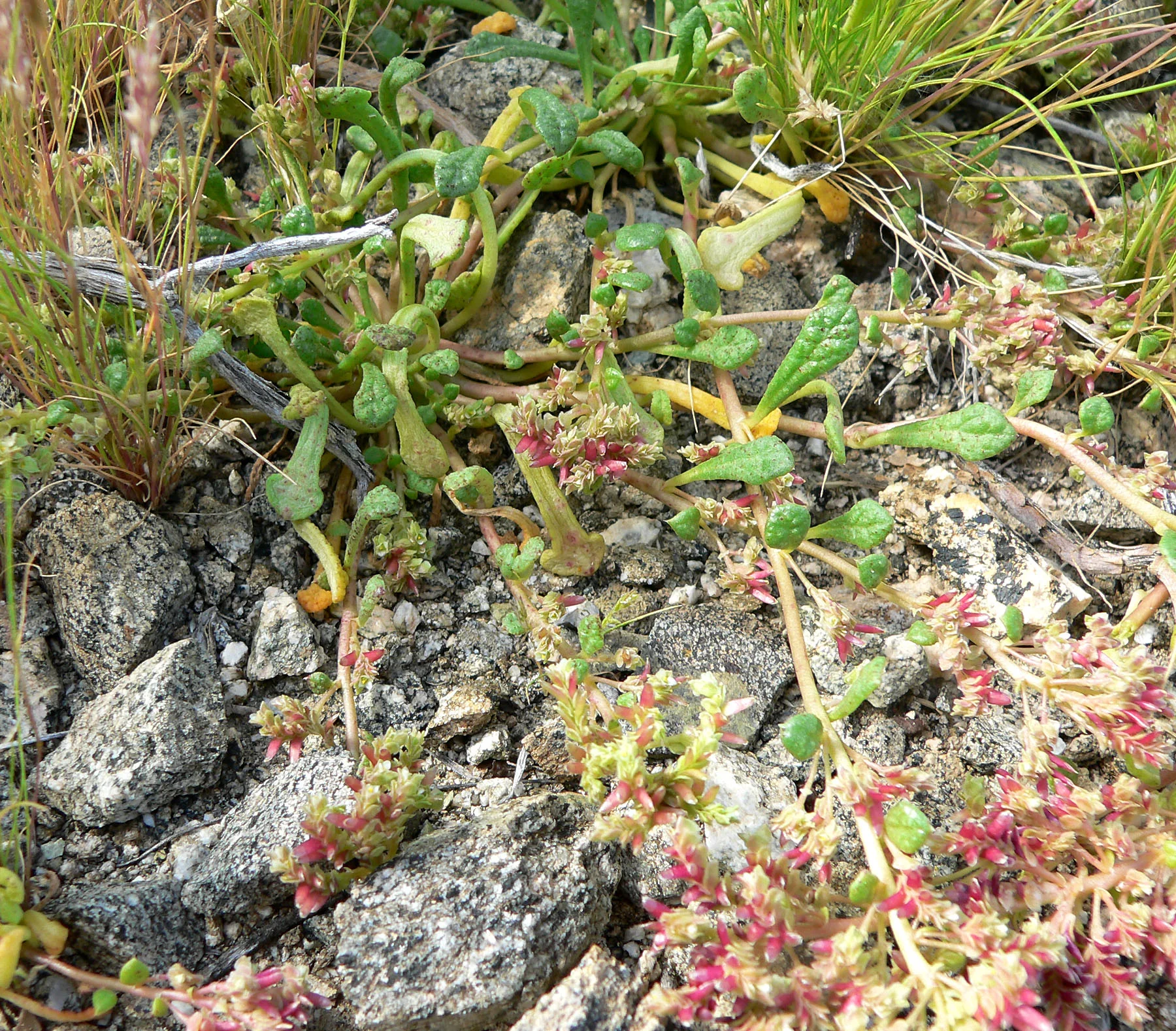
Sand cress (Calyptridium monandrum)
Calyptridium monandrum: Sandcress Botanical Profile
Inhabiting dry, sandy washes and open desert scrub, Calyptridium monandrum grows as a delicate annual wildflower in the arid regions of southwestern North America. Its growth cycle is closely tied to seasonal winter rains.
The species completes its lifecycle rapidly before the intense heat of summer arrives. It represents a highly specialized member of the Montiaceae family as documented in taxonomic registries.
Taxonomy
- β ΡΠ°ΡΡΡΠ²ΠΎ Plantae
- β division Tracheophytes
- β subdivision Spermatophytes (Seed plants)
- β Angiosperms
- β eudicots
- β Superasterids
- β order Caryophyllales
- β family Montiaceae
- β genus Calyptridium (Pussypaws)
- β species Calyptridium monandrum (Sand cress)
Morphology
The anatomical structure of this desert-adapted annual is relatively simple. Its compact form minimizes water loss in hot climates.
- Stems: Spreading or prostrate stems that branch from the base, measuring 5 to 20 centimeters in length.
- Leaves: Narrow, linear to spatulate leaves that form a basal rosette and are alternate along the stems.
- Flowers: Small, inconspicuous blossoms arranged in terminal spikes or panicles.
- Stamens: Typically a single stamen per flower, which is a key identifying feature of the species.
The seeds are small, black, and glossy. They are dispersed during dry conditions and remain dormant in the sand until the next rain cycle.
Flowering season
Late winter to spring, primarily from February to May.
Interesting facts
The life cycle and structure of sandcress offer interesting insights into desert survival.
- Botanical Name: The specific epithet monandrum is derived from Greek and means "having a single stamen."
- Ephemeral Cycle: It is a classic desert ephemeral, germinating, blooming, and setting seed within a few short weeks.
- Taxonomic History: First described by Thomas Nuttall in 1838, it has also been classified under the synonym Cistanthe monandra.
Geography of distribution
- California
- Arizona
- Baja California
- Sonora
Sources
- Historical description: Torrey & Gray, A Flora of North America (1838).
- Species registry: Kew Science, Plants of the World Online (POWO).
- Geographic records: Checklist of the native vascular plants of Mexico (VillaseΓ±or, 2016).