Mount Hood pussypaws (Calyptridium umbellatum)

Mt. Hood Umbellate Pussy-paws Mt. Hood Pussy-paws Mount Hood umbellate pussypaws
#A19A84
#6E6852
#2A2616
#89856B
#C08396

Calyptridium umbellatum: Mount Hood Pussypaws Guide

Adorning sandy volcanic soils and gravelly alpine slopes, Calyptridium umbellatum develops dense flower clusters resembling soft animal paws. This hardy species is a familiar sight to hikers exploring high-altitude trails in western North America.

The plant forms low, spreading mats that stabilize loose volcanic soils. It plays an important role in primary succession on alpine slopes.

Taxonomy

  • ∟ царство Plantae
  • ∟ division Tracheophytes
  • ∟ subdivision Spermatophytes (Seed plants)
  • ∟ Angiosperms
  • ∟ eudicots
  • ∟ Superasterids
  • ∟ order Caryophyllales
  • ∟ family Montiaceae
  • ∟ genus Calyptridium (Pussypaws)
  • ∟ species Calyptridium umbellatum (Mount Hood pussypaws)

Morphology

The morphology of this species reflects its adaptation to dry, exposed environments. Its distinct physical characteristics distinguish it from other mountain flora.

  • Leaves: Fleshy, spatula-shaped leaves that form a tight, ground-hugging rosette.
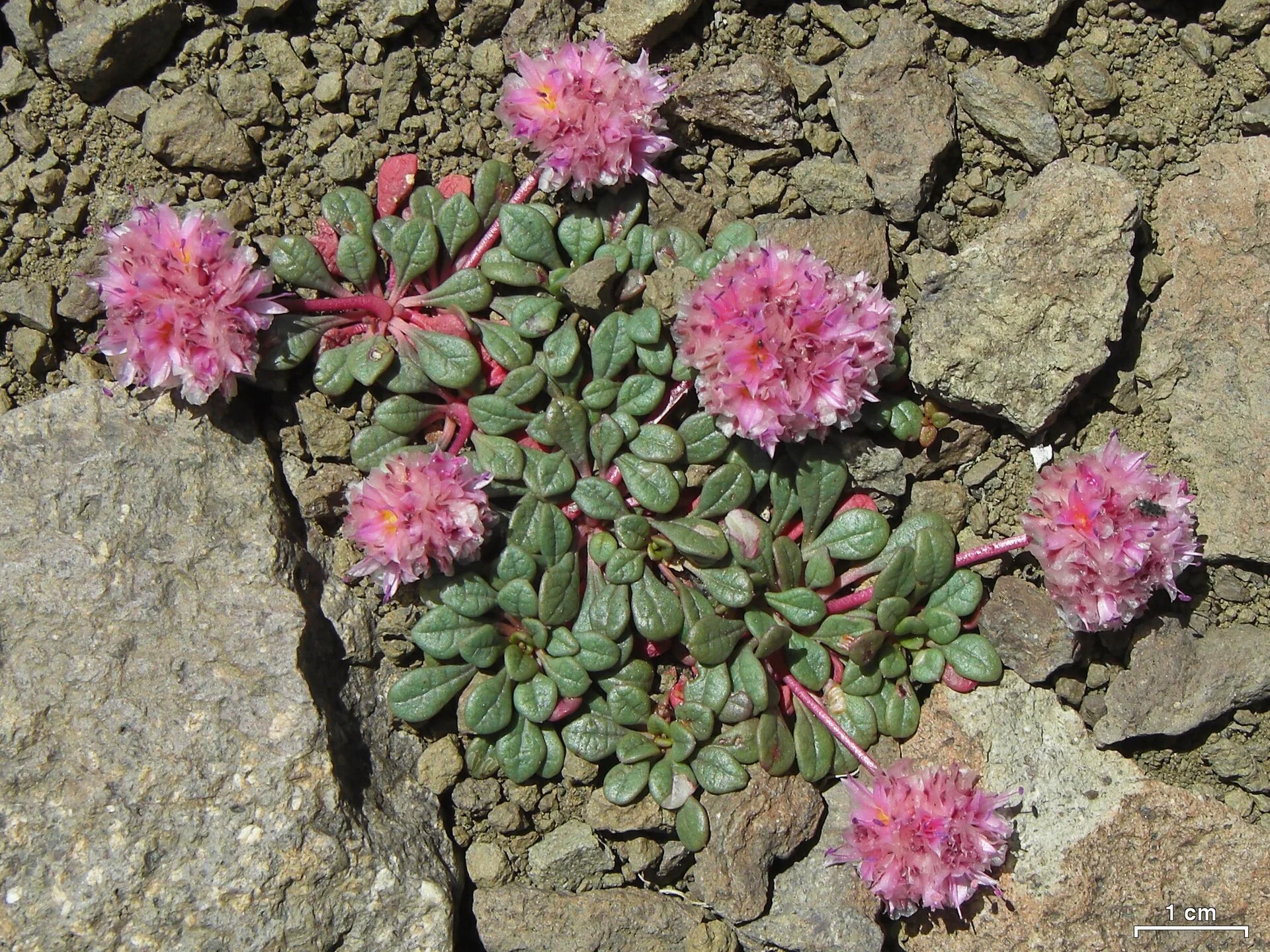
  • Flower Clusters: Umbrella-like arrangements of dense, head-like spikes containing numerous flowers.
  • Flowers: Small blooms with four pink, rose, or white petals and two prominent, papery sepals.
  • Root System: A deep taproot that secures the plant in loose, shifting soils and accesses deep moisture.

As the flowers mature, the sepals become dry and translucent. This gives the flower heads a puffy, papery texture that aids in wind dispersal.

Flowering season

Late spring through summer, generally from June to September.

Jan
Feb
Mar
Apr
May
Jun
Jul
Aug
Sep
Oct
Name
Dec

Interesting facts

The fascinating biology of Mount Hood pussypaws highlights its relationship with alpine ecosystems.

  • Common Name: The name "pussypaws" directly describes the soft, rounded appearance of the inflorescences.
  • Thermal Regulation: Ground-hugging rosettes protect the plant's core from freezing night temperatures and strong winds.
  • Soil Stabilizer: By colonizing gravelly slopes, it helps prevent erosion and prepares the soil for other alpine species.

Geography of distribution

  • California
  • Oregon
  • Washington
  • Nevada
  • Idaho
  • Montana
  • Wyoming
  • Utah

Natural varieties

Sources

  • Taxonomic reference: Kew Science, Plants of the World Online (POWO).
  • Species data: World Flora Online (WFO).
  • Distribution mappings: Global Biodiversity Information Facility (GBIF).

Technical Information

External Databases: GBIF, POWO, Tropicos