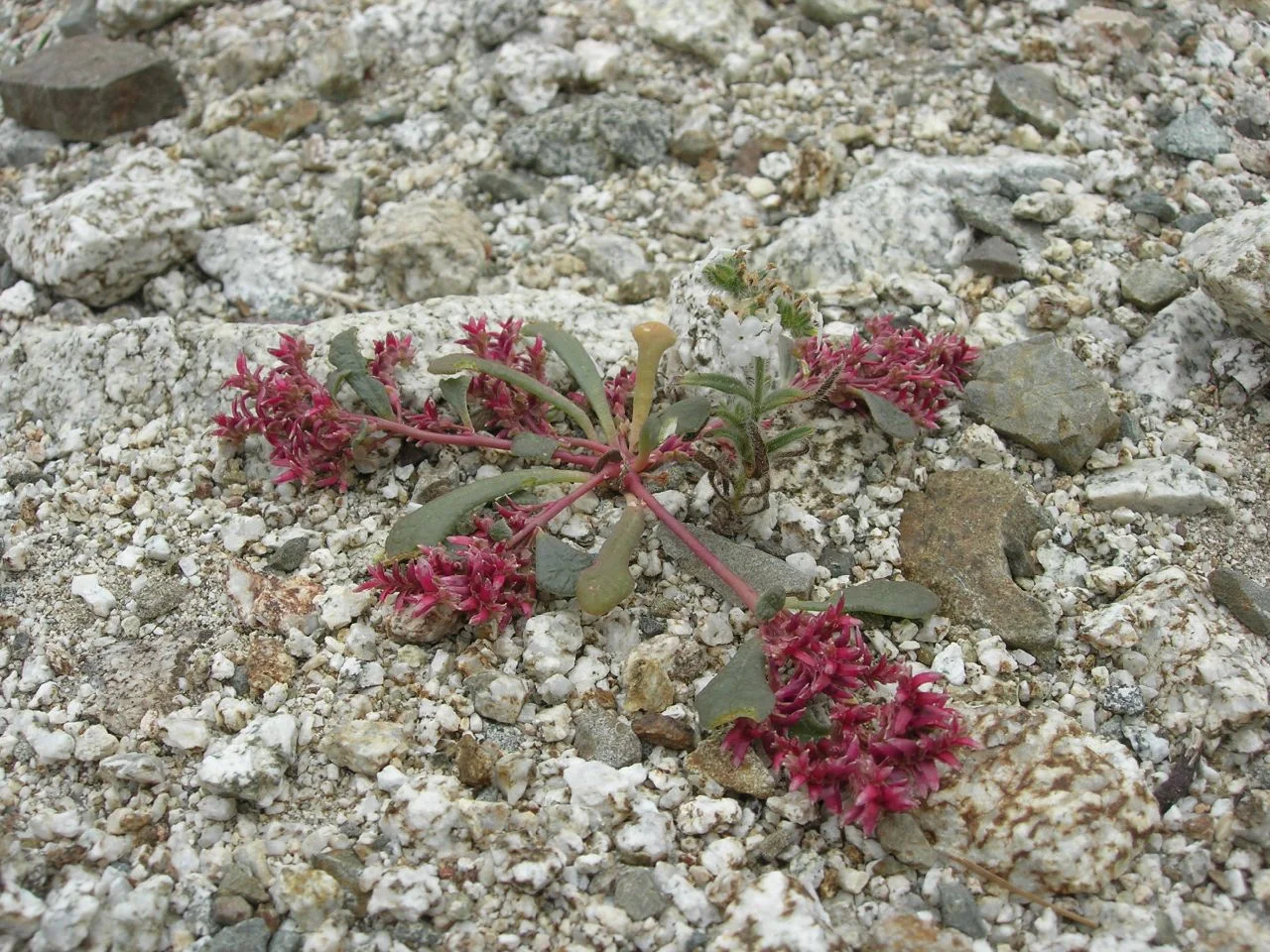
Sand cress
A small annual wildflower characterized by single-stamen flowers and a low-growing growth habit, native to sandy soils of California, Arizona, β¦
Occupying arid, sandy, and alpine regions across western North America and parts of southern South America, the genus Calyptridium consists of succulent-leaved herbs known for their unique flower clusters. These plants are commonly referred to as pussy paws due to the soft, rounded appearance of their inflorescences. They typically grow in nutrient-poor, rocky soils where few other species can survive.
The genus was established in 1838 by Thomas Nuttall, with Calyptridium monandrum designated as the type species. While sometimes merged with Cistanthe, modern molecular and geographical evidence supports maintaining it as a distinct genus.
These plants form dense, flat rosettes of fleshy leaves that hug the ground to conserve warmth and moisture. The flowering stems spread outward from the center, carrying the distinctive dense clusters of blossoms.
Late spring to late summer
While not cultivated for commercial use, these plants are highly valued in native plant restoration projects in dry regions of the American West. Their capacity to grow on degraded, gravelly soils makes them excellent pioneers for erosion control in post-fire landscapes. A few species are grown by enthusiasts in specialized alpine rock gardens and succulent collections.
The persistent sepals of the genus remain intact long after the seeds have ripened, providing a protective covering that aids in seed dispersal. Their prostrate growth habit is a key survival strategy against strong alpine winds and intense ground-level heat. Some species can survive in high-elevation granite sand where almost no other vascular plants can take root.
A small annual wildflower characterized by single-stamen flowers and a low-growing growth habit, native to sandy soils of California, Arizona, β¦
A distinctive perennial wildflower known for its soft, paw-like pinkish flower clusters, native to sandy and gravelly slopes of western β¦
A delicate annual wildflower native to the western United States, noted for its prostrate growth and distinctive rose-tinted, papery sepals.
A perennial herb native to western North America, recognized by its spoon-shaped basal leaves and unique one-seeded pussypaws inflorescences.
A low-growing desert annual characterized by rosette foliage and soft, paw-like flower clusters native to the American Southwest.
An annual herb endemic to California, known for its serpentine soil tolerance and fire-following germination patterns.