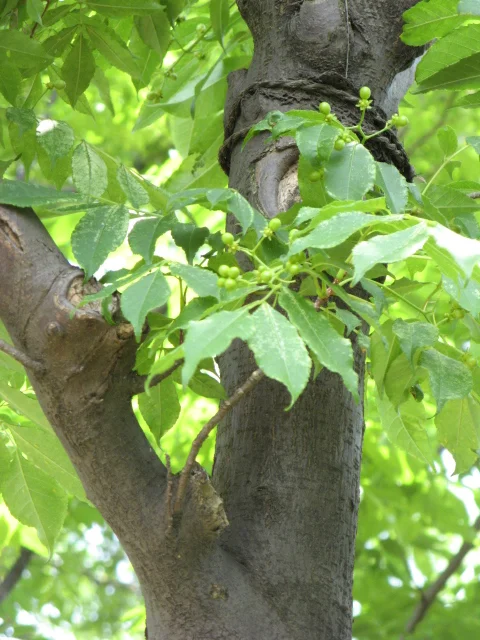
Renowned for the intense bitterness of their bark and foliage, members of the genus Picrasma consist of deciduous trees and shrubs native to tropical and temperate zones of Asia and the Americas.
These woody plants are ecologically important elements of forest understories and canopies alike. They are particularly famous for their biochemical profiles, which contain active bitter principles of pharmaceutical interest.
These plants grow as shrubs or trees, occasionally reaching heights of up to 20 meters, featuring reddish-brown twigs marked with prominent grey lenticels. The deciduous, alternate leaves are imparipinnately compound, usually bearing 5 to 15 opposite leaflets with entire or serrate margins.
The flowers are small, greenish-yellow, and can be unisexual or polygamous, organized in loose axillary cymes. Each flower has 4 or 5 sepals and petals, with male flowers possessing 4 or 5 stamens. The resulting fruits are clusters of small, globose drupes that turn from red to blackish-blue as they mature.
Applications
The wood of Picrasma excelsa is the primary source of Jamaica quassia, which yields extractives used as natural insecticides and bitter food additives. Additionally, species like Picrasma quassioides are cultivated in temperate gardens for their spectacular yellow and red autumn foliage.
Interesting facts
The intensely bitter taste of the bark is caused by chemical compounds known as quassinoids, which are among the most bitter substances found in nature. These compounds act as a highly effective defense mechanism, deterring insect pests and herbivores from feeding on the tree.