Simarouba Genus: Neotropical Trees and Applications
Occupying a prominent place in the rain forests of the Neotropics, the genus Simarouba includes several species of ecologically and economically valuable trees and shrubs.
These plants are easily recognized in their native habitats by their compound leaves and lightweight, bright wood. They have long been utilized by both indigenous populations and modern forestry industries.
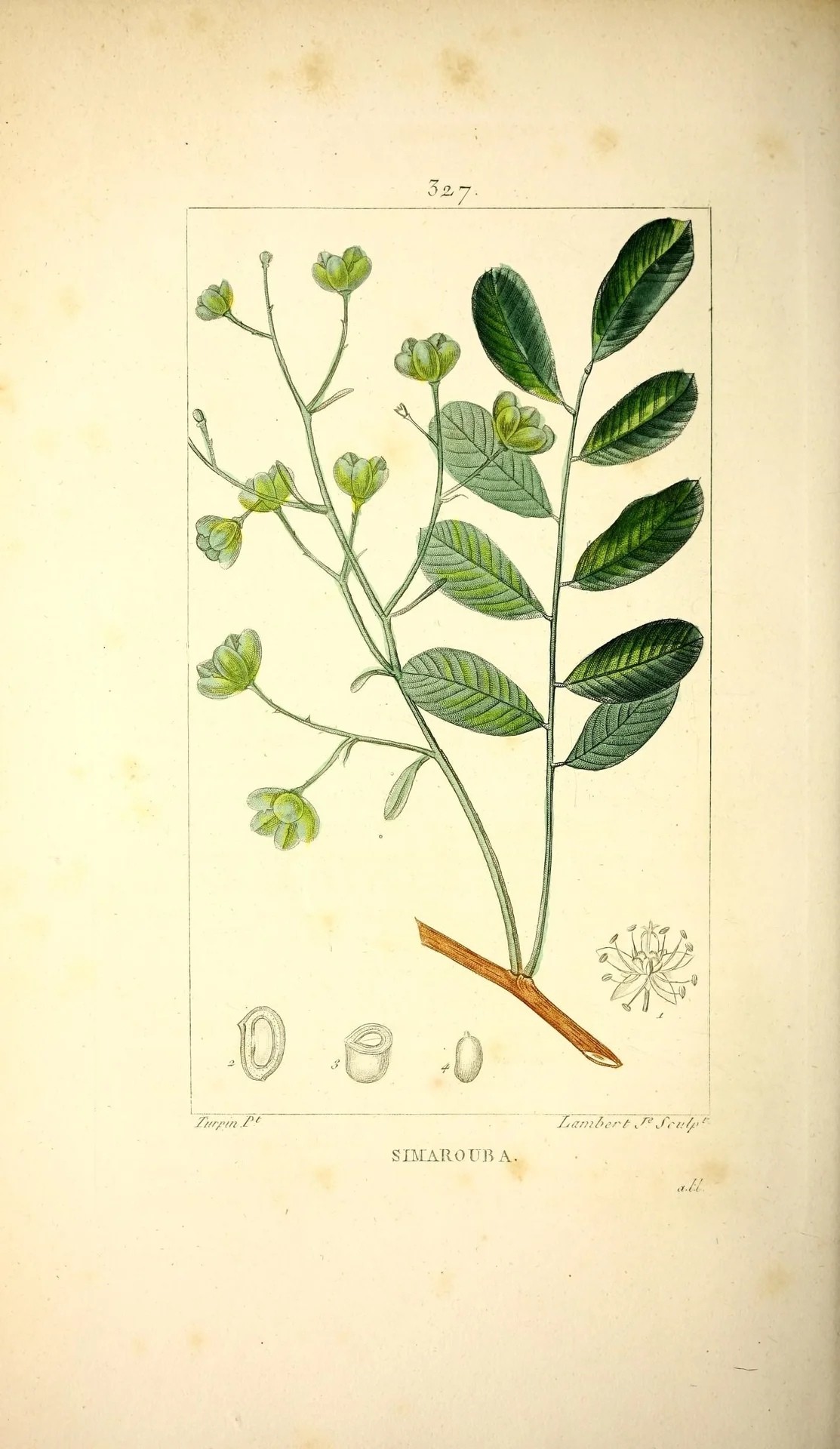
Botanical illustration
Фото: BioDivLibrary / Лицензия: Public Domain Mark
Morphology
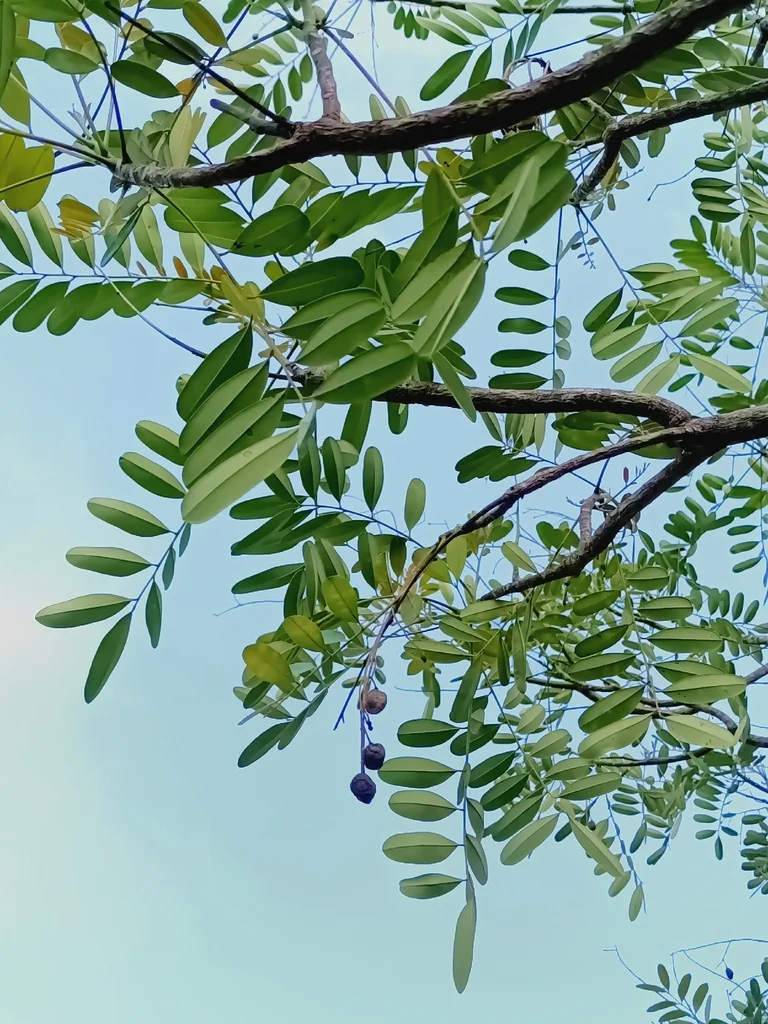
These evergreen trees and shrubs possess pinnately compound leaves featuring 1 to 12 pairs of alternate leaflets that have a leathery texture. They are strictly dioecious, with individual trees producing either male or female flowers in large, branched panicles.
Each small flower, measuring around 1 centimeter in length, has 4 to 6 sepals and petals and up to 12 stamens in male specimens. The female flowers mature into clusters of up to five small, olive-like drupes that turn dark purple or black when fully ripe.
Applications
The lightweight, bright-colored wood of Simarouba amara is highly valued in timber markets for manufacturing fine furniture, toys, and veneers. Additionally, the seeds of Simarouba glauca serve as a source of edible oil, while the bark of several species is historically used to treat dysentery and malaria.
Interesting facts
During the early 18th century, French explorers documented the medicinal properties of this genus, leading to the export of its bark to France to successfully combat a dysentery epidemic. In modern times, these trees are also known to host the larvae of the Ailanthus webworm moth, which feed on their leaves.