Simarouba glauca (Paradise Tree): Guide to the Neotropical Bitterwood
Thriving in the warm Neotropical regions, this majestic evergreen tree is widely recognized for its beautiful glossy foliage and rich medicinal history. It plays a significant ecological role in its native habitats by supporting local wildlife and helping control soil erosion.
Over the years, it has gained international attention for its adaptability and the valuable oil extracted from its seeds. Today, it is grown in various tropical zones for both environmental restoration and agroforestry purposes.
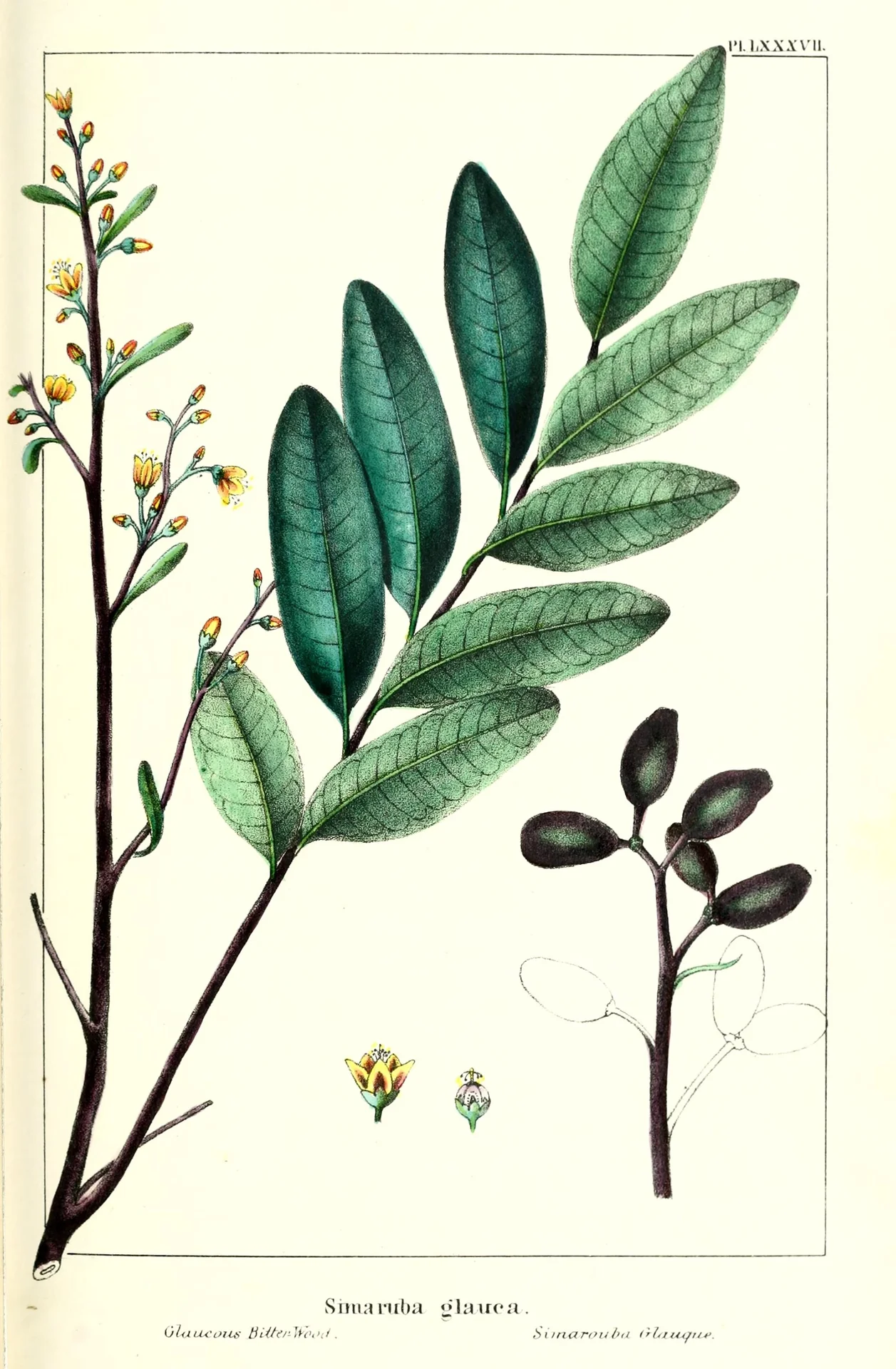
Botanical illustration
Фото: BioDivLibrary / Лицензия: Public Domain Mark
Morphology
This species typically reaches a height of 10 to 15 meters, exhibiting a rounded crown with dense foliage. The trunk is covered in smooth, light brown bark that contains highly bitter compounds.
Its leaf structure is characterized by the following features:
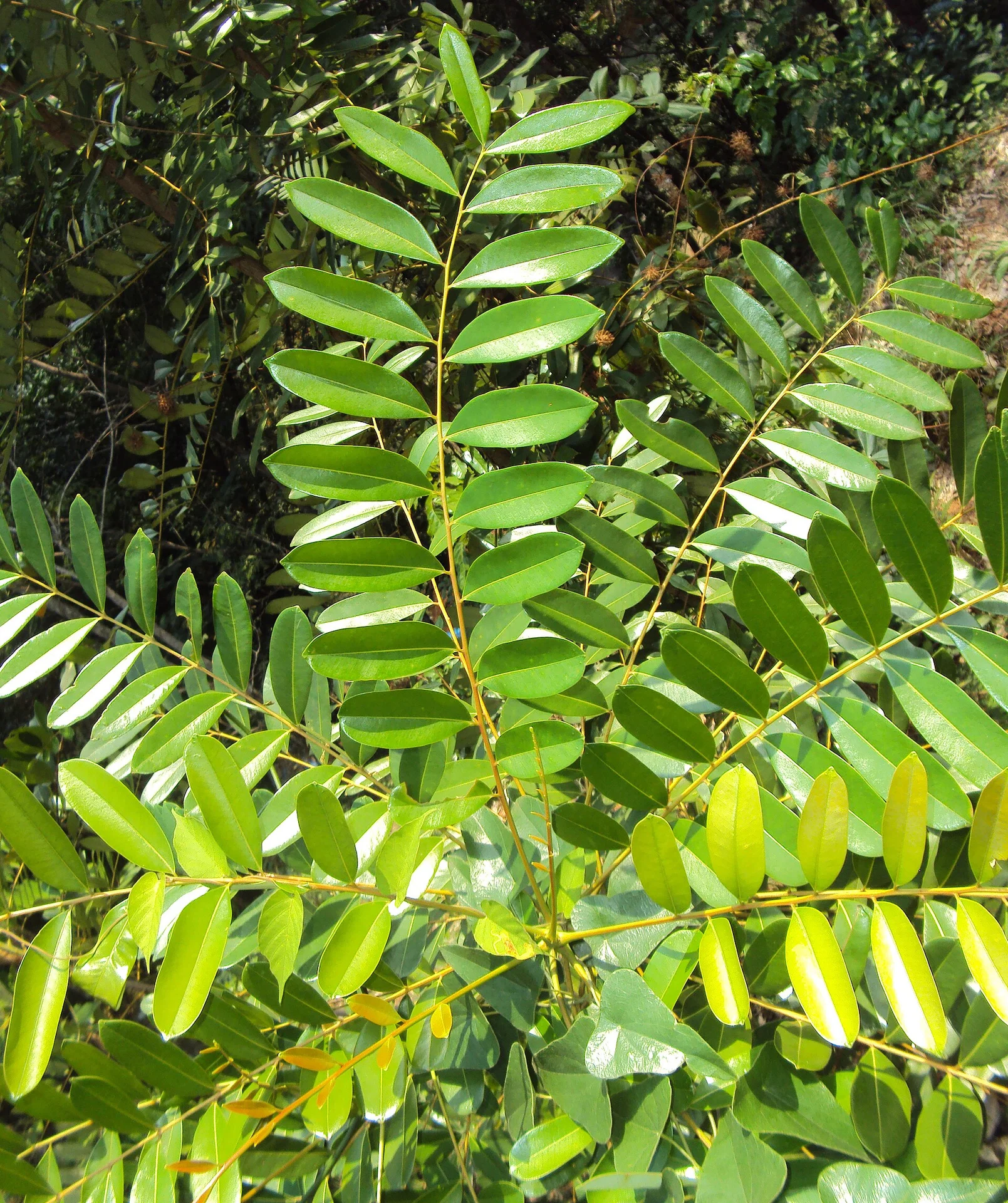
Pinnate arrangement: The leaves are alternate and compound, usually bearing 10 to 20 leaflets.
Leaflet surface: Each leaflet is coriaceous, displaying a dark, glossy green upper surface and a distinct glaucous, bluish-green underside.
Leaflet shape: The leaflets are oblong to elliptic, measuring up to 10 centimeters in length.
The reproductive organs consist of small, greenish-yellow flowers grouped in large, terminal panicles. The trees are dioecious, meaning male and female flowers develop on separate individuals. Following pollination, the female trees produce oval drupes that turn dark purple or black when fully ripe.
Flowering season
Late winter to spring
Jan
Feb
Mar
Apr
May
Jun
Jul
Aug
Sep
Oct
Name
Dec
Applications
The seeds of the tree yield a high-quality edible oil that is also utilized in the manufacturing of soaps, cosmetics, and lubricants. Additionally, the lightweight, easily worked wood is employed for interior construction, matchsticks, and paper production.
Traditional medicine relies on the bark and leaves of this species. Quassinoids present in the plant tissues offer therapeutic properties used historically to treat various ailments:
Dysentery and gastrointestinal disorders
Malaria and associated fevers
Inflammatory conditions of the skin
Interesting facts
In India, the tree was introduced under the name Laxmi Taru to promote wasteland reclamation and sustainable agriculture. Its common name, paradise tree, refers to the attractive, shimmering appearance of its leaves under the sunlight.
The extreme bitterness of its leaves serves as a natural defense mechanism against herbivores and pests, reducing the need for chemical insecticides in agroforestry.