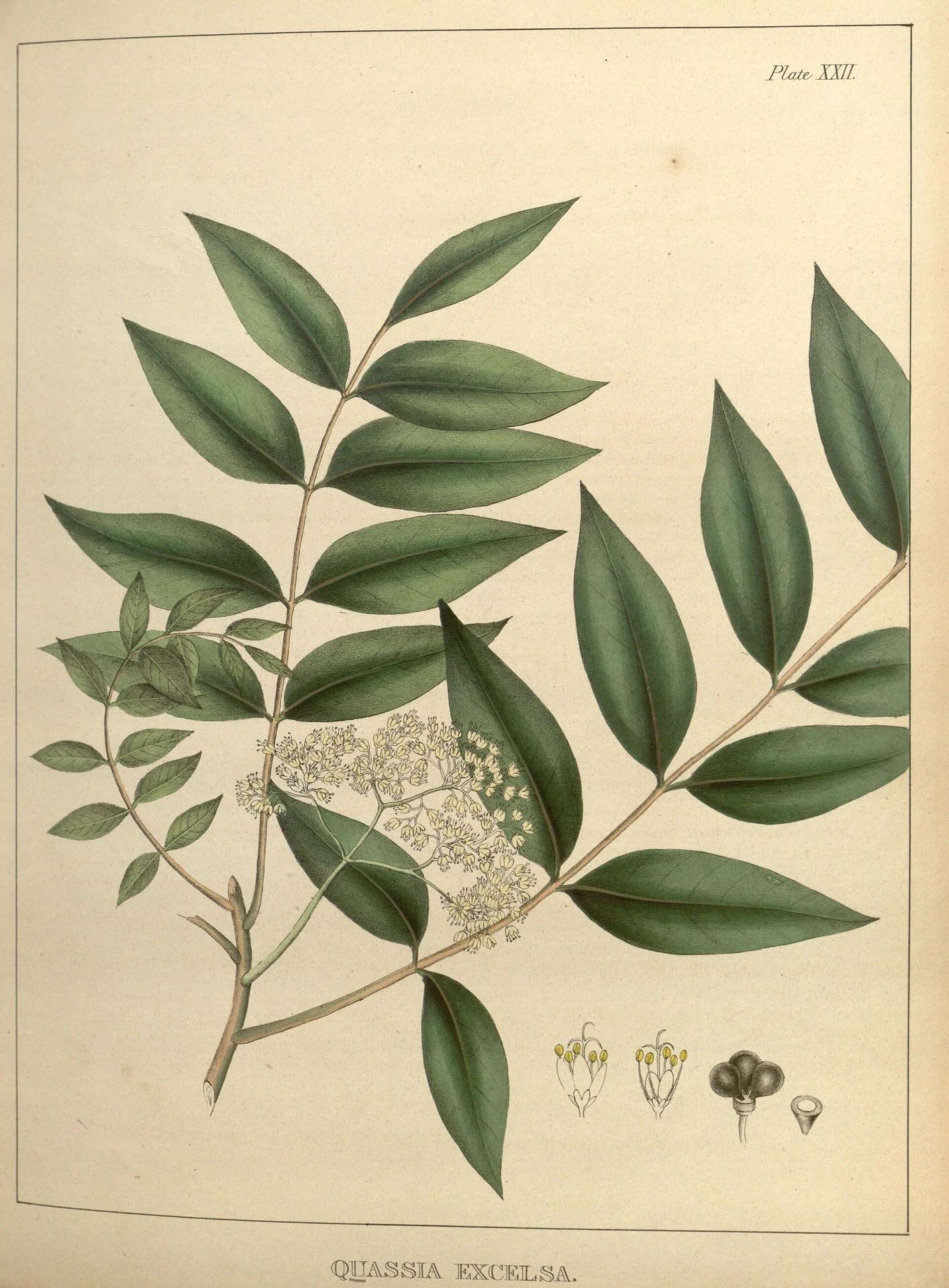
Bitterwood (Picrasma excelsa)

Bitter ash Bitter bark Bitter wood Gall tree Jamaican Quassia Raw dog Bastard Bough
Уязвимый Π²ΠΈΠ΄
#E9DBB8
#676D49
#B6AC8A
#D2C5A3
#868965

Picrasma excelsa: The Jamaican Bitterwood Tree

Clinging to the moist forest slopes of Jamaica and the Caribbean islands, a remarkably resilient tree holds one of the most intense sensory secrets in the plant kingdom. Its wood contains a compound so intensely bitter that even a tiny fragment can flavor gallons of water with its sharp, clean sting.

Historically valued by indigenous peoples and early European colonists alike, Picrasma excelsa became a cornerstone of traditional pharmacology under the name of Jamaican quassia. Its lumber was crafted into special bitter cups, which were filled with water overnight to create a therapeutic tonic by morning.

Today, this stately forest dweller faces growing challenges in the wild, earning it a vulnerable status as its natural woodland habitats continue to shrink across the Antilles. Conservation efforts are now critical to protecting the remaining wild populations in these fragile island ecosystems.

Taxonomy

  • ∟ царство Plantae
  • ∟ division Tracheophytes
  • ∟ subdivision Spermatophytes (Seed plants)
  • ∟ Angiosperms
  • ∟ mesangiosperms
  • ∟ eudicots
  • ∟ Superrosids
  • ∟ rosids
  • ∟ malvids
  • ∟ order Sapindales
  • ∟ family Simaroubaceae (Quassia family)
  • ∟ genus Picrasma (Bitterwood Tree)
  • ∟ species Picrasma excelsa (Bitterwood)

Living Pulse

Morphology

Growing into the canopy, this evergreen tree can reach heights of over 20 meters. Its compound leaves are arranged alternately along the branches and are pinnate, typically consisting of up to 13 oblong leaflets with entire margins.

The reproductive features of Picrasma excelsa are particularly distinctive:

  • Inflorescence: It produces branched, hairy clusters known as panicles that arise from the leaf axils.
  • Flowers: The species is andromonoecious, bearing both male and bisexual flowers on the same plant. These small blossoms are whitish to yellowish-green with four or five petals.
  • Fruit: The tree bears small, round drupes about 6 to 7 millimeters in diameter. These fruits turn shiny black when mature and contain a single seed.

Applications

The primary value of Picrasma excelsa lies in its wood and bark, which are rich in the bitter principle quassin. This compound is widely utilized in traditional medicine as a digestive tonic and appetite stimulant.

Additionally, the extract has several practical applications:

  • Natural Insecticide: The water extract of the wood serves as an organic pesticide, highly effective against aphids and other garden pests without harming beneficial insects.
  • Beverage Industry: It has been used historically to impart a bitter flavor to beverages and traditional beers, sometimes serving as a substitute for hops.
  • Woodworking: The bitter wood is naturally resistant to insect attacks, making it highly durable for local construction.

Interesting facts

The active compound quassin extracted from this tree is officially recognized as one of the most bitter natural substances on Earth. It is estimated to be roughly fifty times more bitter than quinine, yet it is completely non-toxic to humans in standard quantities.

Other fascinating aspects of this species include:

  • Bitter Cups: In the nineteenth century, wood from the tree was turned into drinking cups sold in Europe, allowing users to make their own bitter health tonics simply by adding water.
  • Habitat Diversity: Although commonly associated with Jamaica, the tree is also native to Cuba, Hispaniola, Puerto Rico, and parts of northern Venezuela.
  • Conservation Need: Due to heavy logging for its valuable wood and clearing for agriculture, the species is currently classified as vulnerable on the IUCN Red List.

Geography of distribution

  • Cuba
  • Dominican Republic
  • Haiti
  • Jamaica
  • Puerto Rico
  • Saint Vincent and the Grenadines
  • Venezuela

Technical Information

Taxon Synonyms: Aeschrion antillana, Aeschrion medica, Aeschrion excelsa var. microcarpa, Picraena excelsa, Aeschrion excelsa

External Databases: GBIF, POWO, Tropicos