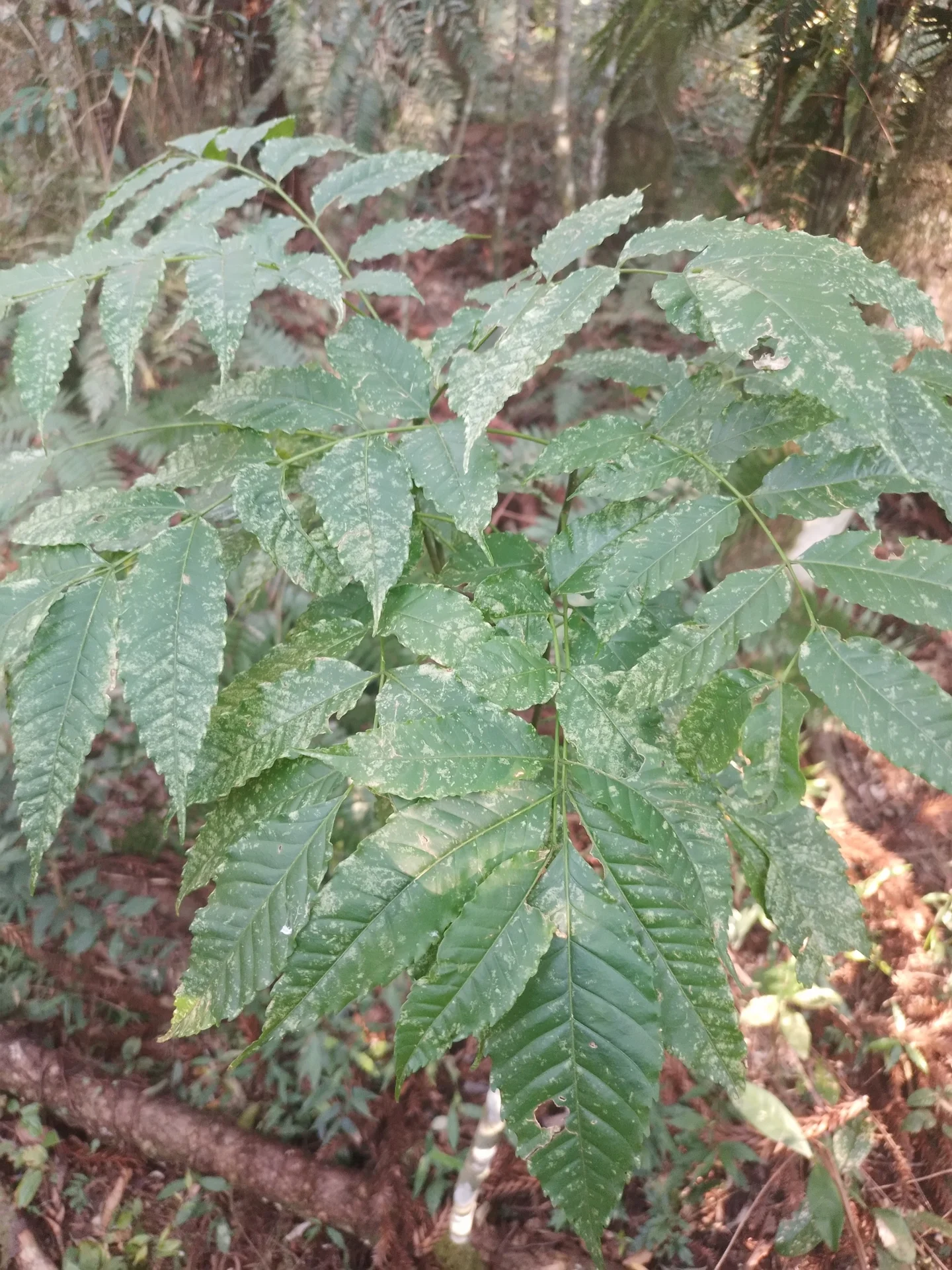
Picrasma crenata (Pau-Amargo): Atlantic Forest Bitterwood Tree
Commonly known as pau-amargo, Picrasma crenata commands attention as a majestic tree native to the Atlantic Forest of South America.
This species thrives in the subtropical and tropical biomes across Brazil, Argentina, and Paraguay. Within Brazil, it populates diverse forest ecosystems ranging from semideciduous seasonal forests to moist mixed ombrophilous woodlands.
This evergreen tree typically reaches heights of up to 20 meters. Its foliage consists of alternate, odd-pinnate leaves that form a dense crown.
The reproductive organs yield distinct obovoid, glabrous drupelets. Each drupelet contains a single seed, which is vital for the propagation of the species in its native forest habitats.
Applications
The wood and bark of Picrasma crenata are traditionally noted for their intense bitter taste. These natural components are sometimes utilized in local folk medicine and as bittering agents.
Interesting facts
The common name pau-amargo translates directly to "bitter wood" in Portuguese, highlighting the chemical profile of the plant. Its presence in the Brazilian Restinga coastal forests shows its adaptability to sandy, nutrient-poor soils.