
Brazilian hackberry
Celtis brasiliensis
A deciduous tree or scrambling shrub in the Cannabaceae family, native to various countries in …
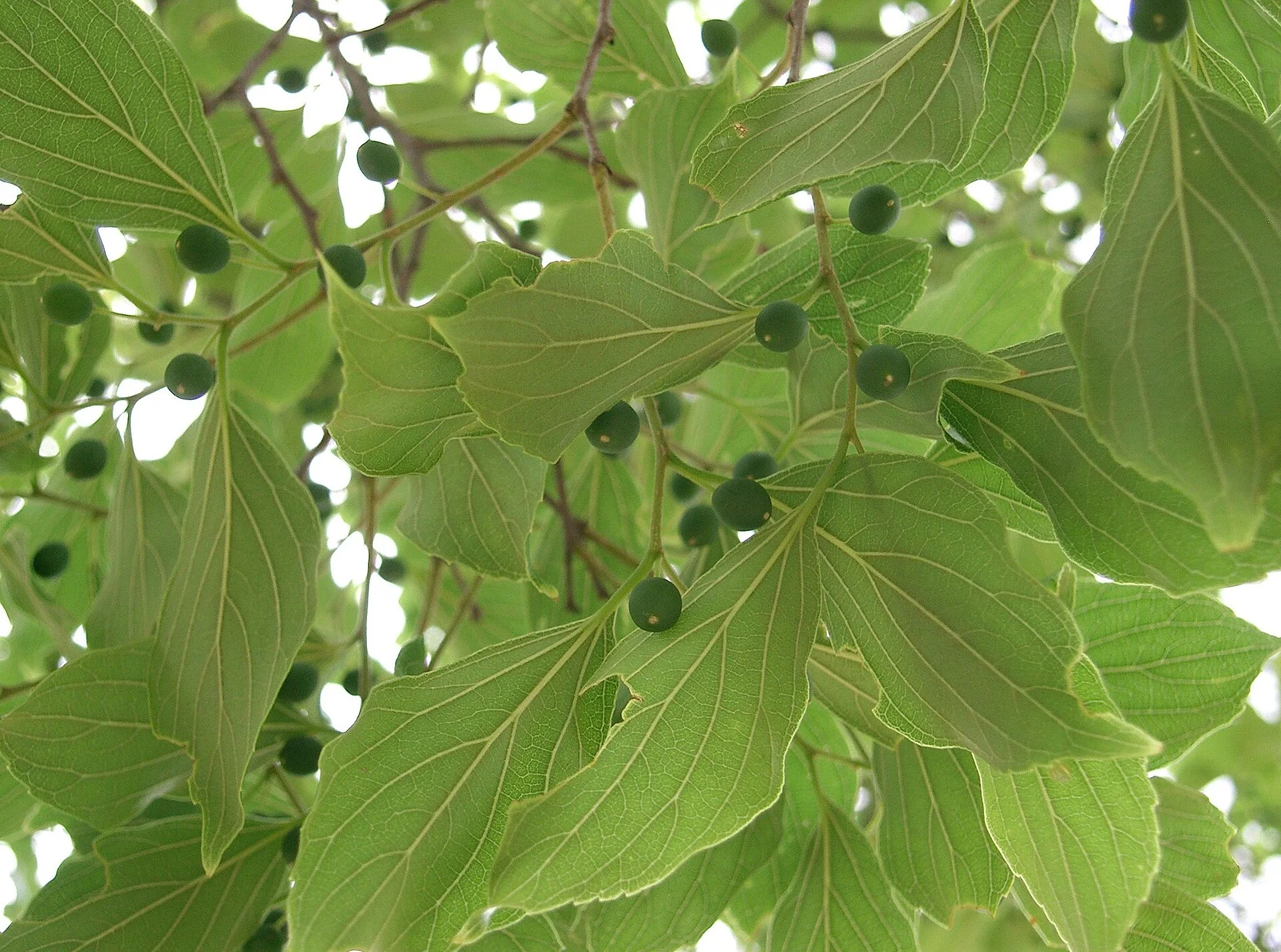
Native to the temperate regions of East Asia, Celtis choseniana flourishes as an ecologically significant tree widely recognized as the Black-fruit hackberry. Botanically classified within the Cannabaceae family, it contributes substantially to the structural diversity of the forest ecosystems in which it naturally occurs. In modern taxonomic literature, it is frequently treated as a synonym of the closely related Celtis jessoensis.
This deciduous woody plant was historically detailed by the prominent Japanese botanist Takenoshin Nakai. Its natural range encompasses the Japanese archipelago and the Korean Peninsula, demonstrating excellent resilience and adaptability to regional seasonal changes.
Developing into a moderately sized tree, this species features a distinctly branching canopy characteristic of its genus. The foliage consists of simple, alternate leaves that typically display serrated margins and distinct venation.
As the common name implies, it produces small, spherical drupes that transition to a dark, almost black hue upon reaching maturity. These fleshy fruits are an integral part of its reproductive cycle and serve as a reliable, nutrient-rich food source for the local avian fauna.
Celtis brasiliensis
A deciduous tree or scrambling shrub in the Cannabaceae family, native to various countries in …

Celtis gomphophylla
A tall tree species in the Cannabaceae family, widespread across sub-Saharan Africa, Madagascar, and the …

Celtis madagascariensis
A small deciduous tree belonging to the Cannabaceae family, endemic to the forest margins of …

Celtis aurantiaca
A deciduous tree species native to Korea, recognized by its large leaves with caudate-acuminate tips …