
Wedge-leaved hackberry
Celtis gomphophylla
A tall tree species in the Cannabaceae family, widespread across sub-Saharan Africa, Madagascar, and the …
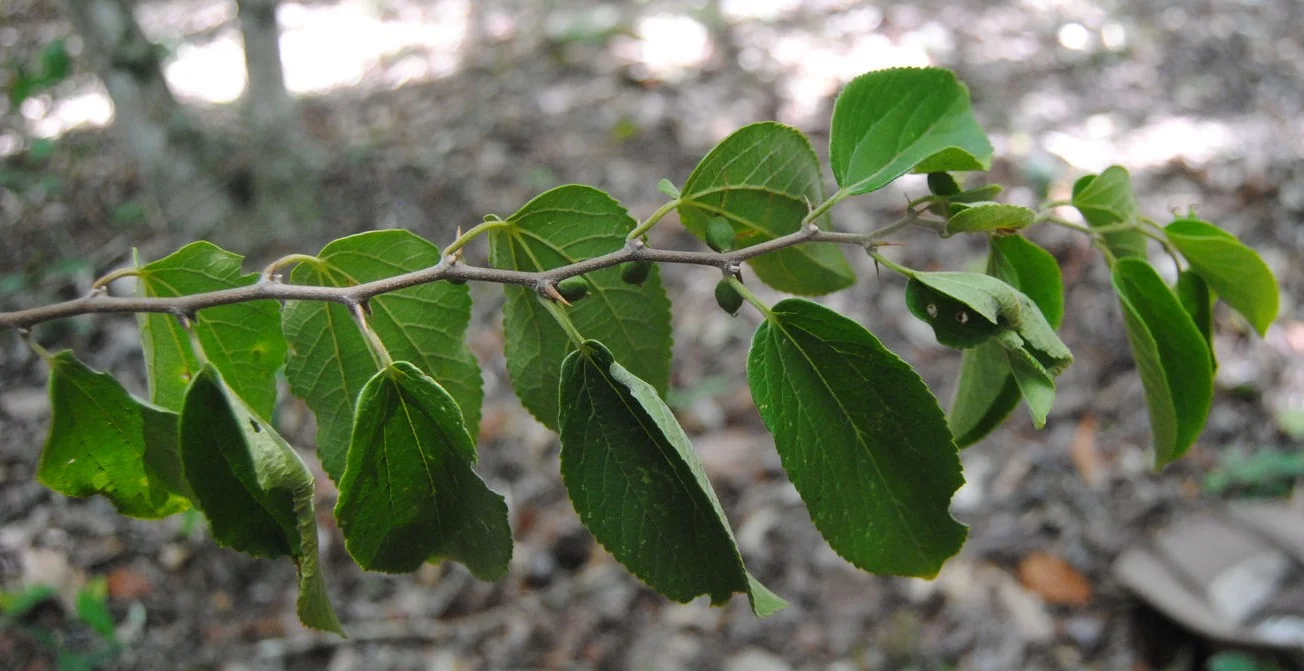
Widely distributed across South America, Celtis brasiliensis flourishes as a versatile woody plant adapted to diverse climates. Commonly referred to as the Brazilian hackberry, it was scientifically classified by Jules Émile Planchon based on earlier botanical collections by George Gardner.
This member of the Cannabaceae family successfully adapts to multiple environmental conditions, growing naturally in regions spanning from Colombia and Peru down to Argentina and Brazil.
Celtis brasiliensis exhibits a flexible growth habit, developing either as a deciduous tree or a scrambling shrub. Mature specimens typically reach heights ranging from 1.5 to 10 meters.
The plant sheds its leaves seasonally, a characteristic behavior for this climate zone. Its foliage presents typical alternate leaf arrangements that support effective photosynthesis in diverse South American environments.
Taxon Synonyms: Celtis crenata, Momisia membranacea, Celtis flagellaris, Momisia crenata, Celtis boliviensis, Celtis dumosa, Celtis membranacea, Celtis brasiliensis f. clausseniana, Momisia flexuosa, Mertensia brasiliensis
Celtis gomphophylla
A tall tree species in the Cannabaceae family, widespread across sub-Saharan Africa, Madagascar, and the …


Celtis smallii
A North American deciduous tree closely related to the sugarberry, known for its distinctively serrated …