
Brazilian hackberry
Celtis brasiliensis
A deciduous tree or scrambling shrub in the Cannabaceae family, native to various countries in …
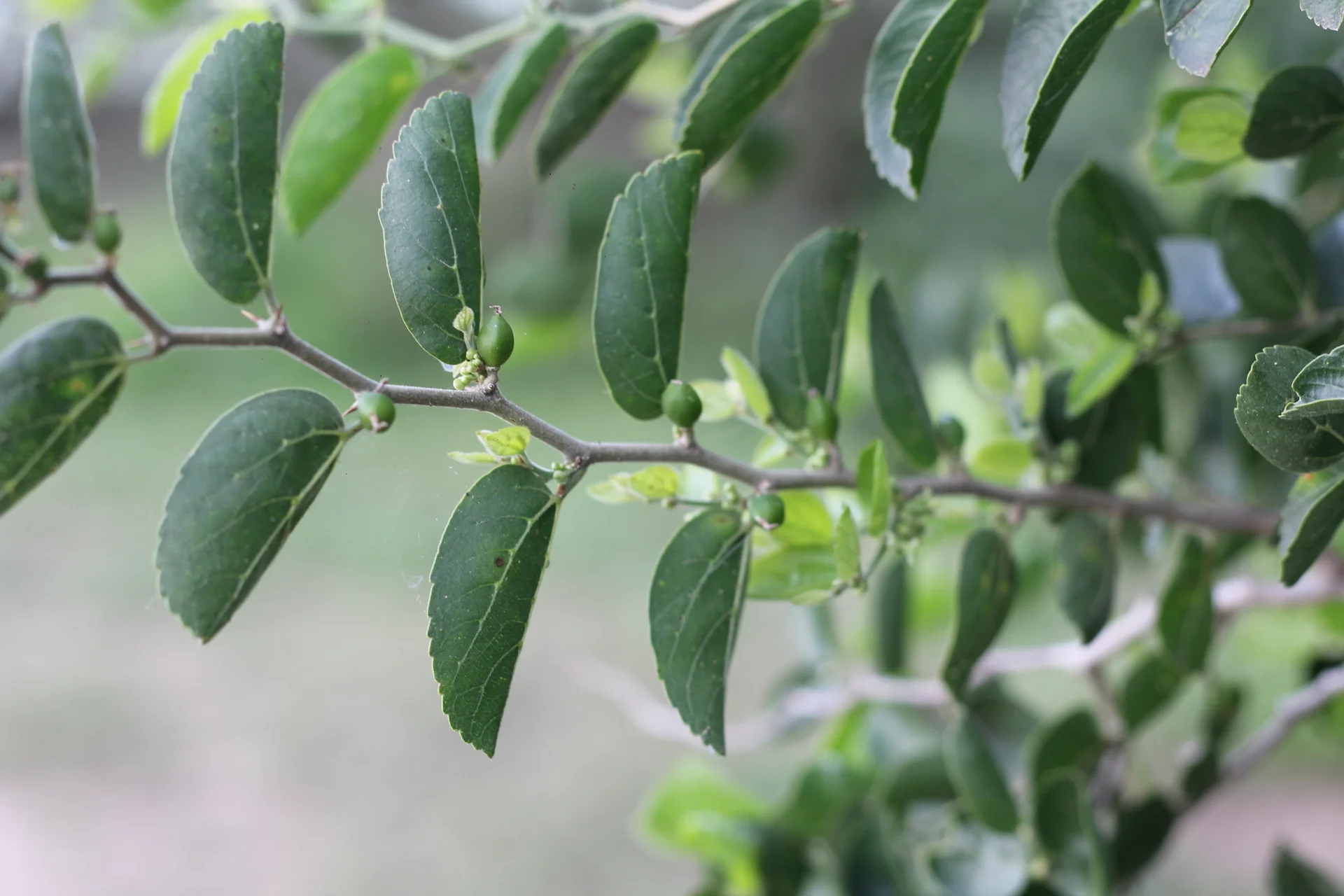
The evergreen canopy of Celtis chichape allows it to thrive across various altitudinal zones in South America. This resilient shrub or small tree grows at elevations up to 1600 meters, forming a crucial part of the regional flora. The species was formally described in 1853 by the Dutch botanist Friedrich Anton Wilhelm Miquel, based on the earlier work of Hugh Algernon Weddell.
Growth forms range from dense shrubs to small evergreen trees. The branches often display a subtle pubescence, a trait reflected in historical synonyms such as Celtis pubescens and Celtis sericea. The alternate leaves feature the characteristic asymmetrical base common to the genus, creating a dense and textured foliage profile.
The extensive list of botanical synonyms, including Momisia chichape and various forms of Celtis tala, points to significant morphological variation across its geographic range. Such diversity in historical classification highlights the phenotypic plasticity of the species in different habitats.
Taxon Synonyms: Momisia chichape, Celtis pubescens var. chichape, Celtis tala var. chichape
Celtis brasiliensis
A deciduous tree or scrambling shrub in the Cannabaceae family, native to various countries in …

Celtis gomphophylla
A tall tree species in the Cannabaceae family, widespread across sub-Saharan Africa, Madagascar, and the …


Celtis smallii
A North American deciduous tree closely related to the sugarberry, known for its distinctively serrated …