
Brazilian hackberry
Celtis brasiliensis
A deciduous tree or scrambling shrub in the Cannabaceae family, native to various countries in …
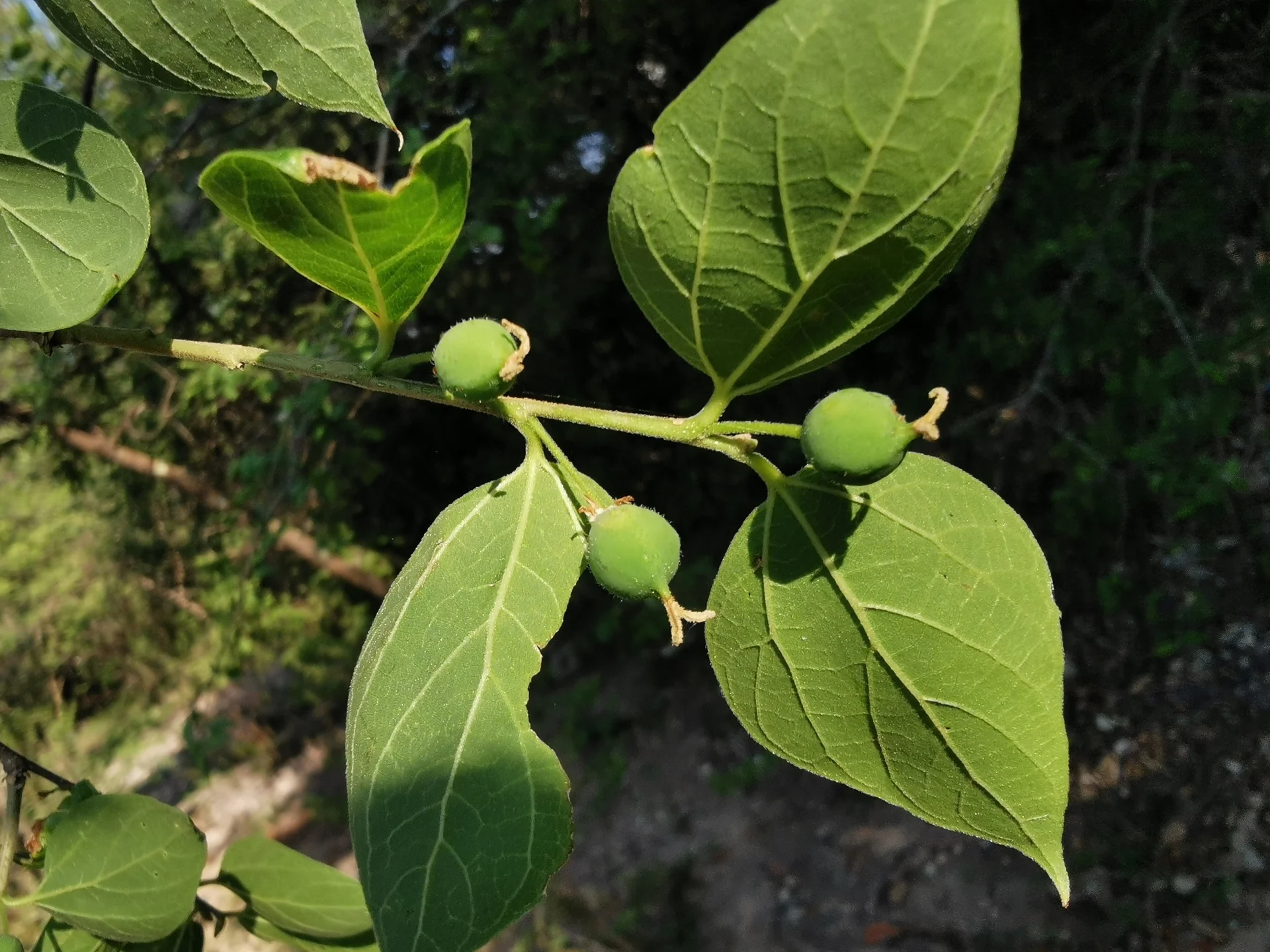
Extensive populations of Celtis caudata stretch across the diverse landscapes of Mexico and Central America. The tree integrates seamlessly into varied forest communities from the northern Mexican states down to Nicaragua. French botanist Jules Émile Planchon first documented the species in 1848, examining type specimens collected from the Zimapan region.
The specific epithet caudata references the distinct "tailed" or acuminate tips of the leaves, serving as a primary diagnostic feature for field identification. The tree develops a robust trunk supporting a spreading canopy. The foliage is alternate, exhibiting the signature asymmetrical leaf bases characteristic of the genus.
Taxonomic history reveals several synonyms for this plant, notably Celtis littoralis and Celtis riparia, which were proposed by Frederik Liebmann in 1851. The scientific literature also records illegitimate homonyms applied to entirely different species within the Rosaceae and Cannabaceae families, underscoring the complexities of botanical nomenclature.
Celtis brasiliensis
A deciduous tree or scrambling shrub in the Cannabaceae family, native to various countries in …

Celtis gomphophylla
A tall tree species in the Cannabaceae family, widespread across sub-Saharan Africa, Madagascar, and the …


Celtis smallii
A North American deciduous tree closely related to the sugarberry, known for its distinctively serrated …