
Brazilian hackberry
Celtis brasiliensis
A deciduous tree or scrambling shrub in the Cannabaceae family, native to various countries in …
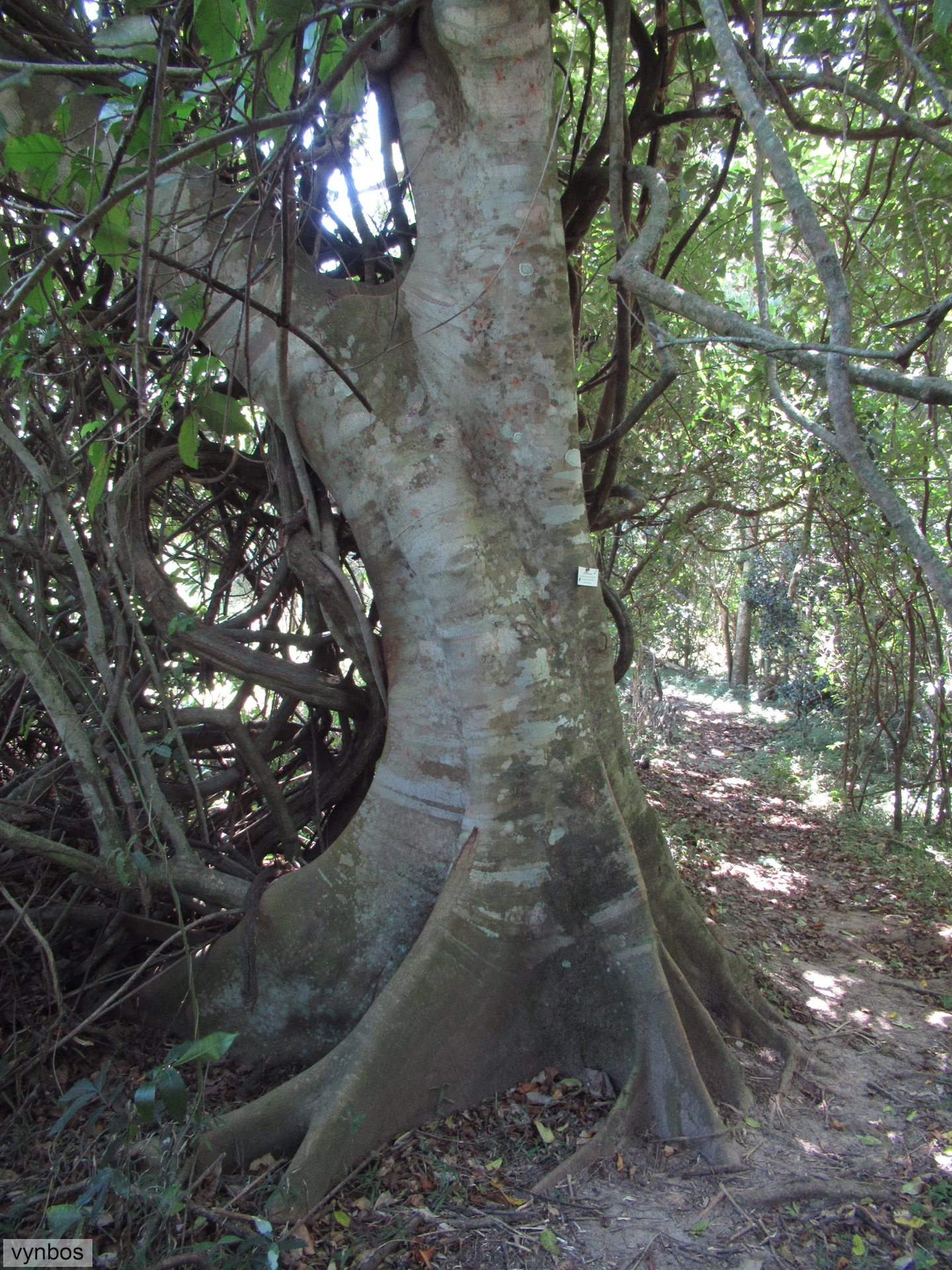
Extensively distributed across sub-Saharan Africa, Madagascar, and the Comoros, Celtis gomphophylla grows as a prominent canopy component in its native habitats. It inhabits a wide variety of ecosystems, ranging from humid tropical lowland and montane forests to dry forests, thickets, and wooded grasslands.
This tree can be found at elevations between 20 and 1500 meters, demonstrating remarkable ecological adaptability. The species was first described scientifically in 1887 by John Gilbert Baker and remains a significant member of the Cannabaceae family.
Celtis gomphophylla is a substantial tree that reaches impressive heights ranging from 5 to 35 meters. The common name suggests a distinctly textured leaf surface, while the foliage is characterized by simple, alternate leaves.
It produces small seeds that contribute to the diet of local wildlife. This ecological interaction aids in the natural dispersal of the species across its expansive range.
In parts of its native range, the tree is heavily utilized for its timber. The wood is harvested for various construction and woodworking purposes, which has led to over-exploitation in certain localized areas.
Taxon Synonyms: Celtis ugandensis, Celtis durandii, Trema integrifolia, Celtis dioica
Celtis brasiliensis
A deciduous tree or scrambling shrub in the Cannabaceae family, native to various countries in …


Celtis smallii
A North American deciduous tree closely related to the sugarberry, known for its distinctively serrated …