
Brazilian hackberry
Celtis brasiliensis
A deciduous tree or scrambling shrub in the Cannabaceae family, native to various countries in …
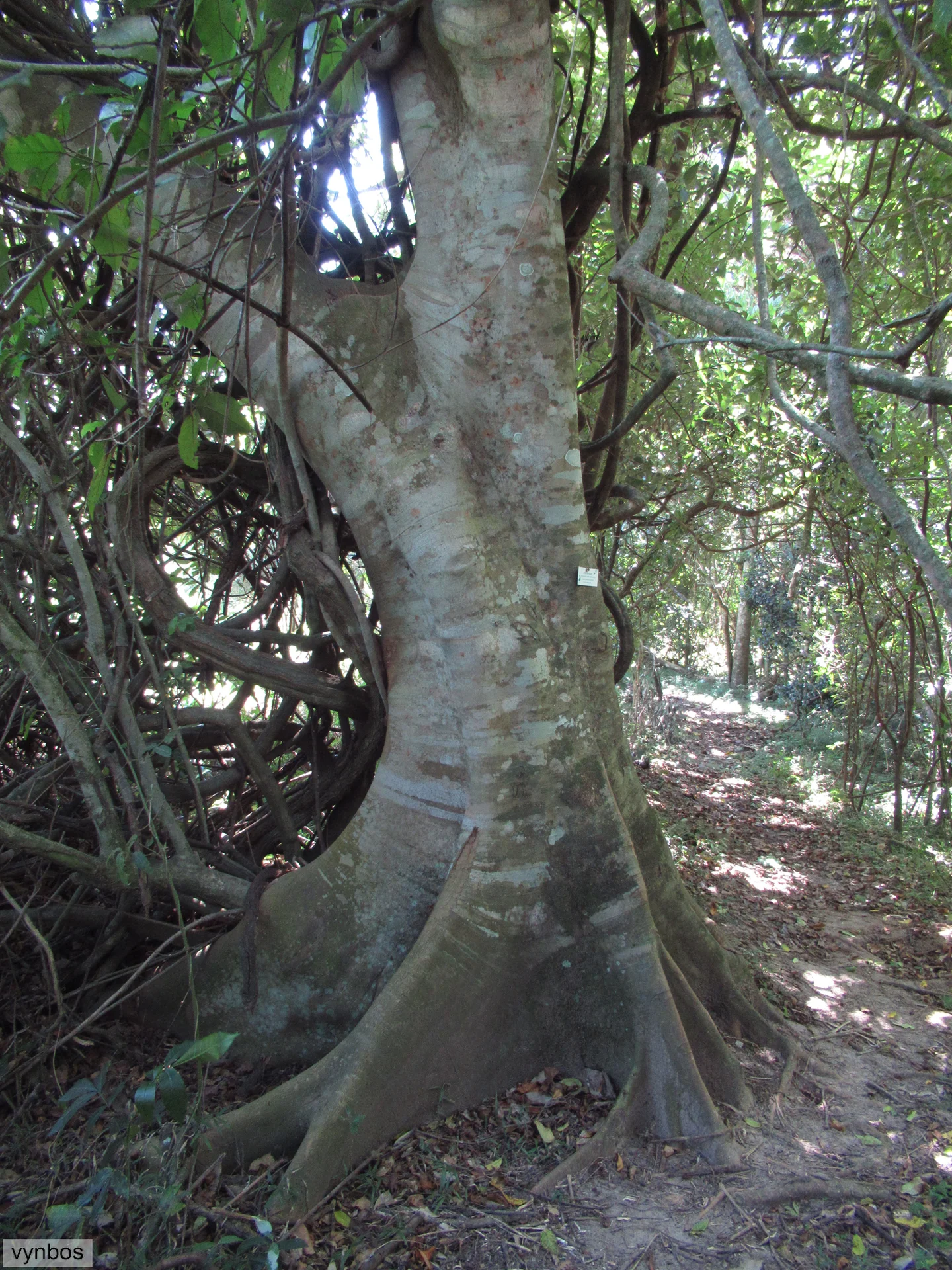
Celtis durandii forms an integral part of various forest ecosystems across the African continent and Madagascar. As a prominent member of the Cannabaceae family, it exhibits the robust growth patterns characteristic of the hackberry genus.
The species was initially formally described by the renowned botanist Adolf Engler. It is widely distributed across Sub-Saharan Africa, where it adapts to a variety of tropical and subtropical environments.
The physical structure of Celtis durandii features a well-developed trunk and a broadly spreading canopy. The bark often displays varying textures depending on the age of the specimen and its specific environmental conditions.
Its leaves follow the typical pattern for the genus, being simple and alternately arranged along the stems. The characteristic asymmetrical leaf base serves as a helpful trait for field identification.
It produces small, discrete flowers that are primarily wind-pollinated. These eventually develop into spherical drupes that serve as an important food source for local bird and mammal populations.
Within its native range, Celtis durandii is primarily valued for its outstanding ecological contributions. It provides essential shade, nesting sites, and crucial food resources for a diverse array of wildlife.
In some local regions, the wood of native Celtis species is utilized for basic construction or as a fuel source. However, commercial timber exploitation of this specific tree remains limited.
Taxonomic research often links Celtis durandii closely with Celtis gomphophylla, with some botanical authorities treating them as part of the same complex or as synonyms.
Its extensive geographic range is highly notable, spanning from West Africa all the way to Southern Africa, and extending across the Mozambique Channel to Madagascar.
Celtis brasiliensis
A deciduous tree or scrambling shrub in the Cannabaceae family, native to various countries in …

Celtis gomphophylla
A tall tree species in the Cannabaceae family, widespread across sub-Saharan Africa, Madagascar, and the …

Celtis madagascariensis
A small deciduous tree belonging to the Cannabaceae family, endemic to the forest margins of …

Celtis aurantiaca
A deciduous tree species native to Korea, recognized by its large leaves with caudate-acuminate tips …