
Brazilian hackberry
Celtis brasiliensis
A deciduous tree or scrambling shrub in the Cannabaceae family, native to various countries in …
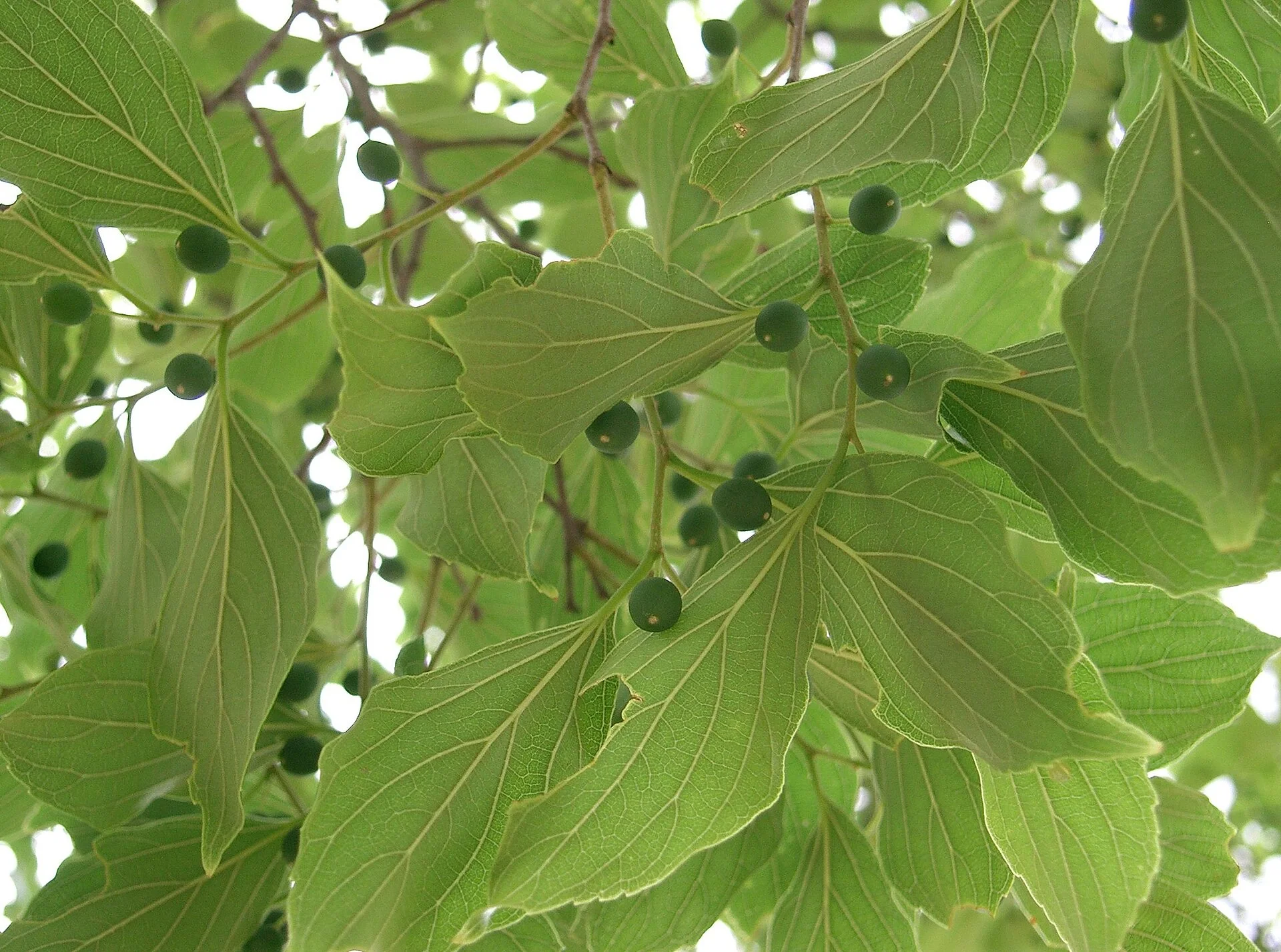
Often found enriching local forest ecosystems, Celtis edulis is a deciduous tree with significant ecological value. It contributes to canopy density and provides essential resources for local fauna. Researchers value this species for its adaptability and unique fruit characteristics.
The foliage of Celtis edulis consists of broad leaves with prominent veins and a textured surface. These morphological traits assist the plant in maximizing sunlight absorption in varying canopy positions. The bark typically develops ridges and furrows as the tree matures.
During the fruiting season, it produces the characteristic yellow drupes that give it its common name. These fruits contain a single hard seed surrounded by a thin layer of flesh. The branching architecture allows the tree to withstand moderate to severe wind conditions.
The fruits of Celtis edulis have been historically recognized as an edible resource for local fauna and sometimes human populations. Its strong wood makes it suitable for crafting tools and small structural elements. Ecologically, it is widely planted in restoration projects to stabilize soils and increase biodiversity.
Celtis brasiliensis
A deciduous tree or scrambling shrub in the Cannabaceae family, native to various countries in …

Celtis gomphophylla
A tall tree species in the Cannabaceae family, widespread across sub-Saharan Africa, Madagascar, and the …

Celtis madagascariensis
A small deciduous tree belonging to the Cannabaceae family, endemic to the forest margins of …

Celtis aurantiaca
A deciduous tree species native to Korea, recognized by its large leaves with caudate-acuminate tips …