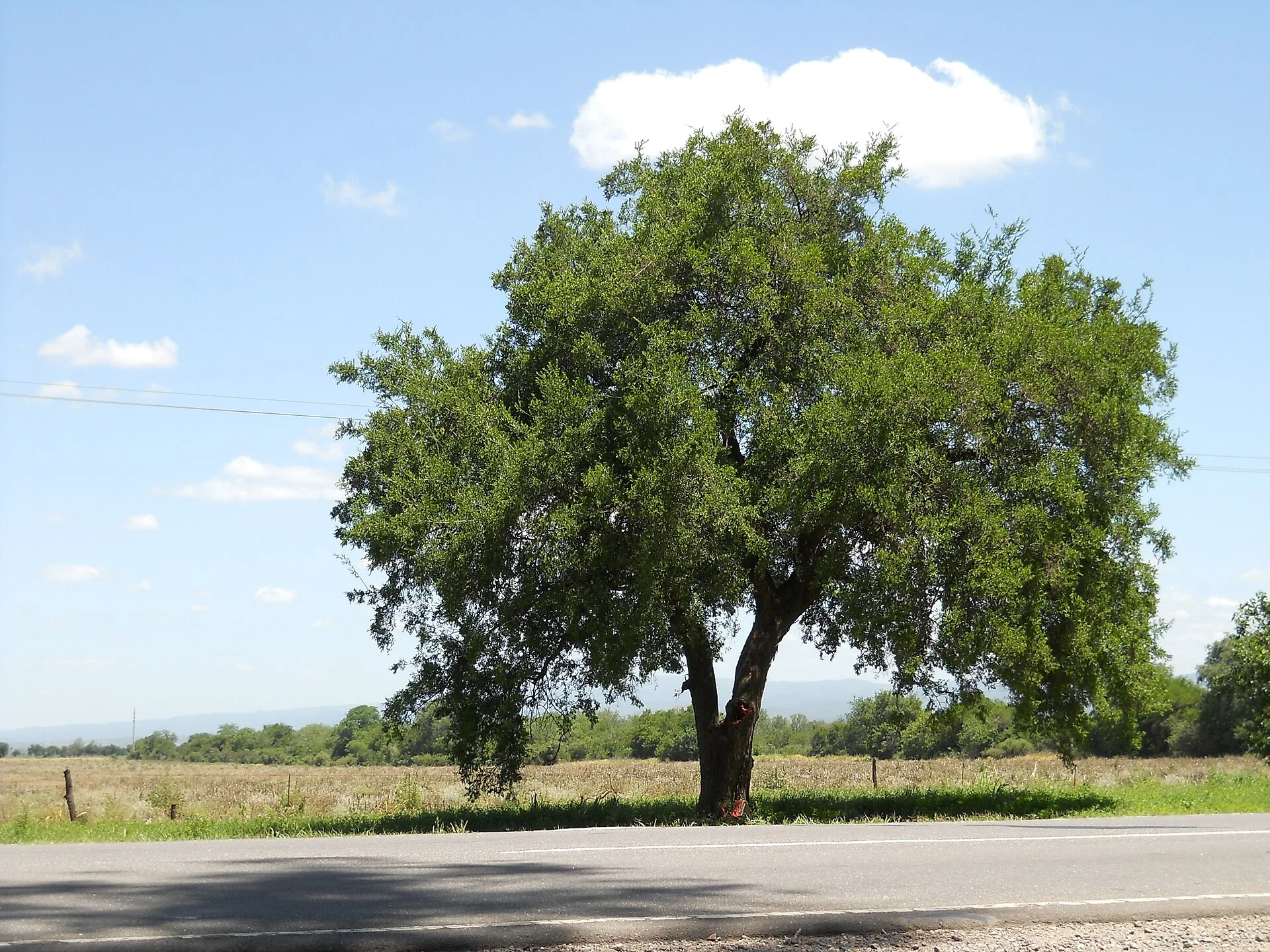
Celtis ehrenbergiana: Ecology, Characteristics, and Natural Habitat
Flourishing in the arid and semi-arid environments of the Americas, Celtis ehrenbergiana stands out as a resilient and ecologically vital species within the Cannabaceae family. This woody plant has adapted remarkably well to dry habitats, including deserts, brushlands, canyons, and coastal cliffs. Known for its dense, zigzagging branch structure, it often forms impenetrable thickets that provide crucial shelter for diverse wildlife.
Its extensive natural range stretches from the southern United States down through Mexico and deep into South America, reaching central Argentina. Historically, the plant has held significant cultural value in various regions, even lending its name to multiple towns and neighborhoods across South America, reflecting its prominence in the native landscape.
This woody plant typically develops as a moderately sized tree, reaching heights between 4 and 9 meters, though arid conditions can restrict its growth to a multi-stemmed shrub form. The bark features a light grayish-brown hue that gradually flakes and becomes dehiscent on mature specimens. Its dense, zigzagging branches are heavily armed with robust, straight paired thorns that emerge from the leaf axils, growing up to 15 mm in length.
The foliage consists of alternate, simple leaves borne on short petioles, exhibiting an ovate shape that measures approximately 35 mm long by 20 mm wide. These leaves display rounded bases and distinctively serrated margins towards the apex. In the reproductive phase, the plant produces diminutive, 2 mm yellow or green flowers that eventually mature into small, ovoid drupes. Measuring about 7 mm across, these fleshy fruits ripen into vibrant shades of orange, yellow, or red.
Applications
The timber harvested from this species is exceptionally dense, heavy, and hard, making it highly prized for specific woodworking applications. Although the typically small and tortuous nature of the trunk precludes its use for large-scale lumber, the wood remains a versatile material.
Crafting durable tool handles and small-scale cabinetry.
Producing high-quality firewood and premium charcoal.
Serving as an edible foraging resource through its sweet, juicy drupes.
Interesting facts
Due to its profound historical and cultural significance in the region, the species was officially declared the emblematic tree of the Autonomous City of Buenos Aires in 2015. Its prominence in the native landscape is further reflected in local geography, with numerous towns and neighborhoods across South America bearing names derived from its common moniker.
Ecologically, the dense canopy creates a protected microenvironment that supports an extraordinarily rich fauna. The tree provides crucial resources for various wildlife:
Nesting sites for native bird species.
A vital larval host plant for several butterfly varieties.