
Brazilian hackberry
Celtis brasiliensis
A deciduous tree or scrambling shrub in the Cannabaceae family, native to various countries in …
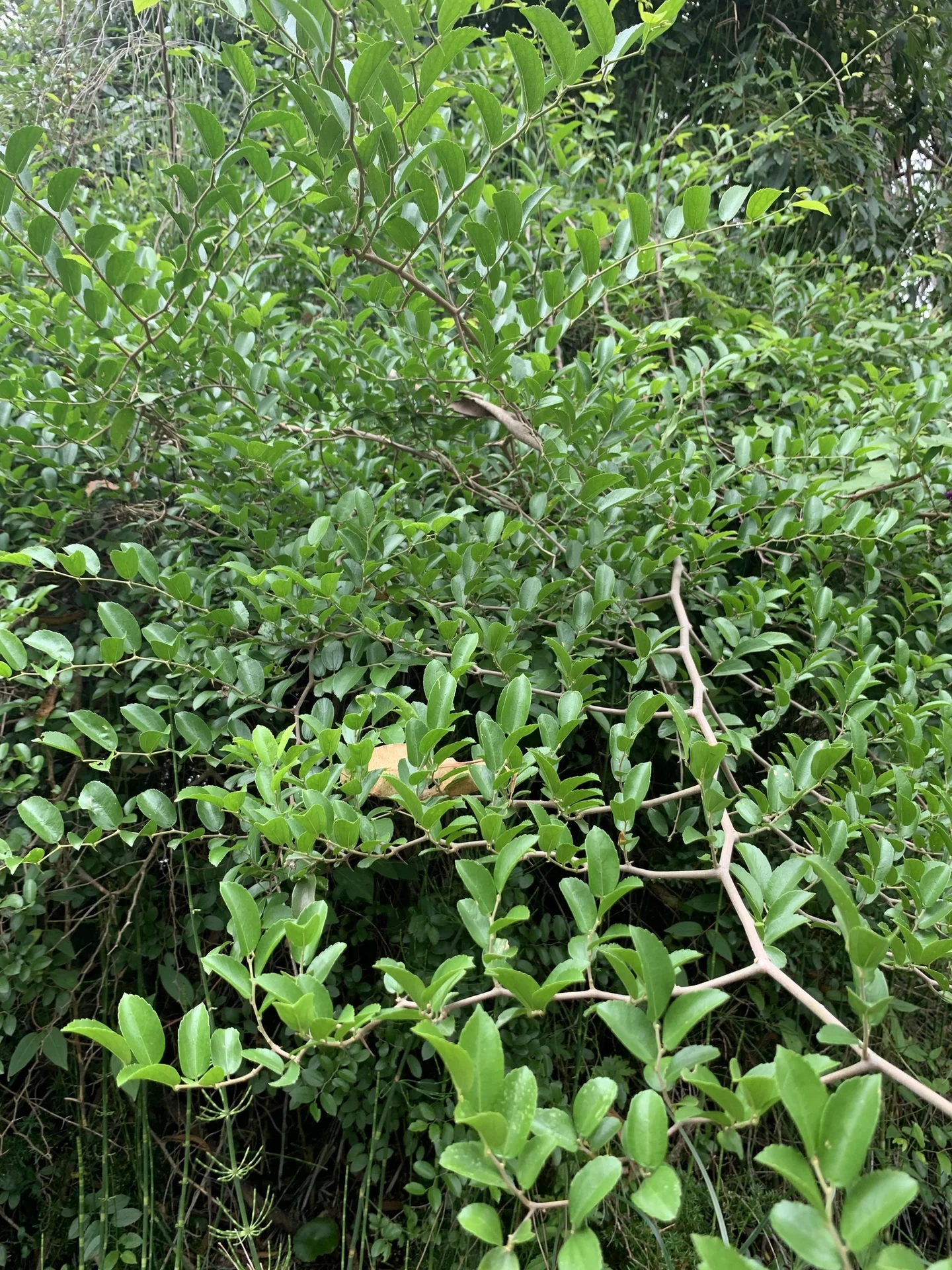
Classified within the Cannabaceae family, Celtis glycycarpa stands as a botanical taxon that frequently appears in historical taxonomic literature. Often discussed in connection with Celtis iguanaea, it shares the fundamental characteristics of the broader hackberry lineage. The species highlights the inherent complexities involved in the precise classification of woody plants across varied botanical collections.
Research into its taxonomic standing heavily relies on historical herbarium specimens and established botanical registries. It remains an intriguing subject of study for botanists dedicated to mapping the vast morphological diversity of the Celtis genus.
The vegetative portion of the plant is characterized by extremely flexible branches that, in most populations, are protected by short curved thorns, constituting an excellent defense mechanism. The leaves are predominantly ovate to elliptic, featuring prominent veins and the typical asymmetrical base that morphologically defines many representatives of its botanical family.
The discreet inflorescences give way, after pollination, to small fleshy drupes that turn yellowish or orange during the final stage of ripening. The juicy pulp of these small berries attracts numerous frugivorous birds and mammals, ensuring the wide dispersal of their seeds in nature.
Historical records and nomenclatural data clearly show that the delimitation of Celtis glycycarpa from other representatives of the genus was often fluid and open to debate. Taxonomists spent decades analyzing old herbarium specimens to define its exact systematic position.
Celtis brasiliensis
A deciduous tree or scrambling shrub in the Cannabaceae family, native to various countries in …

Celtis gomphophylla
A tall tree species in the Cannabaceae family, widespread across sub-Saharan Africa, Madagascar, and the …

Celtis madagascariensis
A small deciduous tree belonging to the Cannabaceae family, endemic to the forest margins of …

Celtis aurantiaca
A deciduous tree species native to Korea, recognized by its large leaves with caudate-acuminate tips …