
Brazilian hackberry
Celtis brasiliensis
A deciduous tree or scrambling shrub in the Cannabaceae family, native to various countries in …
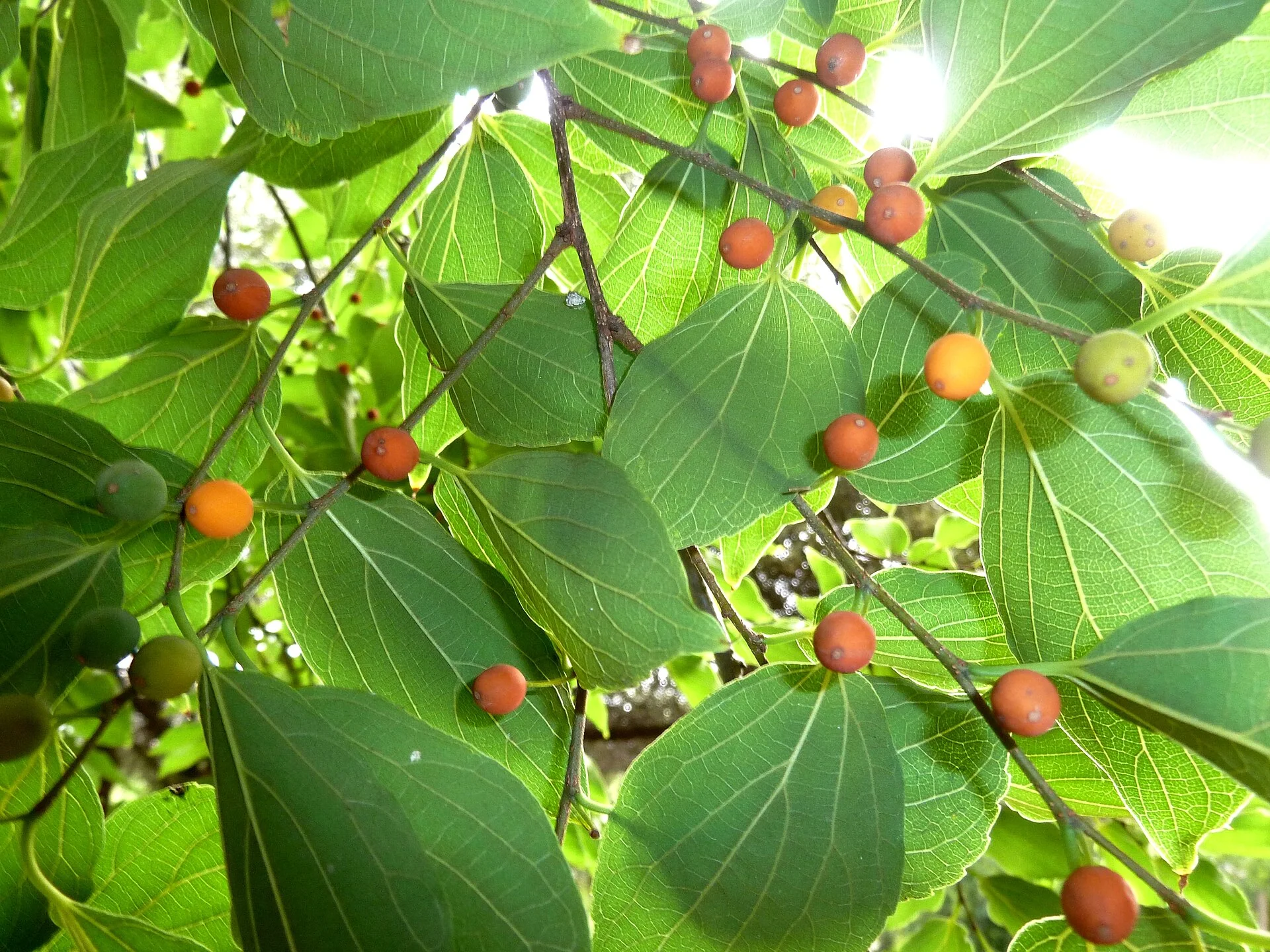
Historically documented as a distinct botanical entity, the name Celtis labilis now serves in modern taxonomy as a recognized synonym for the widely distributed Chinese hackberry, Celtis sinensis. Botanist Camillo Karl Schneider provided the original description for this specific name, identifying a prominent arboreal element of East Asian flora within the Cannabaceae family. This taxonomic realignment reflects a deeper understanding of the natural variations across the region.
As part of the broader Celtis sinensis complex, this deciduous tree integrates deeply into temperate and subtropical landscapes. The sheer number of historical synonyms, including varieties from Japan and various Chinese provinces, illustrates the plant's extensive geographic reach and morphological adaptability.
Trees associated with this taxonomic group develop into medium to large deciduous specimens featuring a broad and elegantly spreading canopy. The bark typically presents a smooth, grayish appearance that often matures to display the distinct corky ridges characteristic of the hackberry genus.
Its foliage consists of alternately arranged leaves that are generally ovate with serrated margins and an asymmetrical base. During the reproductive phase, the tree yields small flowers that eventually ripen into fleshy, globose drupes, transitioning from green to a dark orange or reddish hue upon full maturity.
While it thrives abundantly in the wild, this robust tree is frequently cultivated in spacious gardens and parks where its generous canopy provides excellent shade. Its architectural branching structure and responsive growth also make it a highly favored subject in the traditional art of East Asian bonsai.
Historically, the timber of these trees has been utilized by local communities for construction and practical woodworking tasks due to its reliable durability.
Celtis brasiliensis
A deciduous tree or scrambling shrub in the Cannabaceae family, native to various countries in …

Celtis gomphophylla
A tall tree species in the Cannabaceae family, widespread across sub-Saharan Africa, Madagascar, and the …

Celtis madagascariensis
A small deciduous tree belonging to the Cannabaceae family, endemic to the forest margins of …

Celtis aurantiaca
A deciduous tree species native to Korea, recognized by its large leaves with caudate-acuminate tips …