
Golden Pothos
Epipremnum aureum
Epipremnum aureum, commonly known as golden pothos, is a popular evergreen vine from French Polynesia. …
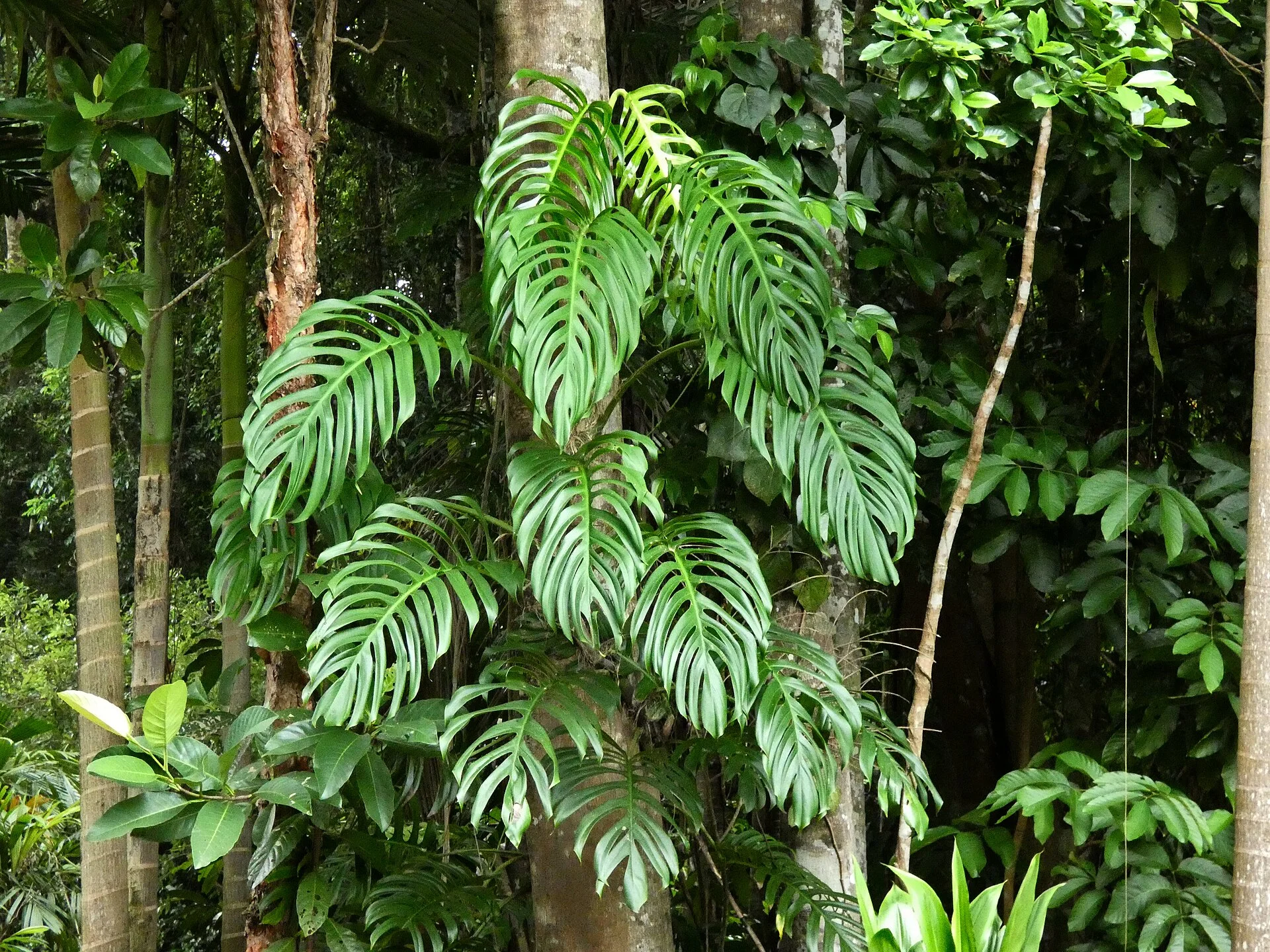
Scaling the giant rainforest trunks from Northern Australia to the Ryukyu Islands, this vigorous climber undergoes a dramatic transformation as it rises toward the canopy. Known to start its life as a modest terrestrial creeper, Epipremnum pinnatum eventually ascends to a completely epiphytic existence high above the forest floor.
This remarkable evergreen climber is celebrated for its striking foliage dimorphism, displaying completely different leaf shapes across its juvenile and mature stages. Whether cascading from a hanging basket or scaling a supportive moss pole, it brings a lush, ancient tropical atmosphere to indoor spaces.
The structural complexity of Epipremnum pinnatum is marked by a robust climbing habit and highly adaptable anatomical features. Its thick, vining stems reach up to 15 meters in length and range from 5 to 40 millimeters in diameter, transitioning from bright green to a papery, light brown epidermis as they age.
The species exhibits the following distinct morphological characteristics:
Typically flowers during the late spring to early summer, specifically from May to June in its native habitats.
Bright, indirect sunlight is optimal. Can tolerate lower light conditions, but high-intensity indirect light encourages larger leaf development and fenestration.
Allow the top couple of inches of soil to dry out completely between waterings. Water weekly or when the soil dries, ensuring excellent drainage to prevent root rot.
Prefers a warm range of 18°C to 30°C (64°F to 86°F). Protect the plant from cold drafts and temperatures below 10°C (50°F).
Thrives in moderate to high humidity (50% or above). Appreciates regular misting, a humidifier, or being placed on a pebble tray.
Contains calcium oxalate crystals, which are toxic to humans, cats, and dogs, causing mouth irritation, drooling, and difficulty swallowing if ingested.
Beyond its widespread popularity as an ornamental houseplant, Epipremnum pinnatum holds traditional and functional value in indigenous cultures. In Tonga, the long, durable stems are harvested and prepared to weave traditional baskets used in funeral ceremonies.
The plant also serves various ethnobotanical and practical applications:
The botanical identity of Epipremnum pinnatum has historically generated much confusion among plant enthusiasts and botanists alike. It is frequently mislabeled and sold as Monstera deliciosa due to the similar leaf splits, or confused with its close relative Epipremnum aureum.
Intriguing cultural and botanical aspects of the species include:
Several distinct cultivars of Epipremnum pinnatum are highly sought after by collectors for their unique foliage variations. The most notable varieties include:
Taxon Synonyms: Rhaphidophora caudata, Epipremnum crassifolium, Epipremnum formosanum, Rhaphidophora cunninghamii, Rhaphidophora neocaledonica, Monstera pinnata, Scindapsus bipinnatifidus, Epipremnum elegans, Rhaphidophora pinnata, Rhaphidophora laciniata, Rhaphidophora pinnatifida, Rhaphidophora rosenburghii, Rhaphidophora wallichii, Monstera caudata, Pothos pinnatus, Rhaphidophora dilacerata, Monstera dilacerata, Rhaphidophora lovellae, Rhaphidophora merrillii, Epipremnum robinsonii, Epipremnum mirabile, Epipremnum angustilobum, Rhaphidophora vitiensis
Epipremnum aureum
Epipremnum aureum, commonly known as golden pothos, is a popular evergreen vine from French Polynesia. …

Epipremnum giganteum
A giant climbing epiphyte known for its massive leathery leaves and prominent venation, native to …

Epipremnum dahlii
Epipremnum dahlii is a rare tropical climbing liana in the Araceae family, native to the …

Epipremnum falcifolium
A large evergreen climbing vine native to Borneo, distinguished by its sickle-shaped (falcate) leaves and …