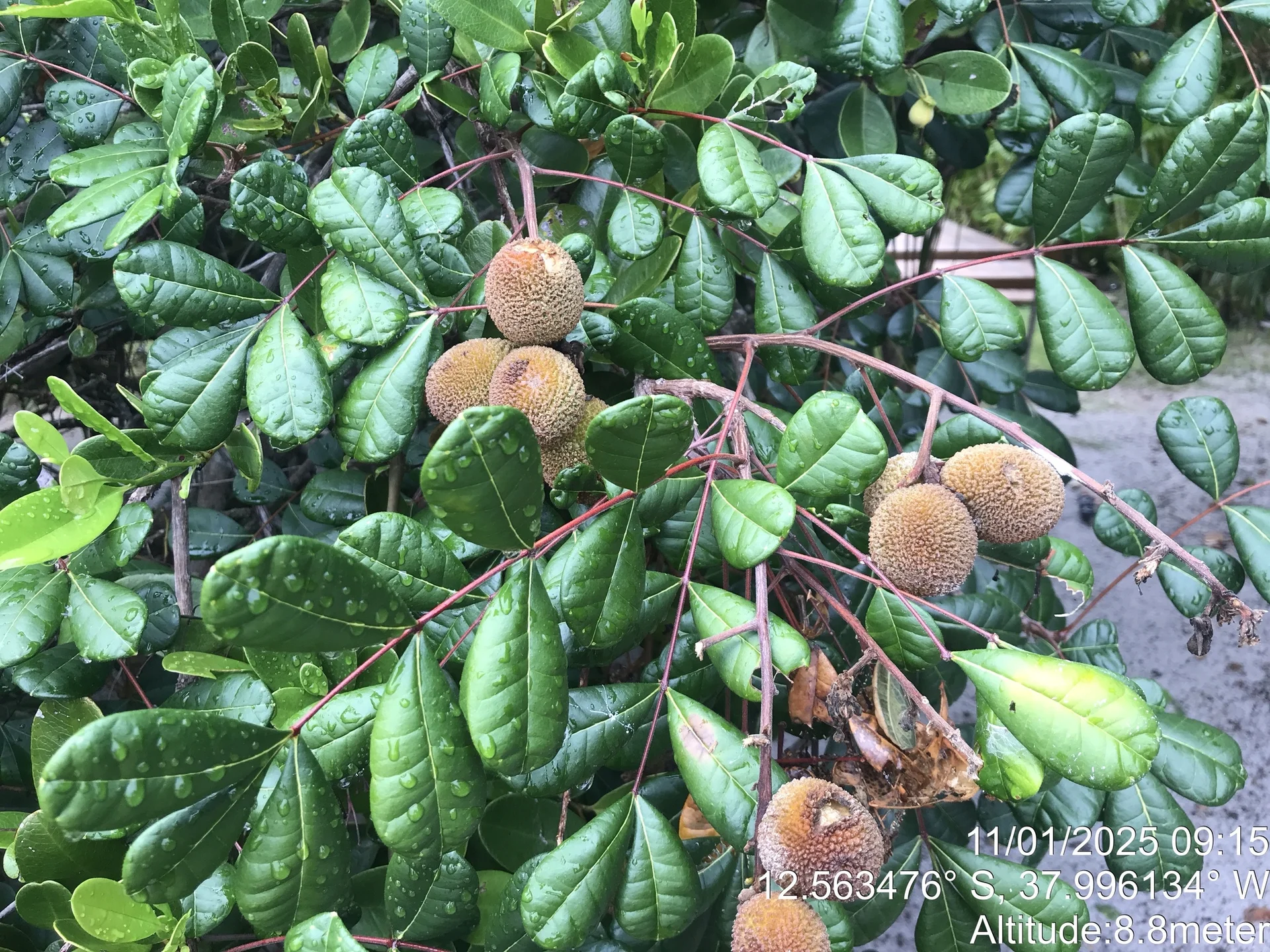
Bahia Homalolepis (Homalolepis bahiensis)

Silhouette: T. Michael Keesey / License

Homalolepis bahiensis: Shrub Species of Northeast Brazil

Seasonal forests and coastal shrublands of eastern Brazil harbor many endemic woody species. Within these diverse habitats, Homalolepis bahiensis grows as a resilient woody plant. It occurs across several Brazilian states, showing a strong adaptation to dry and sandy environments.

Taxonomists originally classified this plant under the genus Simarouba in the nineteenth century. Recent phylogenetic assessments reinstated the genus Homalolepis to better reflect the evolutionary history of these Neotropical taxa.

Taxonomy

  • ∟ царство Plantae
  • ∟ division Tracheophytes
  • ∟ subdivision Spermatophytes (Seed plants)
  • ∟ Angiosperms
  • ∟ mesangiosperms
  • ∟ eudicots
  • ∟ Superrosids
  • ∟ rosids
  • ∟ malvids
  • ∟ order Sapindales
  • ∟ family Simaroubaceae (Quassia family)
  • ∟ genus Homalolepis (Homalolepis Tree)
  • ∟ species Homalolepis bahiensis (Bahia Homalolepis)

Morphology

Living in seasonally dry biomes influences the structure of this species. Its primary botanical characteristics include:

  • Habit: Develops as a branched shrub or small tree.
  • Leaves: Alternate pinnate leaves consisting of multiple oblong leaflets.
  • Inflorescence: Produces branching terminal panicles that hold small flowers.
  • Drupes: Small, fleshy fruits develop after successful pollination.

Applications

Ecological roles in native biomes are the main applications of this wild species:

  • Habitat Restoration: Useful in revegetating degraded sandy soils in northeastern Brazil.
  • Biodiversity Support: Offers forage for local pollinators during the blooming period.

Interesting facts

Historical collection and naming details add to our understanding of the plant:

  • Botanical Authority: The species was initially described by the Swiss-French botanist Stefano Moricand.
  • Geographical Epithet: The specific epithet bahiensis refers to the state of Bahia, where early specimens were collected.

Geography of distribution

  • Alagoas
  • Bahia
  • CearΓ‘
  • EspΓ­rito Santo
  • MaranhΓ£o
  • Pernambuco
  • PiauΓ­

Sources

  • Plants of the World Online (POWO)
  • World Flora Online (WFO)
  • Global Biodiversity Information Facility (GBIF)

Technical Information

External Databases: GBIF, POWO, Tropicos