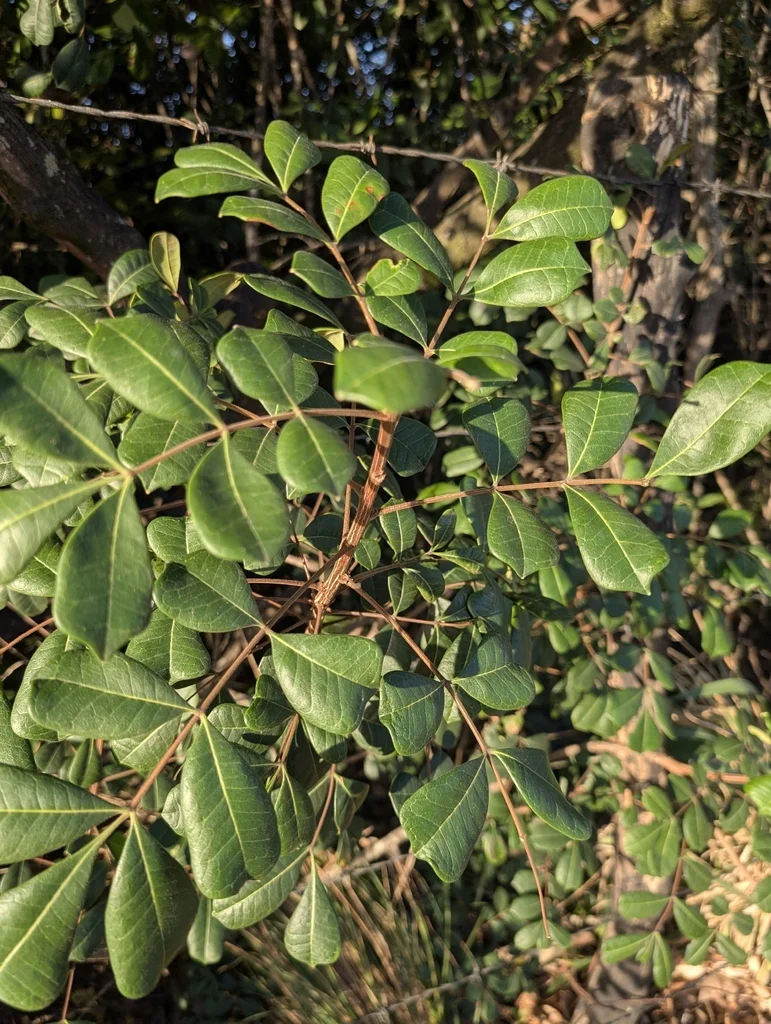
Cavalcante's homalolepis
An endangered woody plant species endemic to the sandy campinarana forests of Pará, Brazil.
Spanning a vast native range from Costa Rica to tropical South America, the genus Homalolepis consists of diverse neotropical flowering plants. Belonging to the family Simaroubaceae, this genus was originally described in 1848 and includes numerous species of shrubs and small trees. It forms an integral part of the understory and mid-canopy in various South American ecosystems.
Botanical specimens of Homalolepis generally present as woody shrubs or modestly sized trees. The foliage is typically composed of alternate, pinnately compound leaves that are characteristic of the broader family. Their floral structures emerge in cymose or paniculate inflorescences, bearing small flowers that facilitate specialized pollination in dense forest environments.
Current botanical literature primarily focuses on the ecological and taxonomic significance of the genus rather than extensive commercial applications. However, local populations in their native ranges sometimes utilize the woody material of certain widespread species for basic construction or artisanal purposes.
The genus underwent a comprehensive taxonomic revision in 2018, which led to the reclassification of several neotropical species and clarified its evolutionary relationships. Many individual species, such as Homalolepis bahiensis and Homalolepis tocantina, are highly endemic and named directly after the specific Brazilian regions where they were discovered.
An endangered woody plant species endemic to the sandy campinarana forests of Pará, Brazil.
Homalolepis planaltina is a resilient wild shrub endemic to the high-altitude Cerrado savannas of central Brazil, characterized by its compound …
An endemic Brazilian shrub or small tree native to Minas Gerais and São Paulo, adapted to the seasonal climate of …
Homalolepis suaveolens is a wild woody shrub or small tree native to Brazil's Cerrado and Atlantic Forest biomes. It is …
A Neotropical tree or shrub renowned in traditional medicine for its intensely bitter seeds used to treat fevers and snakebites.
A robust shrub or small tree native to Brazil and Colombia, commonly known as calunga and used in folk medicine.