The crisp, bitter bite of a cold beer owes its existence to the delicate, cone-like flowers of a vigorous climbing bine. Humulus lupulus, commonly known as the common hop, has intertwined its history with human agriculture for over a millennium. Originating in the temperate regions of the Northern Hemisphere, this herbaceous perennial rapidly scales supports, reaching heights of up to 10 meters in a single growing season.
While primarily celebrated for its stabilizing and flavoring properties in brewing, the plant also boasts a diverse ethnobotanical resume. It has been utilized in traditional medicine, culinary dishes, and even textile production. The resilient nature of the common hop, coupled with its remarkable growth rate, continues to make it an object of both agricultural and botanical fascination.
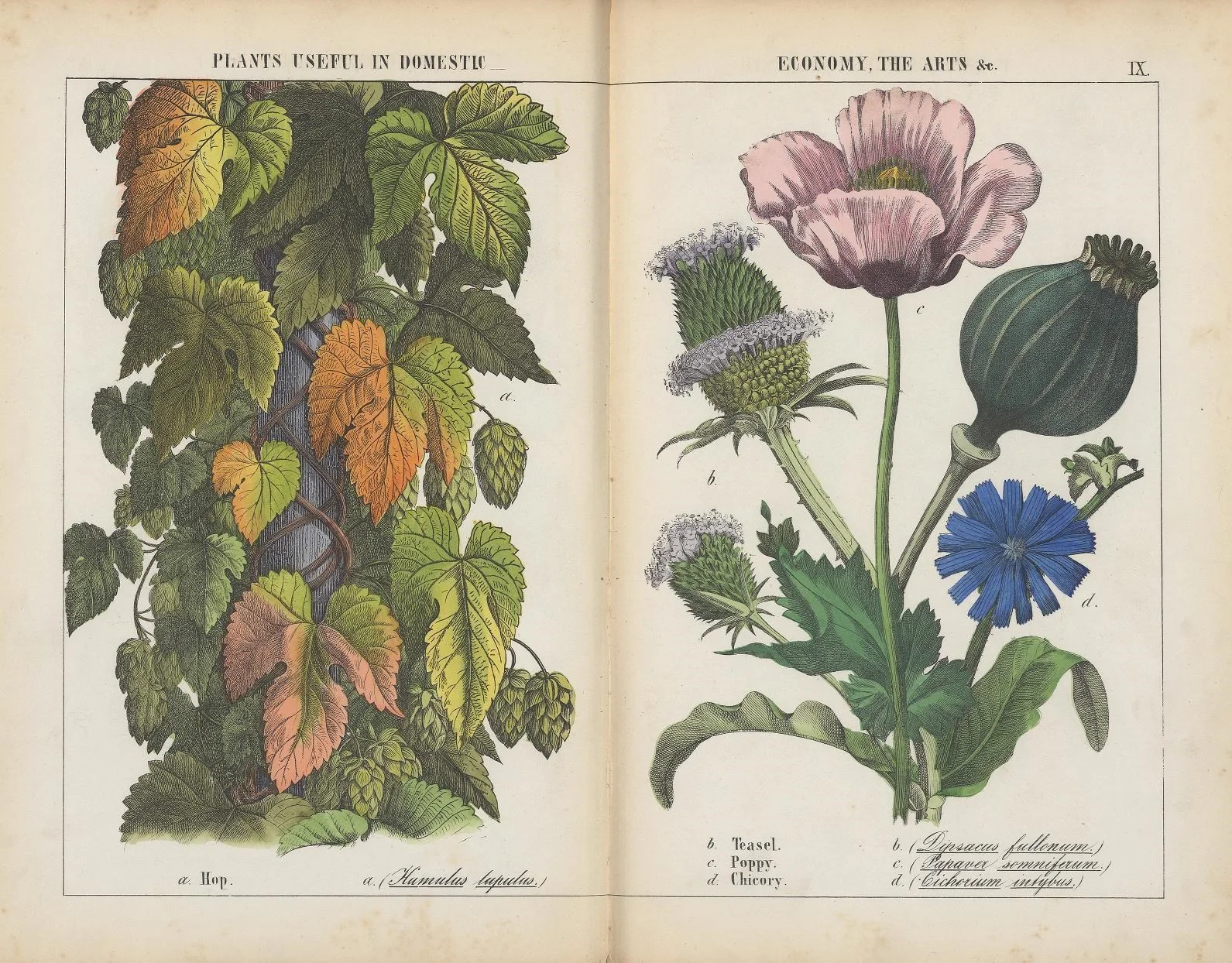
Botanical illustration
Фото: BioDivLibrary / Лицензия: Public Domain Mark
Morphology
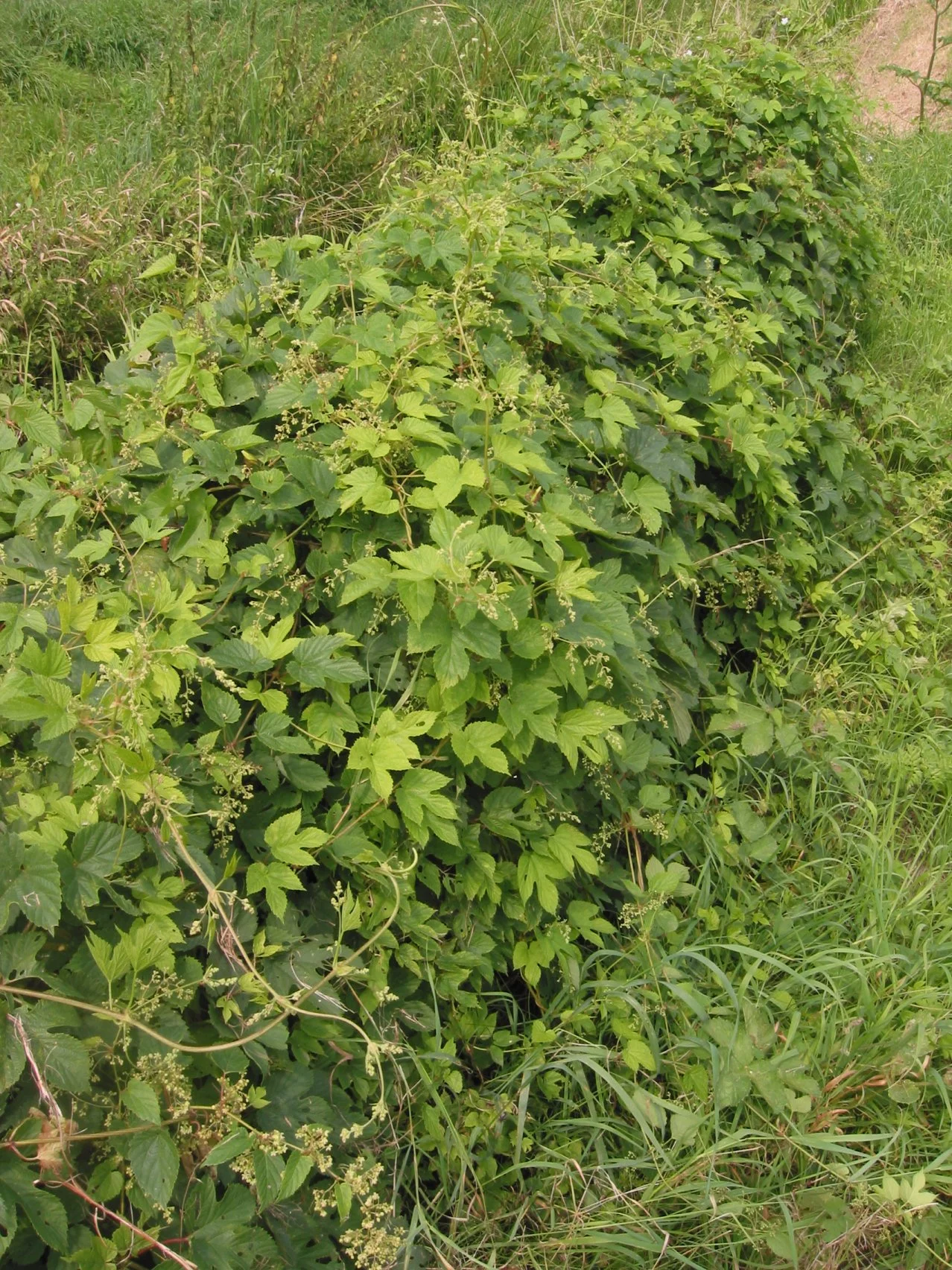
The vegetative structure of Humulus lupulus is characterized by a vigorous, right-handed twining stem that anchors itself using stout, downward-pointing trichomes. The stems, which are somewhat hollow and hexagonal, emerge annually from a robust, perennial rhizome. The foliage exhibits an opposite arrangement, with large, palmate leaves typically divided into three to five deeply lobed segments.
The leaf margins are coarsely serrated, and the surfaces feel distinctively rough to the touch. As a dioecious species, Humulus lupulus produces separate male and female plants. The male inflorescences appear as loose, branching panicles bearing small, greenish-yellow flowers.
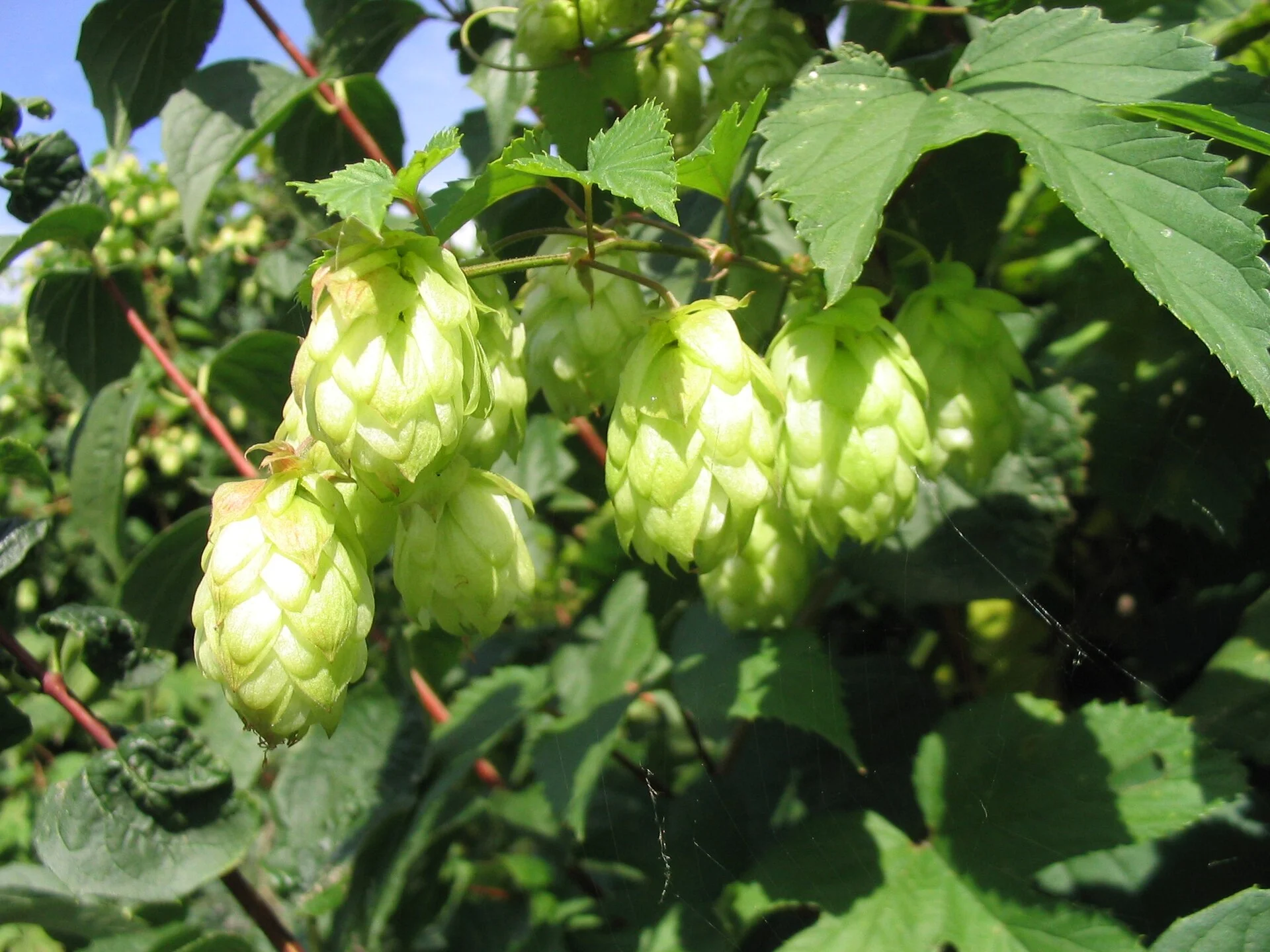
The female flowers, which are of paramount economic importance, develop into cone-like structures known as strobili. These cones are composed of overlapping bracts and bracteoles, which harbor specialized lupulin glands. It is within these glands that the plant synthesizes the resinous humulone and lupulone compounds, alongside a complex array of essential oils.
The fruit itself is a small, hard achene. It remains tightly enclosed within the glandular bracts upon reaching maturity.
Flowering season
Flowering generally occurs from mid to late summer, typically between July and August in the Northern Hemisphere.
Jan
Feb
Mar
Apr
May
Jun
Jul
Aug
Sep
Oct
Name
Dec
Applications
The diverse applications of Humulus lupulus extend far beyond its primary role in the beverage industry. From culinary delicacies to traditional medicinal remedies, this versatile plant offers numerous economic and practical benefits.
Brewing Industry: The unfertilized female cones are a cornerstone of modern brewing, imparting bitterness and essential aromas. They also possess mild antibiotic properties that favor brewer's yeast over spoilage bacteria.
Culinary Uses: In several European regions, the tender young shoots are harvested in early spring as 'hop asparagus'. These shoots are prized as a seasonal delicacy and can be sautéed, steamed, or pickled.
Traditional Medicine: Historically, the lupulin glands have been employed for their mild sedative and hypnotic effects. Hop-stuffed pillows were used to alleviate insomnia, and infusions were administered to soothe anxiety.
Other Uses: The fibrous stems have occasionally been processed to produce cordage and coarse textiles. Additionally, the leaves have been utilized as fodder in certain agricultural practices.
Interesting facts
The biological traits and cultural history of Humulus lupulus are filled with remarkable phenomena. Its unique growth habits and stringent cultivation requirements make it a fascinating subject for both botanists and historians.
Rapid Growth: During the peak of its growing season, the bines can grow at an astonishing rate of up to 10 to 20 centimeters per day.
Gender Segregation: In commercial hop yards, male plants are strictly eradicated. If female flowers are pollinated and produce seeds, the resulting cones can introduce undesirable off-flavors into beer.
Phytoremediation: The leaves and stems of the plant have demonstrated an ability to absorb heavy metal ions from the soil. Specifically, a single gram of hop leaf biomass can absorb significant amounts of lead.
Historical Law: The Bavarian purity law of 1516 famously decreed that beer could only be brewed using water, barley, and hops. This law cemented the plant's indispensable status in brewing culture.
Varieties and cultivars
Centuries of selective breeding have resulted in a vast array of Humulus lupulus cultivars, each tailored for specific climatic conditions and brewing requirements. These varieties are generally categorized based on their aromatic profiles and bittering potential.
Noble Hops: Traditional European varieties such as 'Hallertauer Mittelfrüher', 'Tettnanger', 'Spalter', and 'Saaz'. They are renowned for their delicate, spicy, and floral aromatic profiles with low bitterness.
High Alpha Hops: Cultivars bred specifically for their high bittering potential, including 'Magnum', 'Herkules', and 'Target'. These are used primarily early in the brewing process to maximize bitterness extraction.
Aroma and Dual-Purpose Hops: Popular modern varieties like 'Cascade', 'Citra', 'Centennial', and 'Mosaic'. These offer intense fruity, citrusy, or piney aromas alongside substantial bittering qualities.
Unlock high-yield Humulus lupulus propagation techniques. Learn step-by-step cold stratification for common hop seeds, seedling development, and vegetative rhizome division.
Discover what Humulus lupulus extract is, how common hop flower extract promotes restorative sleep, and its transformative benefits for skin and hair health.
Master Humulus lupulus growing conditions, soil pH, and hardiness zones. Explore top terroirs from Yakima Valley American hops to growing hops in India.