
Common Hop
Humulus lupulus
Humulus lupulus, commonly known as the common hop, is a perennial climbing plant famous for …
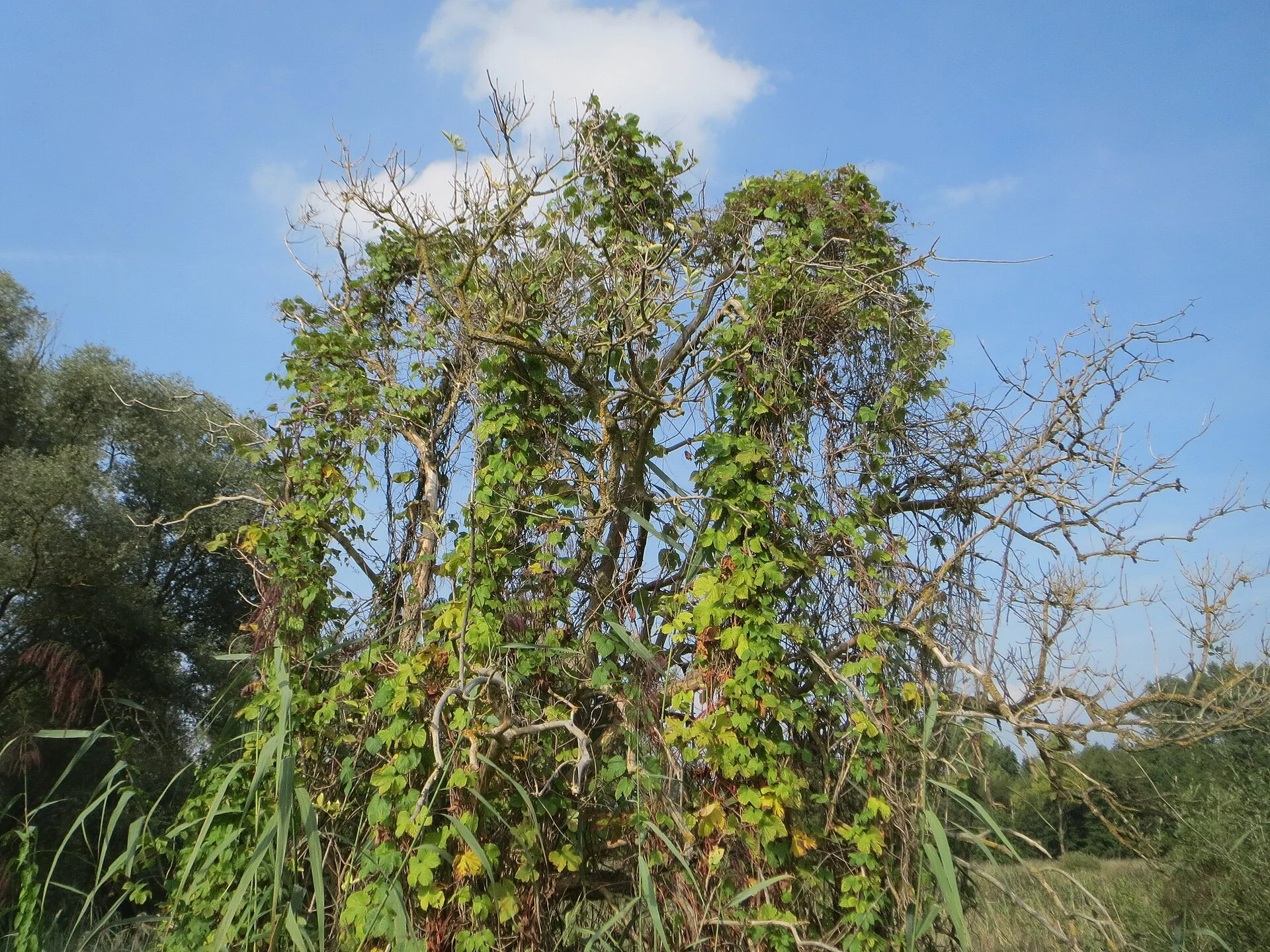
Clinging to the vegetation of southwestern China's mountainous landscapes, a vigorous bine weaves its way toward the canopy, anchored by rough, downward-pointing hairs. The Humulus yunnanensis is a captivating member of the Cannabaceae family, representing the rich botanical diversity found within the Yunnan province. Although it belongs to the same genus as the globally cultivated brewing hops, this particular plant remains a wild and localized resident of East Asian ecosystems.
Known as the Yunnan hop, this herbaceous perennial has adapted to thrive in temperate to subtropical mountainous regions. It produces long, twining stems and characteristic lobed foliage that creates dense vegetative screens in its natural habitat. Taxonomists have frequently debated its exact classification, with many modern botanical databases categorizing it as a regional synonym or variety of the common hop, highlighting the complex evolutionary history of these climbing plants.
The structural adaptations of Humulus yunnanensis are perfectly suited for its climbing lifestyle. The plant develops elongated, twining bines that lack tendrils; instead, they rely on stout, retrorse (downward-pointing) trichomes along the stem to grip surrounding structures. Its foliage is arranged oppositely along the stems, featuring leaves that range from ovate to broadly cordate at the base.
The leaf blades are typically deeply palmately lobed, most commonly displaying three to five distinct lobes with conspicuously serrated margins. The upper leaf surfaces bear stiff hairs that give them a noticeably rough texture, while the undersides often feature scattered resinous glands. As a dioecious species, it produces distinct male and female reproductive structures on separate individual plants.
Male inflorescences appear as loose, highly branched panicles bearing numerous small, greenish-yellow flowers. In contrast, the female flowers are arranged in compact, cone-like spikes known as strobili. These female structures consist of overlapping bracts that protect the developing flowers and eventually house the small, achene-like fruits following wind pollination.
The botanical and historical background of this climbing plant reveals several captivating details:
Humulus lupulus
Humulus lupulus, commonly known as the common hop, is a perennial climbing plant famous for …

Humulus japonicus
Humulus japonicus is an annual climbing vine native to East Asia. Known for its rapid …

Picrasma
A genus of deciduous trees and shrubs known for their extremely bitter bark and medicinal …

Araucaria humboldtensis
A small, critically endangered coniferous tree native strictly to the high-altitude mountain peaks of southern …