
Small-leaved Kaim
Mitragyna parvifolia
A deciduous tree native to South Asia, revered for its medicinal properties, fine timber, and …
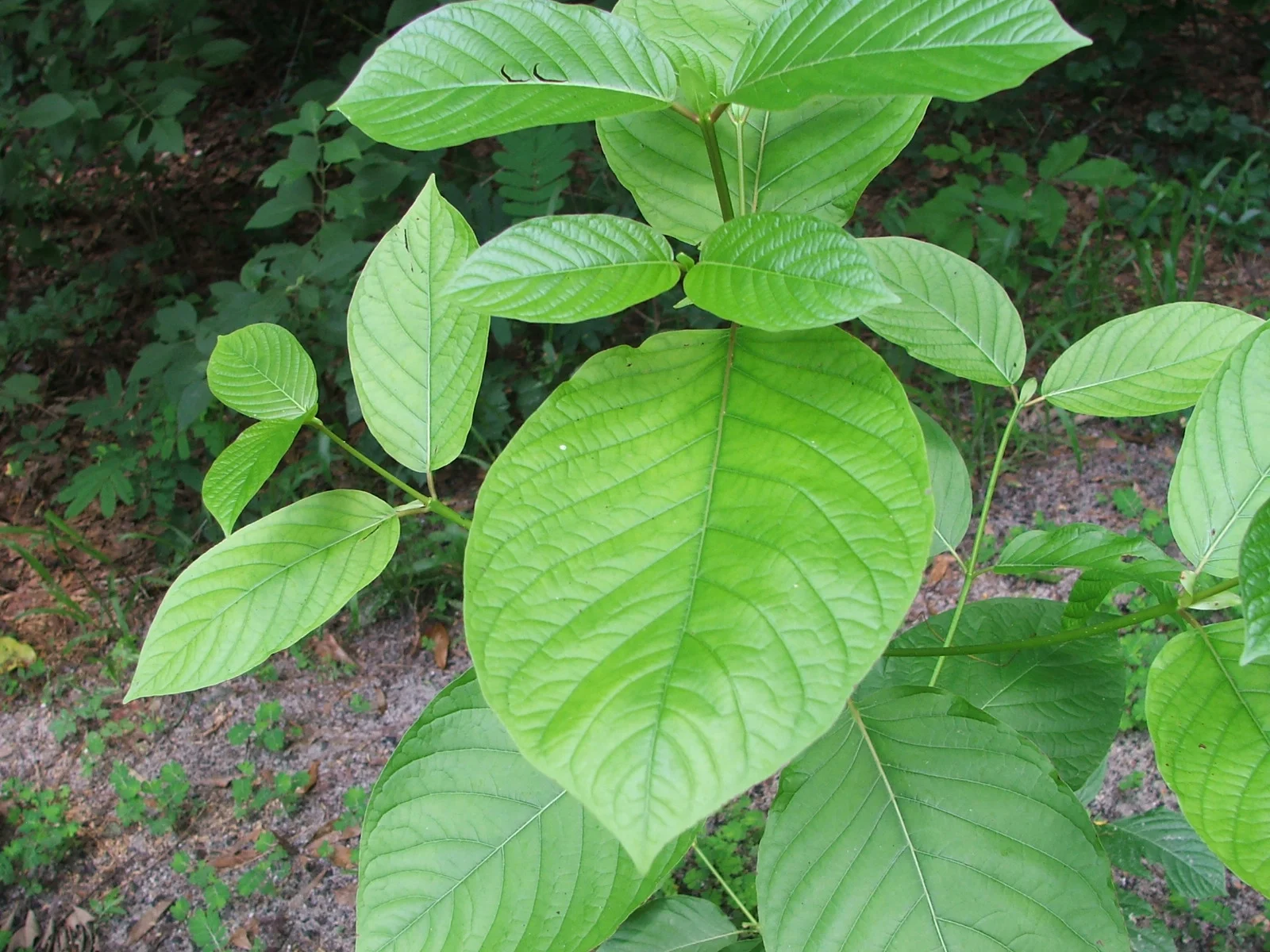
Deep within the humid, tropical rainforests of Southeast Asia, a towering evergreen tree has intertwined itself with local culture and traditional medicine for centuries. Kratom (Mitragyna speciosa) commands attention not only for its impressive stature, reaching up to 25 meters, but also for its complex phytochemical profile. This unique botanical heritage has sparked both global interest and intense regulatory controversy.
Belonging to the Rubiaceae family, which also includes coffee and gardenias, this species thrives in the swampy, low-lying regions of Thailand, Indonesia, and Malaysia. The large, glossy leaves of M. speciosa have been chewed by agricultural workers for generations to endure grueling labor under the scorching sun. This enduring practice has embedded the plant deeply into the social fabric of the region.
Mitragyna speciosa is a medium to large evergreen tree that typically reaches heights of 15 to 25 meters, with exceptional specimens growing even taller. The trunk is generally straight, featuring smooth, greyish-brown bark, and can develop a diameter of up to 90 centimeters. Its branching structure provides a dense, hemispherical crown covered in vibrant, lush foliage.
The leaves are broad, ovate-acuminate, and possess a striking dark green, glossy appearance on the upper surface. They are arranged in opposite pairs, growing up to 20 centimeters in length and 12 centimeters in width. The underside of the leaf is characterized by 12 to 17 prominent, raised veins that can vary in color from pale green to white or red.
The inflorescences form tight, spherical clusters at the ends of the branches, containing up to 80 small, bisexual flowers. These blossoms transition from pale yellow to deeper golden hues as they mature over the season. The resulting fruits are small, rounded capsules containing numerous tiny, winged seeds adapted for wind and water dispersal.
In its native range across Southeast Asia, the leaves of Mitragyna speciosa have been traditionally chewed or brewed into teas by laborers seeking increased stamina and relief from fatigue. It has also held a prominent place in local folk medicine. Communities have historically utilized the plant to soothe digestive ailments, alleviate pain, and manage opioid withdrawal symptoms.
Beyond traditional contexts, kratom has gained international recognition as a botanical supplement, primarily consumed in powdered form or as an extract. The presence of alkaloids, notably mitragynine and 7-hydroxymitragynine, interacts with the body's receptors to produce dose-dependent effects. These effects can range from mildly stimulating in lower doses to highly sedative and analgesic in higher quantities.
Despite its widespread use, the global regulatory status of M. speciosa remains highly complex and frequently debated. While some regions are moving towards regulated medical production, numerous countries have restricted or completely banned its sale. Authorities frequently cite potential adverse effects, including dependency, nausea, and dangerous interactions with other substances.
The cultural significance of this tree extends far beyond its physiological effects.
Mitragyna parvifolia
A deciduous tree native to South Asia, revered for its medicinal properties, fine timber, and …

Mitragyna stipulosa
A tropical forest and swamp-dwelling tree of Africa, notable for its alkaloid content and ecological …

Mitragyna tubulosa
A tall tree species native to the Western Ghats of India and Sri Lanka, known …

Mitragyna rotundifolia
An Asian tree species recognized by its distinctively rounded foliage and robust bark.