Portulaca oleracea (Common Purslane): Morphology, History, and Applications
Sprawling across sun-baked soils and effortlessly colonizing the cracks in urban pavements, Portulaca oleracea demonstrates remarkable resilience in the face of harsh environmental conditions. Widely recognized as common purslane, this cosmopolitan herbaceous plant thrives in warm climates and nutrient-poor environments. It boasts a rich history of interaction with various cultures, traversing continents from the Old World to the Americas long before modern agricultural globalization.
Historically, archaeobotanists have uncovered its seeds in prehistoric sites across Greece, indicating an ancient presence in the Mediterranean basin. Pliny the Elder even recommended wearing the plant as a protective amulet to ward off evil. Today, people frequently encounter Portulaca oleracea both as a tenacious agricultural weed and a highly valued botanical resource.
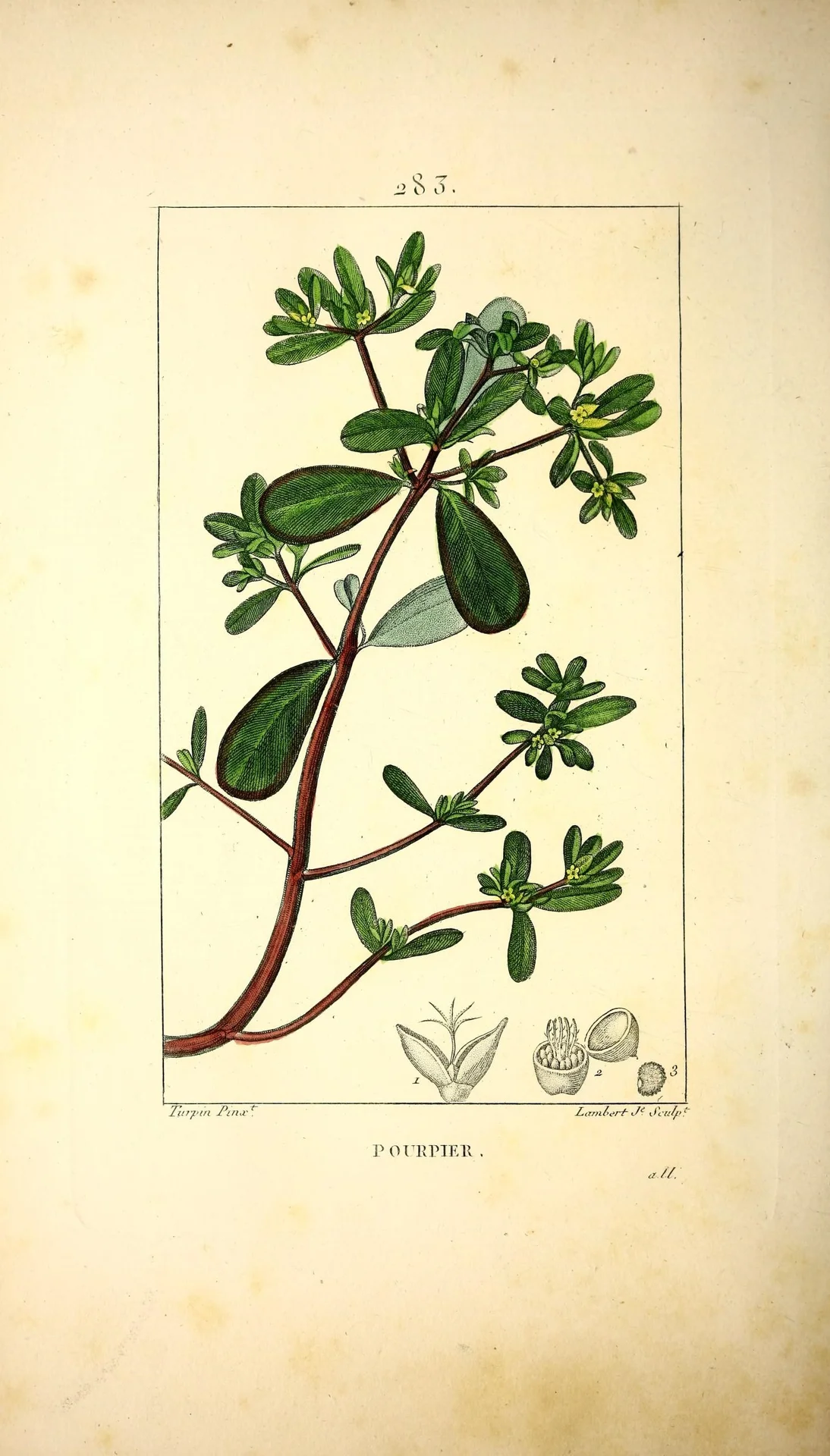
Botanical illustration
Фото: BioDivLibrary / Лицензия: Public Domain Mark
Morphology
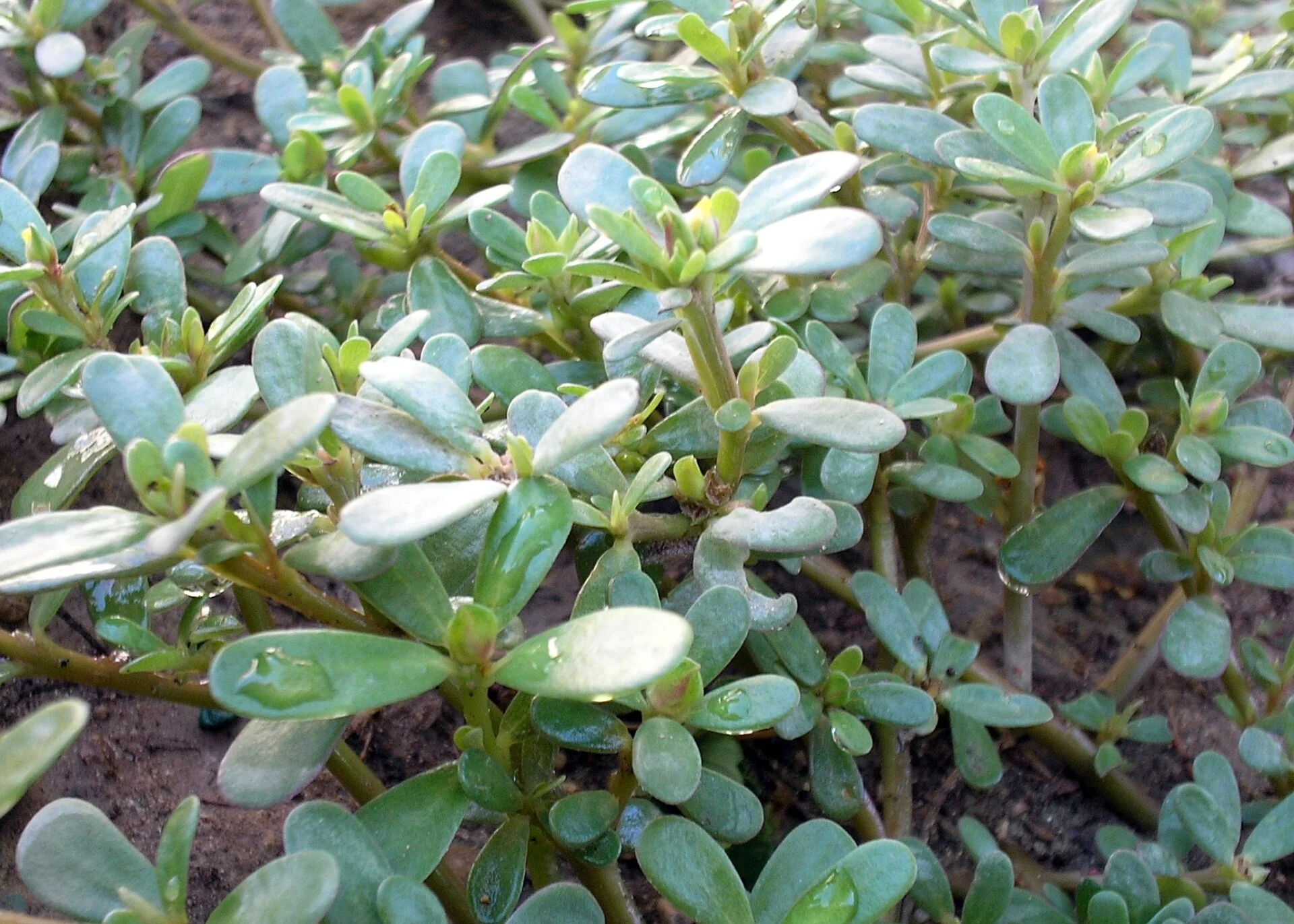
The physical structure of Portulaca oleracea perfectly adapts to survive in arid and challenging habitats. Typically exhibiting a prostrate growth habit, this highly branched annual herb forms dense mats that can reach up to 40 centimeters in length. Distinctively succulent tissues characterize the entire vegetative body of the plant.
Key morphological features include:
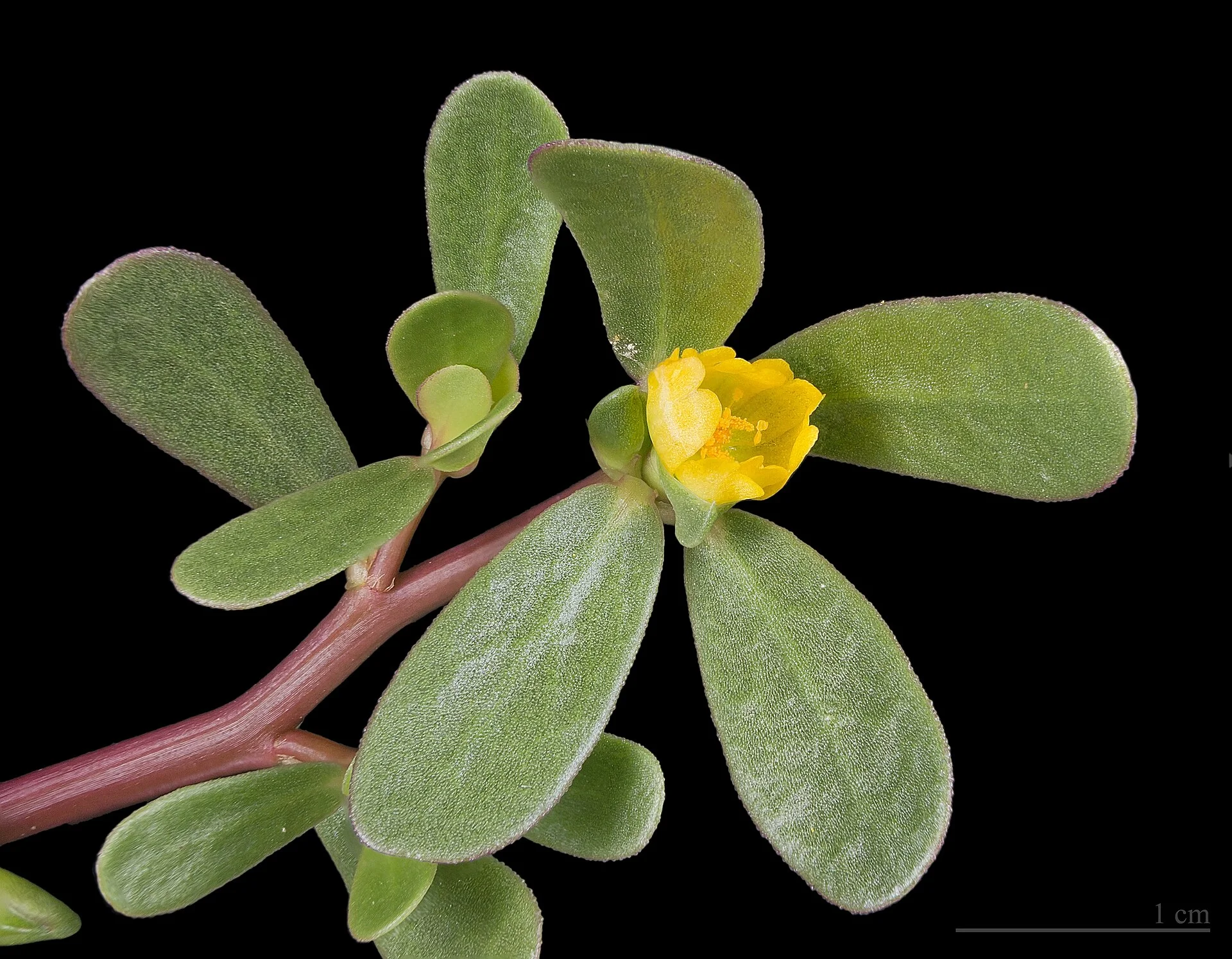
Stems: The smooth, fleshy stems are predominantly reddish or purplish, lacking any significant pubescence, and branch extensively from the base.
Leaves: Its succulent, spatulate leaves are alternate or nearly opposite, crowding near the stem joints and ends.
Flowers: The solitary, sessile flowers are bright yellow, measuring up to 6 millimeters across, and typically open for only a few hours on sunny mornings.
Fruit and Seeds: After pollination, the plant produces an ovate capsule that bursts open upon maturity, releasing numerous tiny, dark seeds.
Remarkably, this species possesses a strong taproot accompanied by fibrous secondary roots. This robust root system allows it to tolerate compacted soils and prolonged drought with exceptional efficiency.
Applications
Throughout human history, Portulaca oleracea has served communities globally with its nutritional and therapeutic properties. Numerous regions, including Europe, the Middle East, Asia, and Mexico, consume it regularly as a leafy vegetable. The slightly tart and salty flavor profile makes it a versatile ingredient in various traditional cuisines.
Primary applications include:
Culinary Uses: The stems, leaves, and flower buds are completely edible. Cooks frequently add them fresh to salads, prepare them like spinach, or incorporate them into soups and stews due to their mucilaginous quality.
Nutritional Value: Raw purslane is incredibly nutrient-dense, serving as one of the richest plant-based sources of alpha-linolenic acid, an essential omega-3 fatty acid. It also provides abundant Vitamin A, Vitamin C, and magnesium.
Traditional Medicine: In traditional Chinese medicine, practitioners know it as Ma Chi Xian and use it to clear heat, neutralize toxins, and treat respiratory ailments. Greek folk medicine has historically employed it for digestive issues and urinary tract inflammations.
Agricultural Phytoremediation: The plant exhibits high salt tolerance and can remove significant amounts of chloride and sodium from saline soils. This capability makes it a valuable companion plant for salt-sensitive crops like tomatoes.
Interesting facts
The biological adaptations and cultural significance of Portulaca oleracea encompass several fascinating phenomena. Its unique survival strategies highlight its evolutionary success as a globally distributed species.
Dual Photosynthesis: It is one of the rare plants capable of utilizing both C4 and CAM photosynthetic pathways. During severe drought, it can switch from C4 to CAM to conserve water.
Diurnal Acidity: The tart flavor of the leaves is most pronounced in the early morning. This occurs due to the accumulation of malic acid overnight through the CAM pathway, which the plant then metabolizes during the day.
Pre-Columbian Arrival: Evidence from Crawford Lake in Ontario suggests that purslane seeds were present in North America between 1430 and 1489. This indicates the plant reached the continent before the arrival of Christopher Columbus.
Infallible Vitality: The plant can reproduce vegetatively with extreme ease. If sufficient moisture is present, uprooted stems left on the ground can quickly develop new roots and continue growing.