
Tall Tree of Heaven
Ailanthus excelsa
A fast-growing, large deciduous tree native to India and Sri Lanka, highly valued for its …
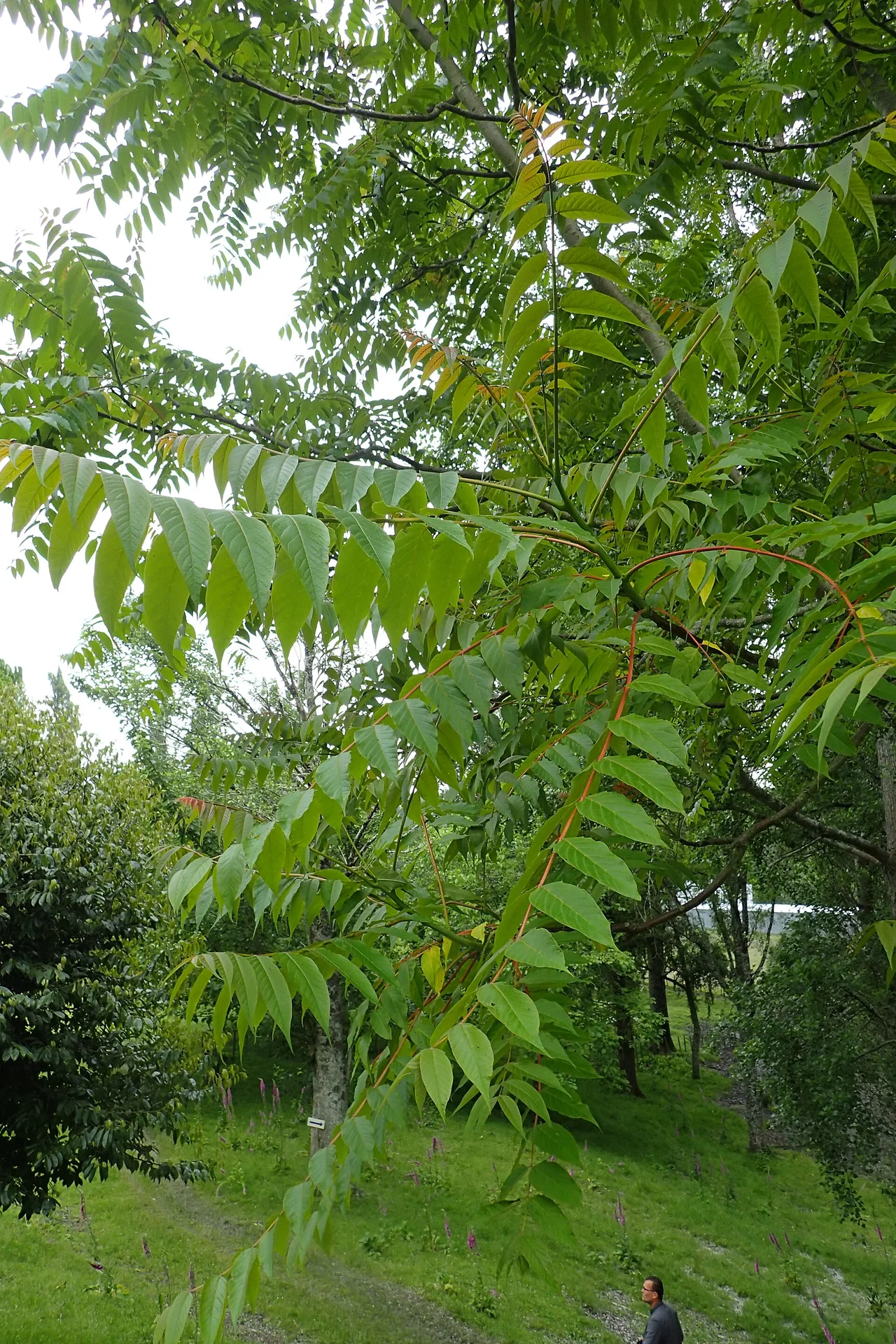
Originating from the mountainous slopes and valleys of western China, this striking deciduous tree is distinguished by its downy foliage and ornamental appeal. It is commonly referred to as the downy tree of heaven and is grown as a rare specimen in European botanical collections.
The plant was introduced to Western horticulture in the late 19th century by French botanist Paul Guillaume Farges. While closely resembling its relative Ailanthus altissima, it remains distinct due to its unique puberulous characteristics and spiny shoots.
Reaching heights of 20 meters or more, this deciduous tree develops a broad crown spreading up to 15 meters. The young shoots frequently exhibit small, soft green spines, while the main trunk occasionally produces epicormic sprouts. Its foliage is notably darker than that of related species and has a distinctly pendulous habit.
The leaves and flowering structures display these notable features:
This tree is primarily cultivated for ornamental purposes in botanical gardens and private collections across Europe. Its large, red-stemmed leaves and exotic appearance make it a striking specimen plant, especially in the milder climates of southern England and Scotland.
Taxonomists continue to debate the status of this species. While some authorities like the Flora of China recognize it as a distinct species, other major databases such as World Flora Online classify it as a synonym of the common tree of heaven (Ailanthus altissima).
The species was first successfully grown in the United Kingdom in 1897 from seeds sent by French missionary and collector Paul Guillaume Farges, who discovered it in Sichuan province.
Ailanthus excelsa
A fast-growing, large deciduous tree native to India and Sri Lanka, highly valued for its …

Ailanthus kurzii
A tall tropical evergreen tree native to South and Southeast Asia, known for its winged …

Ailanthus triphysa
A tall evergreen rainforest tree native to Asia and Australia, famous for its aromatic halmaddi …

Ailanthus giraldii
A deciduous tree native to the mountain forests of China, characterized by its hairy leaves …