
Kurz's Ailanthus
Ailanthus kurzii
A tall tropical evergreen tree native to South and Southeast Asia, known for its winged …
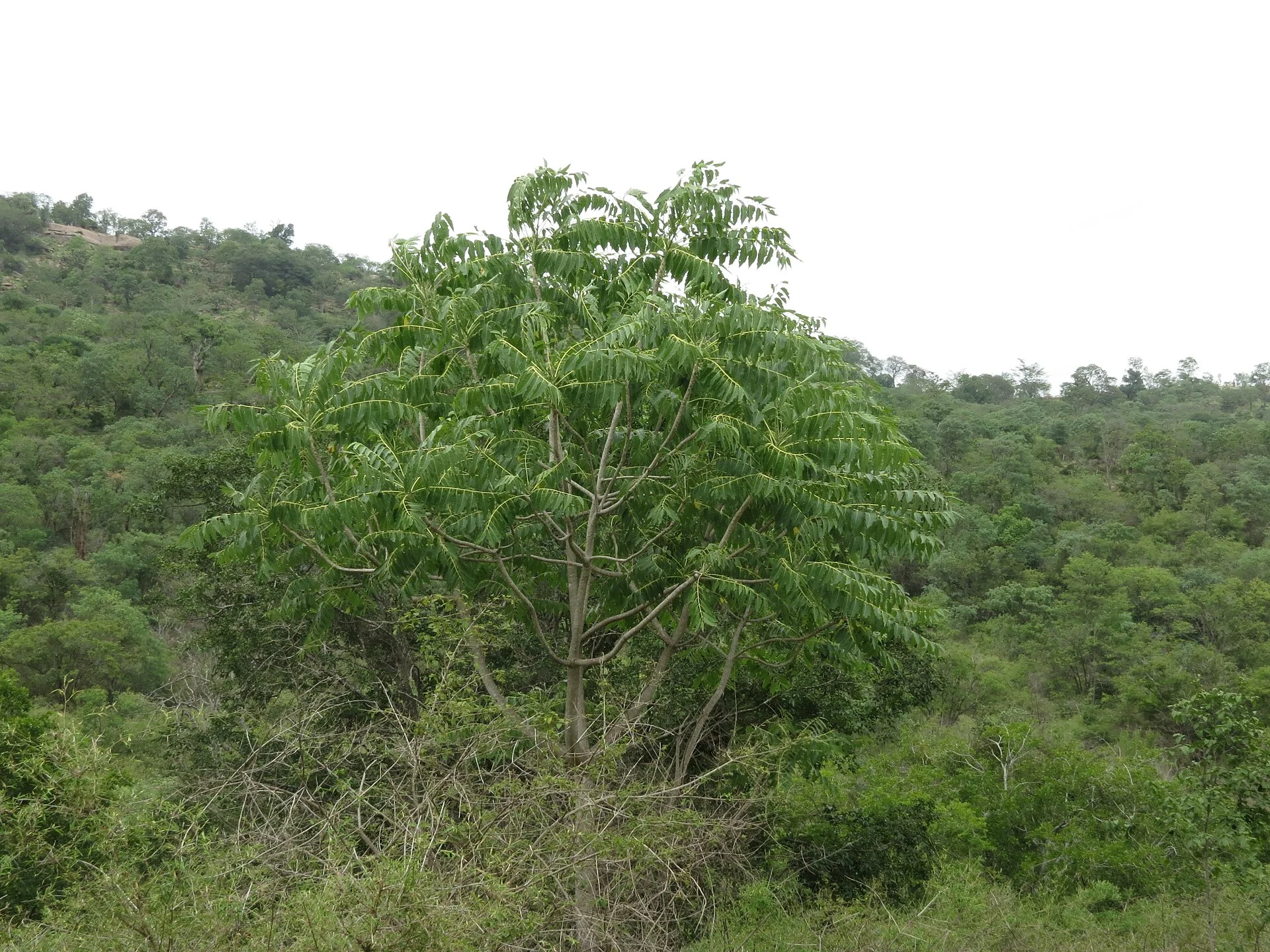
Widely distributed across the arid and semi-arid regions of India and Sri Lanka, Ailanthus excelsa commands attention as a fast-growing, large deciduous tree. Commonly known as the Indian tree of heaven, it plays a vital role in agroforestry and soil stabilization along riverbanks.
The species is easily recognized by its robust stature and characteristic odor.
This deciduous tree typically reaches a height of 18 to 25 meters, featuring a straight trunk with light grey to yellowish, rough bark. The large, pinnately compound leaves are alternately arranged, measuring up to 90 cm in length and bearing 10 to 14 pairs of coarsely dentate leaflets.
Key botanical characteristics include:
Flowers from February to April
The bark serves as a potent febrifuge in traditional medicine, frequently prescribed to alleviate asthma, bronchitis, and acute dysentery. A tonic made from the leaves and bark is traditionally administered to women after childbirth to relieve labor-related pains.
Beyond medicinal value, the lightweight wood is heavily utilized in the matchstick industry, as well as for making packing boxes, toys, and fishing floats. Furthermore, the tree acts as an effective green barrier against air pollution by trapping suspended particulate matter.
In Tamil, this tree is called Pi-Nari Maram, which translates to 'stinking tree' due to the foul scent of its crushed leaves and flowers.
The leaves are also a favored food source for goats and host the larvae of the moth Phyllocnistis hagnopa.
Ailanthus kurzii
A tall tropical evergreen tree native to South and Southeast Asia, known for its winged …

Ailanthus vilmoriniana
A large deciduous tree native to western China, characterized by its deep red, finely pubescent …

Ailanthus triphysa
A tall evergreen rainforest tree native to Asia and Australia, famous for its aromatic halmaddi …

Ailanthus giraldii
A deciduous tree native to the mountain forests of China, characterized by its hairy leaves …