
Philippine False Elm
Aphananthe philippinensis
A prominent rainforest tree from Australia and the Pacific, known for its sandpaper-like leaves and …
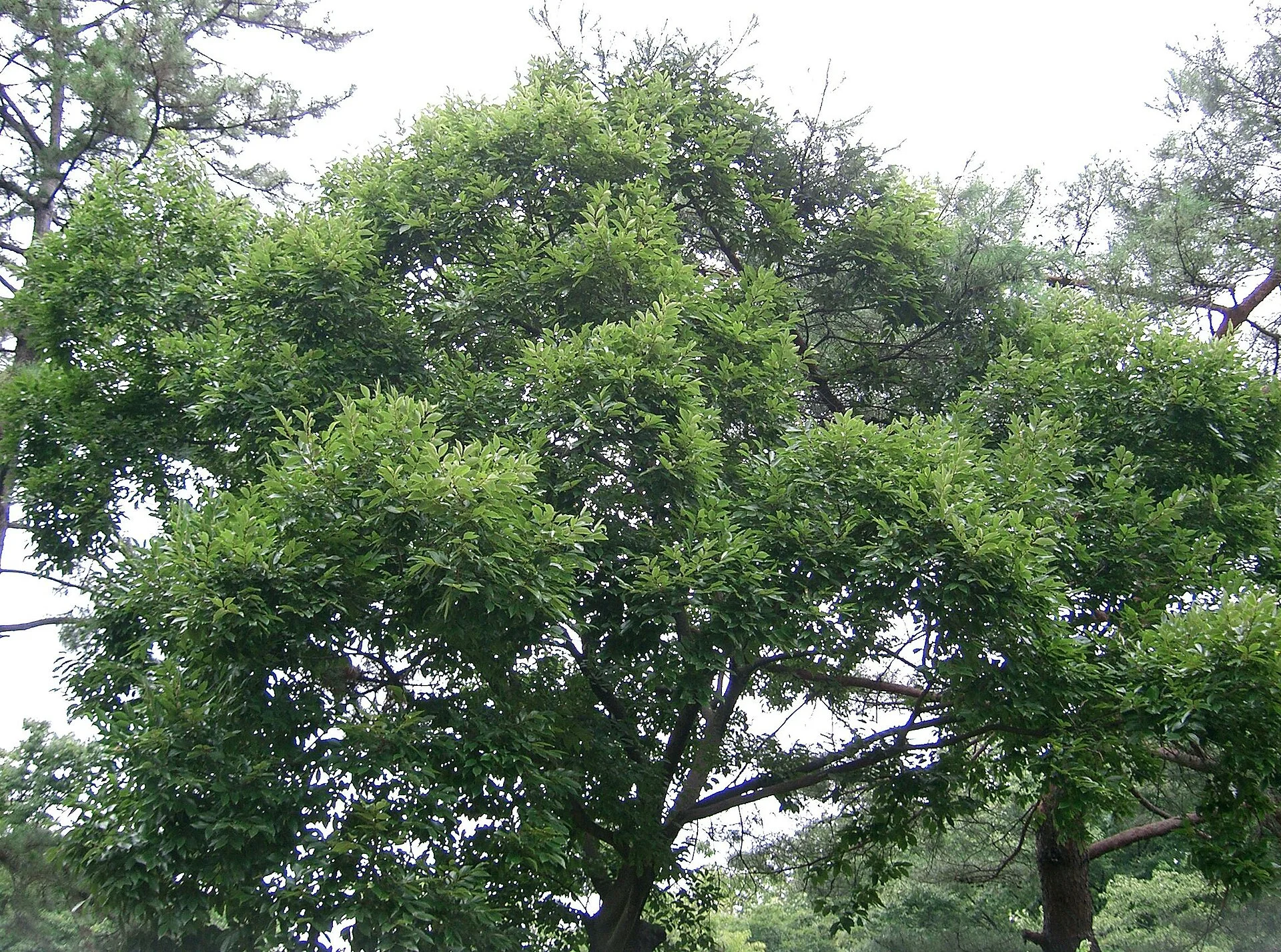
In the dense forests and stream banks of East Asia, from the rocky mountain slopes of China to the coastal islands of Japan, the muku tree stands out with its uniquely abrasive foliage. Aphananthe aspera has been intertwined with local craftsmanship for centuries, its leaves historically serving as a natural, fine sandpaper for polishing wood and tortoise shell.
This large, fast-growing deciduous tree is a prominent member of the Cannabaceae family, capable of reaching majestic heights of up to 30 meters. During the autumn months, its canopy transforms into a vibrant yellow, attracting flocks of birds eager to feast on its sweet, dark purple fruits.
Often found in temperate to subtropical regions, the tree thrives at elevations ranging from 100 to 1,600 meters. Beyond its wild presence, it occasionally graces classical Chinese gardens, valued both for its structural beauty and its cultural significance.
Aphananthe aspera is a robust deciduous tree that can grow up to 25 to 30 meters in height, with a trunk diameter exceeding 1 meter in mature specimens. The bark is pale gray-brown, remaining relatively smooth on young trees but developing longitudinal, web-like fissures and peeling away in shallow strips as it ages.
The foliage of this species exhibits several distinctive characteristics:
The species is monoecious, producing separate male and female flowers on the same tree during the spring. The tiny, pale green flowers have a simple perianth; male flowers grow in small corymbs at the axils of lower branches, while female flowers emerge solitarily at the upper leaf axils.
Following pollination, the tree develops small, spherical drupes measuring 7 to 12 millimeters in diameter. These fruits transition from green to a deep purplish-black as they ripen in the autumn.
Spring (April to May)
Aphananthe aspera provides a variety of valuable resources, historically making it an important tree for local artisans and craftsmen.
Additionally, the dark purple drupes are completely edible and noted for their highly sweet flavor. While primarily consumed by local wildlife, they have historically served as a foraging food source for humans.
In Japan, Aphananthe aspera is widely known as the muku tree, a name deeply embedded in local folklore, geography, and cultural history.
During the autumn fruiting season, flocks of bulbuls and azure-winged magpies frequently gather in its branches. This vibrant bird activity naturally aids in the widespread dispersal of the tree's seeds.
Taxon Synonyms: Aphananthe aspera var. pubescens, Sponia nudiflora, Homoioceltis aspera, Celtis mukii, Aphananthe aspera var. aspera
Aphananthe philippinensis
A prominent rainforest tree from Australia and the Pacific, known for its sandpaper-like leaves and …

Aphananthe cuspidata
A large evergreen tree species native to the forests of South and Southeast Asia, notable …

Aphananthe monoica
A medium-sized wild tree native to the humid tropical forests of Mesoamerica.

Picrasma
A genus of deciduous trees and shrubs known for their extremely bitter bark and medicinal …