
Common Pawpaw
Asimina triloba
Asimina triloba, commonly known as the pawpaw, is a small deciduous tree native to North …
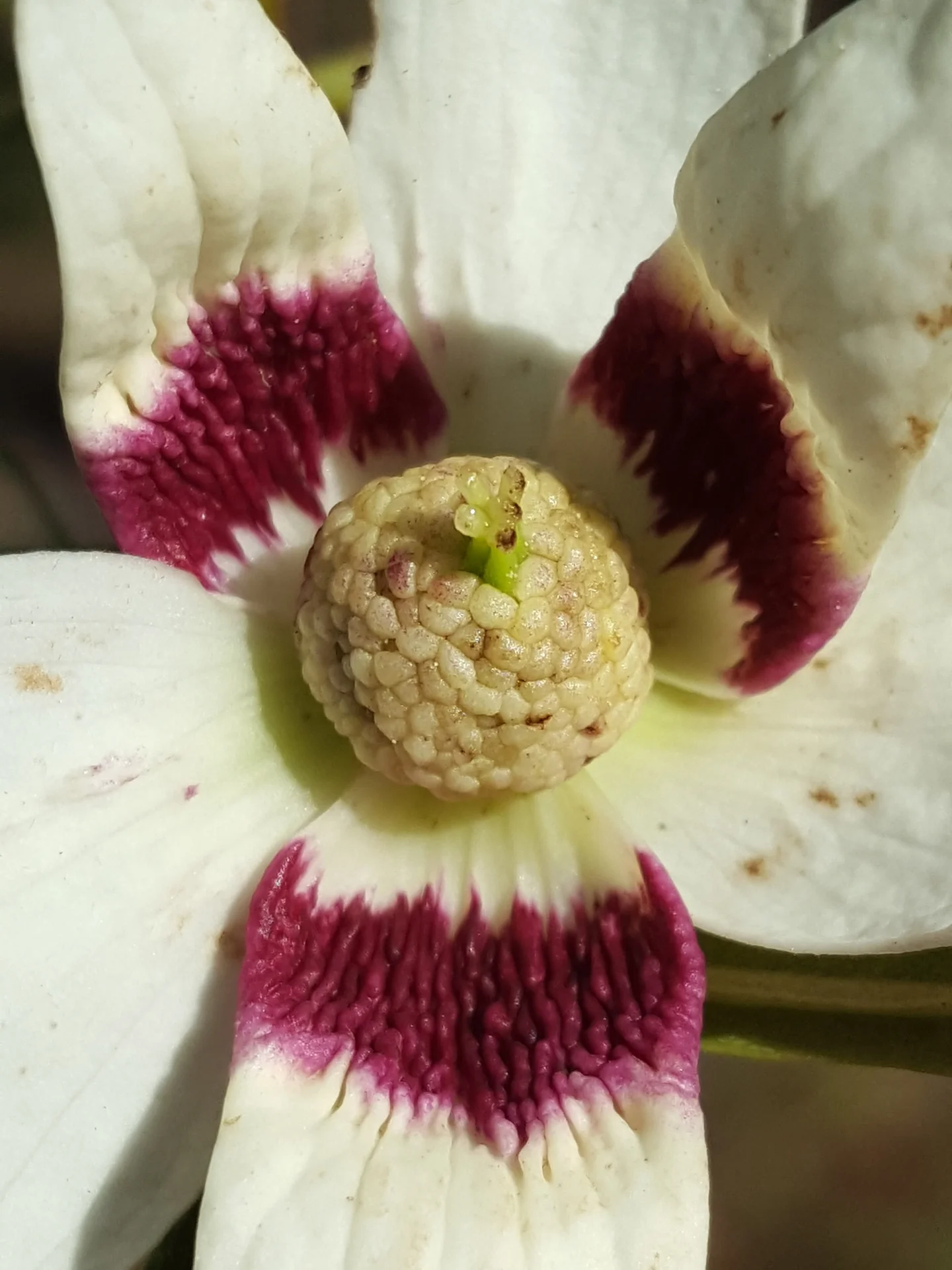
Asimina angustifolia, commonly known as the slimleaf pawpaw, is a low-growing shrub from the sunny pine savannas and sandy hills of the southeastern United States. Unlike its taller forest-dwelling relatives, this sun-loving species wears narrow, strap-like leathery leaves—a trait directly reflected in its specific epithet angustifolia, which translates from Latin as "narrow-leaved."
The species belongs to the custard apple family (Annonaceae) and was first formally described by the polymath Constantine Samuel Rafinesque in 1840. In botanical literature and older regional guides, it is also frequently encountered under the synonym Asimina longifolia, published by Robert Kral in 1960.
This perennial shrub typically reaches 0.5 to 1.5 meters in height, sending up smooth, slender shoots from a deep, woody taproot. The bark on young twigs shifts from yellowish-red to rich reddish-brown as the stems mature.
The leaves are alternate, leathery, and notably elongated, with blades that are linear-elliptic to narrowly spatulate (spoon-shaped). Each leaf sits on a tiny, hairless petiole—the stalk attaching the blade to the stem—that measures only 2 to 4 millimeters long.
Fragrant flowers emerge singly or in small clusters from the leaf axils along the branches. Each bloom features 2 to 7 pistils at its center and a striking two-tiered arrangement of six petals.
Spring to early summer (April to June)
Although it is primarily a wild plant of sandy pinelands, Asimina angustifolia holds value in specialized ecological landscaping and scientific collections.
While the custard apple family (Annonaceae) is overwhelmingly composed of giant tropical rainforest trees, Asimina angustifolia has engineered a way to thrive in dry, sun-baked sandhills where periodic wildfires sweep across the landscape.
To survive in open longleaf pine savannas, the plant invests heavily in its underground architecture and streamlined foliage before building tall above-ground trunks.
The flower of Asimina angustifolia operates as a coordinated visual and chemical guidance system for beetles and flies. The broad, creamy-white outer petals act as high-contrast visual flags against the pine litter, while the dark maroon inner petals curve inward over the reproductive organs to form a shaded, scented chamber that guides visiting insects directly across the pollen-bearing stamens and receptive stigmas.
Taxon Synonyms: Pityothamnus angustifolius, Asimina spatulata, Asimina longifolia, Asimina longifolia var. spatulata
Asimina triloba
Asimina triloba, commonly known as the pawpaw, is a small deciduous tree native to North …

Asimina obovata
An endemic shrub or small tree from Florida, noted for its large showy flowers and …

Asimina parviflora
Asimina parviflora, commonly known as the smallflower pawpaw, is a dwarf shrub native to the …

Asimina reticulata
A flowering shrub endemic to Florida, featuring leathery leaves and fragrant flowers.