
Common Pawpaw
Asimina triloba
Asimina triloba, commonly known as the pawpaw, is a small deciduous tree native to North …
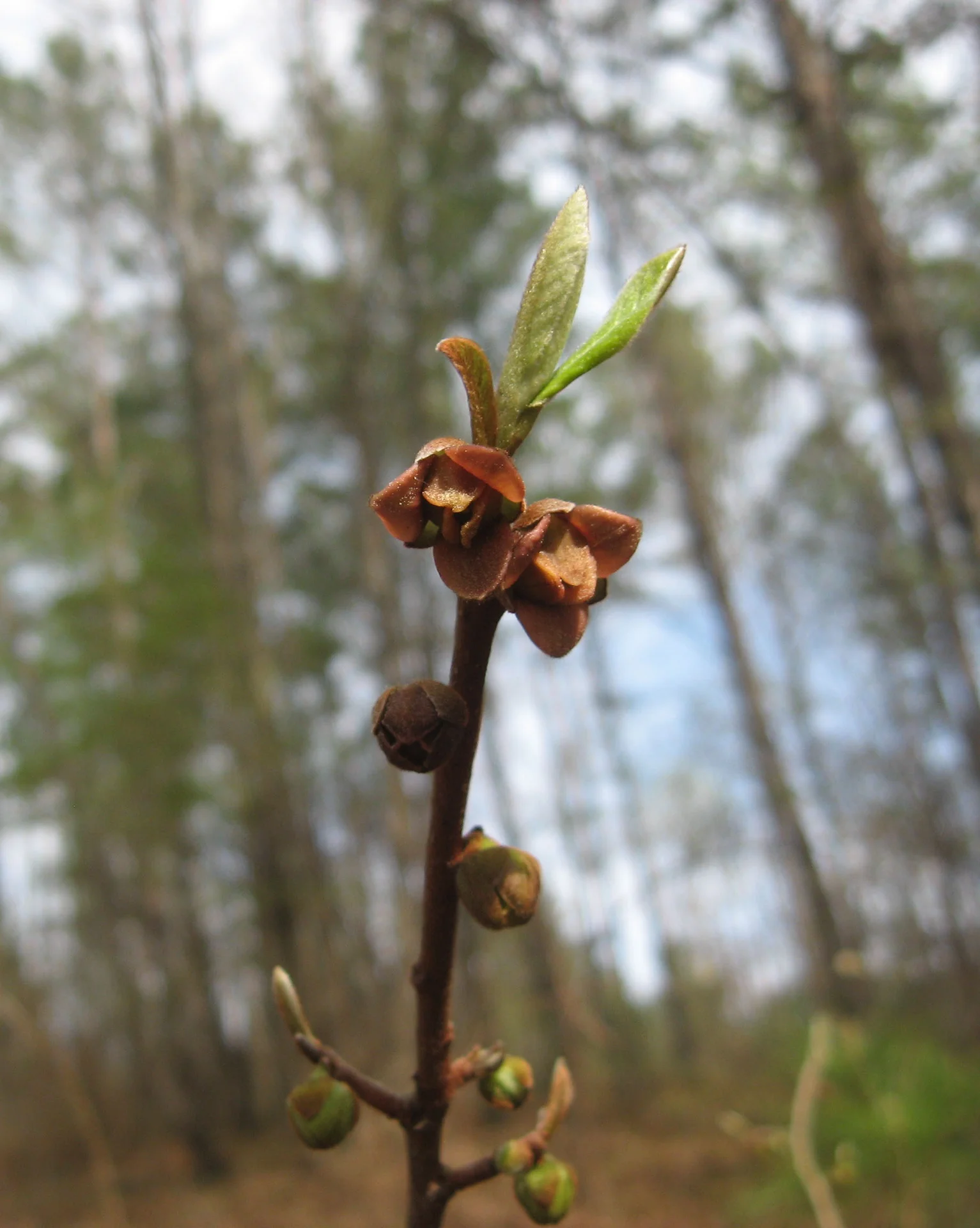
Thriving in the loamy, moist sands of the Southeastern United States, a resilient dwarf shrub quietly produces sweet, custard-like fruits hidden beneath broad, dark green leaves. Asimina parviflora, commonly known as the smallflower pawpaw, weaves its roots through woodland slopes and floodplains, creating dense understory patches.
While often overshadowed by its taller relatives, this botanical treasure holds its own with unique maroon flowers and a rich history of traditional uses. Its modest stature allows it to flourish under the forest canopy, finding a unique ecological niche in its native habitat.
The physical structure of Asimina parviflora presents as a small evergreen tree or spreading shrub, typically reaching heights of 1 to 2 meters, though occasionally growing taller. Young shoots are distinctly covered with a fine, hairy tomentum that protects new growth.
Its foliage consists of alternately arranged, simple leaves that are obovate to oblanceolate in shape. These dark green, smooth-textured leaves can measure between 6 and 15 centimeters in length, featuring a wedge-shaped base and a pointed tip, supported by short, glabrous petioles.
The floral and fruiting characteristics are particularly distinctive:
The smallflower pawpaw typically blooms in the spring, with flowers opening from February through May, and occasionally extending into June.
The primary appeal of Asimina parviflora lies in its edible fruits, which, despite being smaller than those of the common pawpaw, offer a similar sweet flavor. These fruits are traditionally gathered from the wild and can be eaten raw directly from the plant or incorporated into various baked goods.
Historically, different parts of the plant held significant medicinal value in traditional remedies.
Beyond its botanical characteristics, Asimina parviflora possesses several intriguing traits that highlight its unique evolutionary path.
Asimina triloba
Asimina triloba, commonly known as the pawpaw, is a small deciduous tree native to North …

Asimina obovata
An endemic shrub or small tree from Florida, noted for its large showy flowers and …

Asimina reticulata
A flowering shrub endemic to Florida, featuring leathery leaves and fragrant flowers.

Asimina pygmaea
A small, intriguing shrub native to Florida and Georgia, known for its deep crimson flowers …