
Common Pawpaw
Asimina triloba
Asimina triloba, commonly known as the pawpaw, is a small deciduous tree native to North …
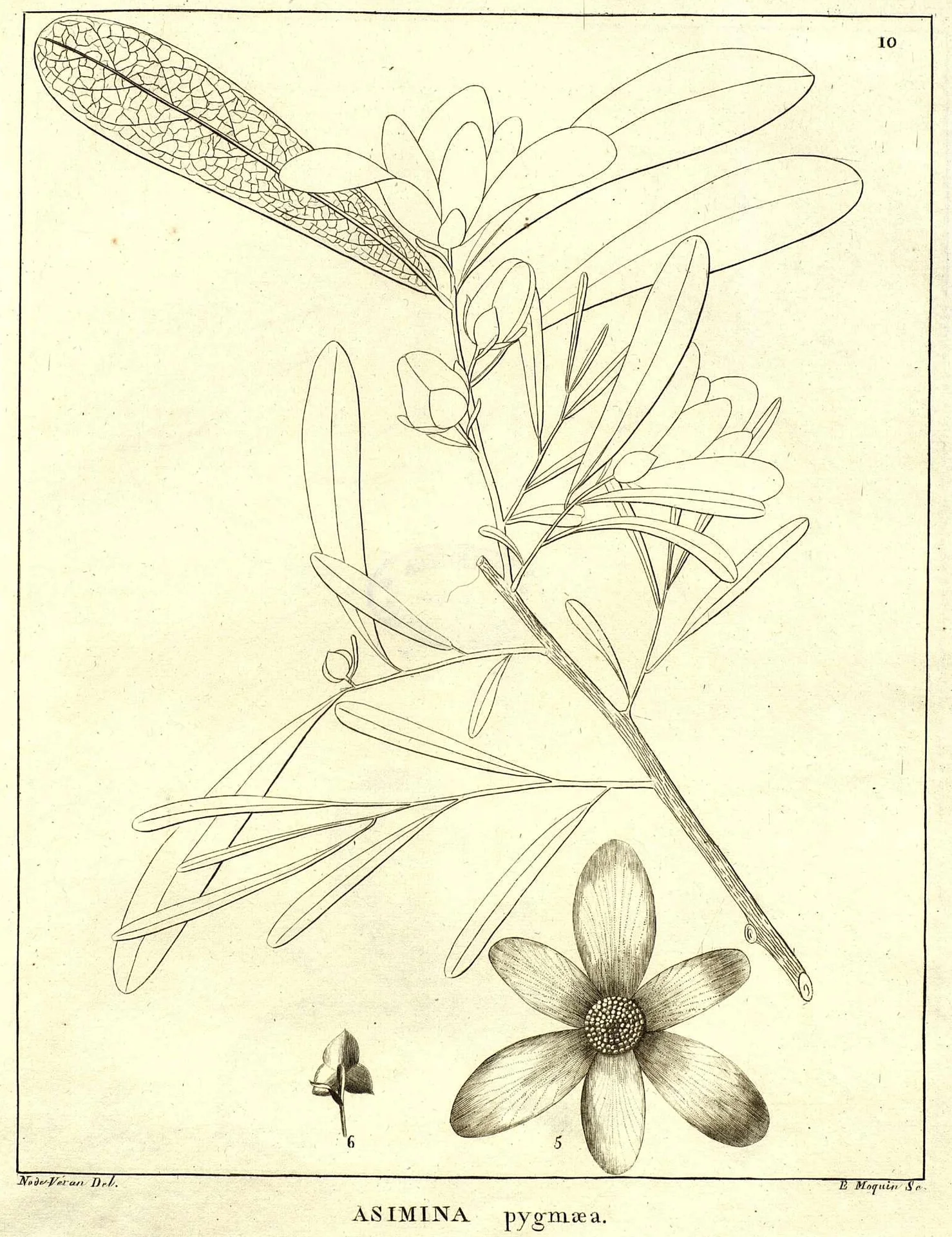
American naturalist William Bartram first documented Asimina pygmaea in 1791, noting its remarkably diminutive stature. Thriving in the pine flatwoods, savannahs, and well-drained sandy soils of Florida and Georgia, this shrub rarely exceeds 30 centimeters in height. It represents a fascinating miniature component of the custard apple family.
Known by common names such as dwarf pawpaw and gopherberry, it has evolved highly specialized reproductive strategies. The plant is particularly noted for its unusual floral scent, which plays a crucial role in its ecological interactions and survival.
Despite its small size above ground, Asimina pygmaea develops a robust, spindle-shaped taproot. The leathery, dark green leaves are 4 to 11 centimeters long, featuring a noticeable network of veins on their paler undersides and margins that roll downwards. Young shoots emerge with red to brown bark dotted with lenticels.
The flowers are particularly striking, showcasing a brown-crimson color and consisting of six petals arranged in two whorls. The outer petals are fleshy and reflexed, while the inner petals have a swollen, wrinkled base. Following successful pollination, it produces curved, yellow-green cylindrical fruits containing shiny brown seeds in two rows.
Asimina triloba
Asimina triloba, commonly known as the pawpaw, is a small deciduous tree native to North …

Asimina obovata
An endemic shrub or small tree from Florida, noted for its large showy flowers and …

Asimina parviflora
Asimina parviflora, commonly known as the smallflower pawpaw, is a dwarf shrub native to the …

Asimina reticulata
A flowering shrub endemic to Florida, featuring leathery leaves and fragrant flowers.