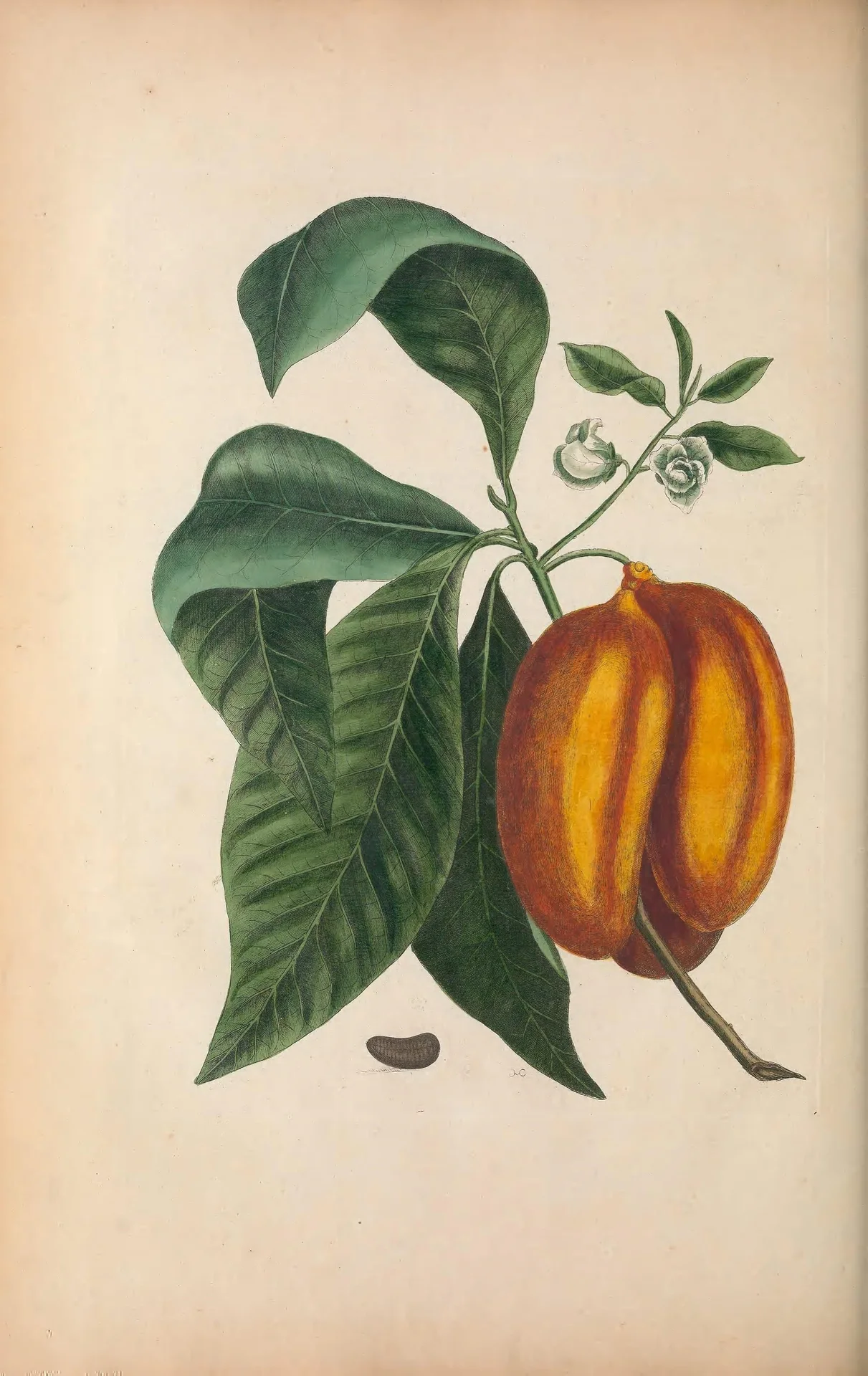

Bigflower pawpaw
Asimina obovata
An endemic shrub or small tree from Florida, noted for its large showy flowers and …
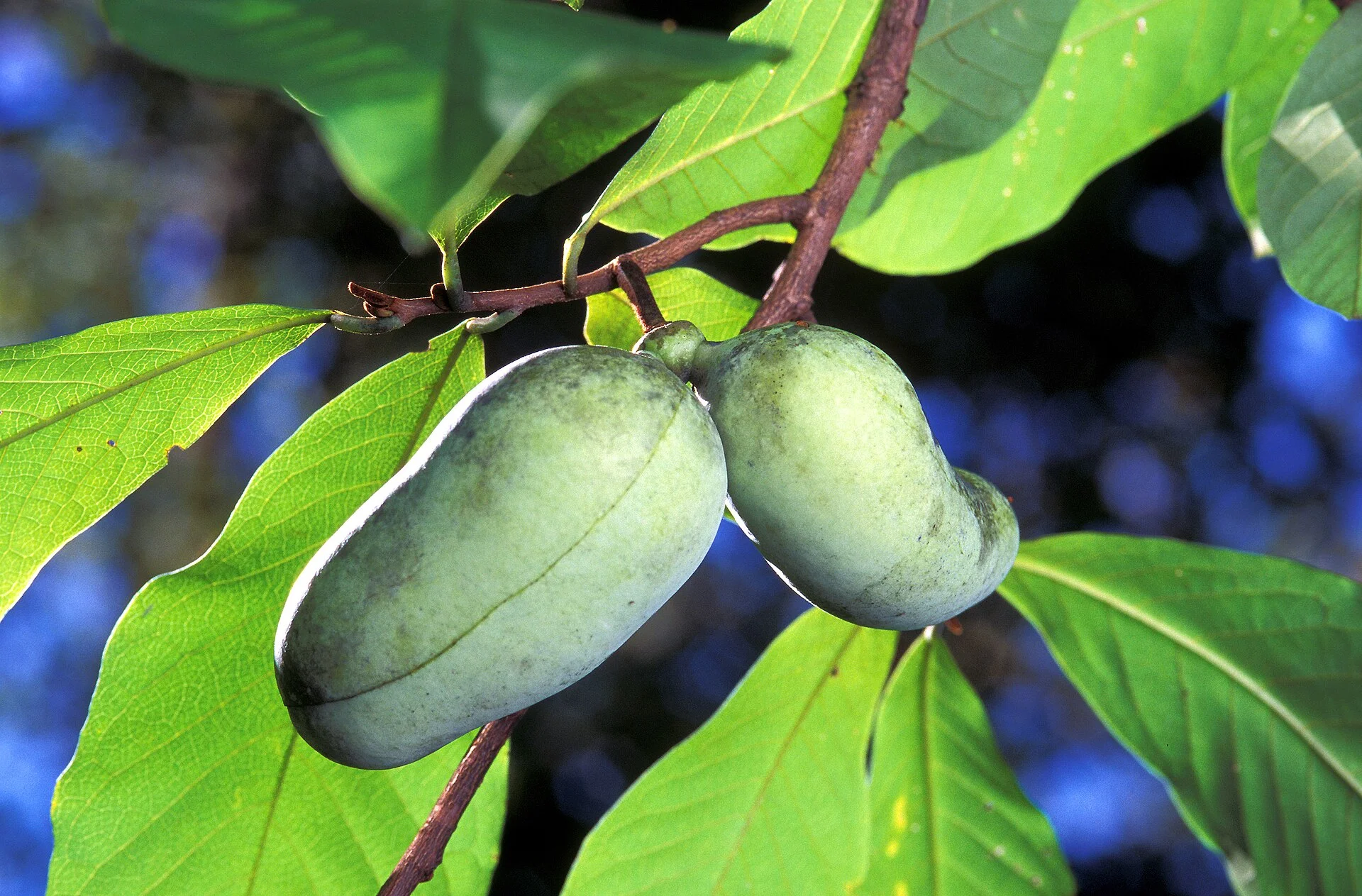
Deep within the understory of eastern North American hardwood forests, a tropical-looking tree produces the continent's largest indigenous edible fruit. This unique species, Asimina triloba, forms dense clonal patches along well-drained, fertile bottomlands and hilly uplands. The plant provides a rare glimpse into a botanical lineage thriving far outside its typical tropical range.
Known by regional names such as the pawpaw or Indian-banana, this small deciduous tree typically reaches heights of up to 11 meters. During the autumn months, its foliage turns a vibrant rusty yellow, allowing groves to be easily spotted from a distance. Its broad, deeply veined leaves give the tree an unmistakably exotic appearance in a temperate landscape.
Asimina triloba is a large shrub or small tree, characterized by a straight trunk and smooth, light gray to brownish bark. It exhibits a deeply taprooted system that complicates transplantation but ensures survival in natural habitats. The branches are light brown, often marked by shallow grooves, and hold distinctively pointed leaf buds alongside fuzzy, round flower buds.
The foliage consists of large, simple, and alternate leaves measuring up to 30 centimeters in length. They are obovate-lanceolate, wedge-shaped at the base, and feature prominent primary veins. When bruised, the leaves emit a strong, pungent odor often compared to green bell peppers, serving as a natural deterrent against many herbivores.
Its floral and fruiting structures are particularly notable:
Flowers bloom in early spring, appearing simultaneously with or slightly before the new leaves.
Historically, the native populations and early settlers of North America widely utilized Asimina triloba for food and practical materials. The soft, spongy wood had limited timber value, but the fibrous inner bark was woven into strong ropes, fishing nets, and mats. Today, the primary interest in the plant centers around its unique, highly perishable fruit.
The pawpaw fruit is highly sought after by foragers and specialty growers. It boasts a complex flavor profile blending banana, mango, and pineapple, making it a popular ingredient in artisanal ice creams, baked desserts, and even craft beers. Due to its short shelf life, commercial cultivation remains a niche market, primarily supplying local farmers' markets.
Beyond culinary uses, the plant holds significant medicinal and agricultural potential:
The name "pawpaw" traces its roots to the word papaya, a nod to the superficial resemblance of the fruits, which historically led to considerable taxonomic confusion. Despite its tropical appearance, Asimina triloba is remarkably cold-hardy, surviving winter temperatures as low as -25 °C. This resilience allows it to grow in climates far north of its relatives.
Fascinating ecological and historical details surround this species:
Taxon Synonyms: Annona triloba, Asimina conoidea
Asimina obovata
An endemic shrub or small tree from Florida, noted for its large showy flowers and …

Asimina parviflora
Asimina parviflora, commonly known as the smallflower pawpaw, is a dwarf shrub native to the …

Asimina reticulata
A flowering shrub endemic to Florida, featuring leathery leaves and fragrant flowers.

Asimina pygmaea
A small, intriguing shrub native to Florida and Georgia, known for its deep crimson flowers …