
Royal Poinciana
Delonix regia
Delonix regia, also known as the royal poinciana or flame tree, is a spectacular tropical …
Thriving in the harsh, semi-arid spiny forests of southwestern Madagascar, the striking Delonix decaryi stands out with its distinctive swollen, cigar-shaped trunk. This architectural silhouette is an evolutionary adaptation that stores water during prolonged drought periods.
Local populations know this species as fengoky, and they rely on its sturdy wood and bark for various traditional purposes. Despite its cultural and ecological importance, the tree faces significant threats in its natural habitat due to selective logging and land clearing.
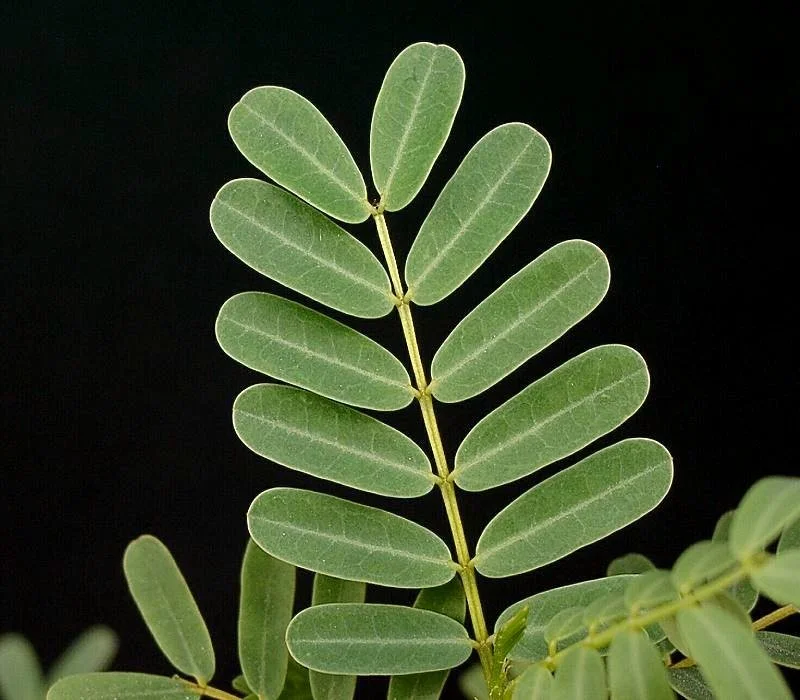
Reaching heights between 3 and 10 meters, this deciduous tree features a notably bulbous trunk and peeling, greyish bark. The leaves are bipinnately compound, creating a delicate, feathery canopy that helps minimize water loss.
Its large, fragrant flowers measure about 7 to 8 centimeters in length. The petals are predominantly white, though the upper petal displays a distinct yellow spot that serves as a guide for pollinators. The flowers open at night, showing long, protruding stamens and styles that range from pale pink to brilliant red.
Following successful pollination, the tree produces long, slender seed pods that measure approximately 35 centimeters in length and 3.5 centimeters in width. These pods mature to a dark brown color and contain several hard seeds.
Late spring to summer
Throughout its native range, the wood of this tree is traditionally harvested and hollowed out by local communities to construct durable dug-out canoes. The natural resin obtained from the trunk serves as a sealing agent to make these boats watertight.
Additionally, the species is sometimes planted as a live fence or hedge around settlements due to its dense, spreading habit. Its unique form has also made it an attractive specimen for dry-gardening and succulent collections in tropical botanical gardens.
The nocturnal opening of the large, scented flowers of this species suggests a specialized relationship with nocturnal pollinators, likely hawkmoths. The species name, decaryi, was established in honor of the French botanist Raymond Decary, who extensively documented the flora of Madagascar in the 20th century.
Delonix regia
Delonix regia, also known as the royal poinciana or flame tree, is a spectacular tropical …

Delonix floribunda
A medium-sized deciduous tree endemic to Madagascar, famous for its dense heads of bright yellow …

Delonix pumila
An endangered, slow-growing dwarf tree with a swollen caudiciform trunk, endemic to the dry spiny …

Delonix elata
A medium-sized deciduous tree known for its striking cream-colored flowers that fade to yellow, native …