
Royal Poinciana
Delonix regia
Delonix regia, also known as the royal poinciana or flame tree, is a spectacular tropical …
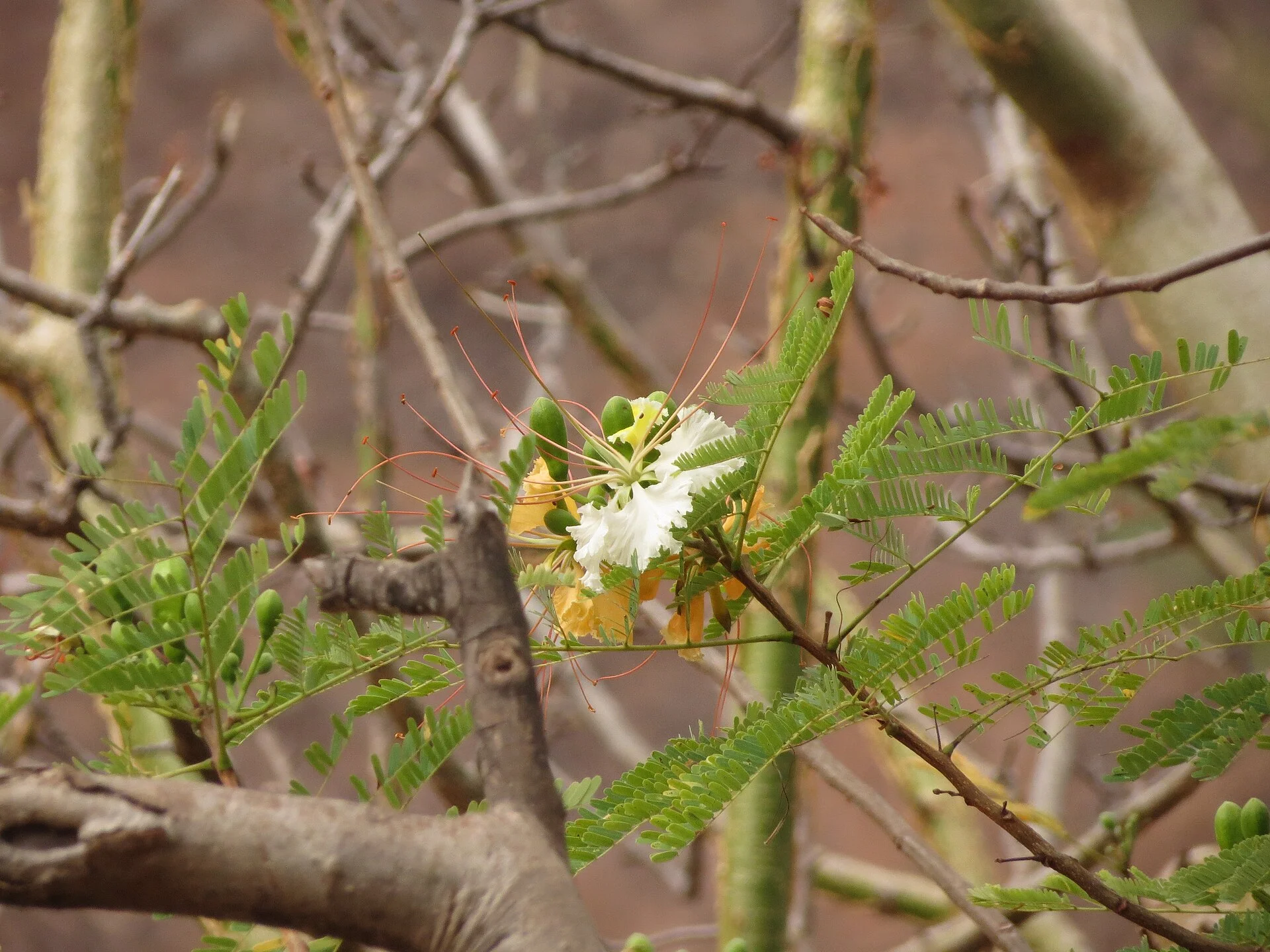
Thriving in the arid landscapes of East Africa and the Arabian Peninsula, Delonix elata captures attention with its striking display of color-changing blossoms. This dry-season deciduous tree plays a vital role in its native ecosystems, offering shade and stabilization in harsh desert-like environments. Known for its resilience, it is highly valued both for its ecological functions and its ornamental appeal.
Delonix elata typically reaches a height of 5 to 15 meters, forming a broad, rounded canopy that provides valuable shade. Its bark is characteristic, displaying a smooth surface that ranges from pale yellow-buff to grey and frequently peels in thin papery layers.
The foliage is twice-pinnately compound, reaching up to 20 centimeters in length and composed of 4 to 8 pairs of pinnae. Key leaf characteristics include:
The showy flowers are arranged in terminal racemes and exhibit a fascinating color transition, opening as pure white or cream and aging to a deep yellow. The stamens are particularly long, extending up to 10 centimeters, with dark red or purple filaments that create a dramatic contrast. The fruit is a slender, flattened pod measuring 13 to 25 centimeters long, housing 4 to 8 oblong seeds.
May to July, coinciding with the dry season and early rains
Due to its resilience and attractive form, Delonix elata is widely cultivated as an ornamental tree along streets and in public parks. Its nitrogen-fixing root nodules enrich the soil, making it valuable for reforestation and soil conservation projects in drylands.
Local communities utilize the tree in several practical ways:
A fascinating feature of Delonix elata is the rapid color shift of its petals, which start as a soft white or cream when opening at dawn and deepen to a golden yellow by the following day. This change signals to pollinators that the flower has already been visited or is ready for pollination.
Additional intriguing features of this tree include:
Delonix regia
Delonix regia, also known as the royal poinciana or flame tree, is a spectacular tropical …

Delonix floribunda
A medium-sized deciduous tree endemic to Madagascar, famous for its dense heads of bright yellow …

Delonix decaryi
A unique deciduous tree endemic to Madagascar, characterized by a swollen trunk and large white …

Delonix pumila
An endangered, slow-growing dwarf tree with a swollen caudiciform trunk, endemic to the dry spiny …