
Drumstick Tree
Moringa oleifera
Moringa oleifera, commonly known as the drumstick tree, is a fast-growing, drought-resistant tree native to …
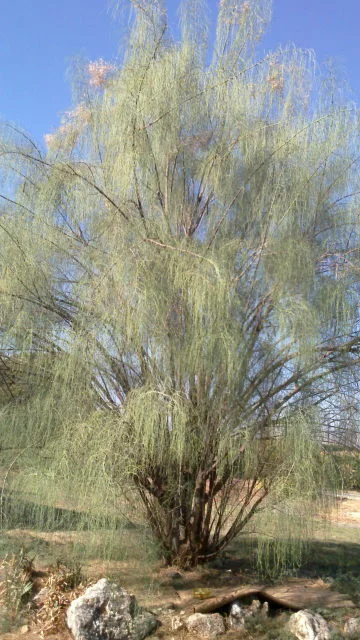
Clinging to the sheer, sun-baked cliffs of the Dead Sea and dry rocky wadis, a remarkable tree thrives where few other woody plants can survive. Moringa peregrina, known historically as the source of the precious ben oil, braves the harsh desert winds of the Arabian Peninsula and Northeast Africa.
This deciduous species has developed thin, pendulous branches that sway gracefully in the arid breeze. The tree bursts into delicate blossoms of white and pink twice a year, attracting honeybees and painting the rocky canyons with soft colors.
Long before modern chemistry, ancient Egyptians and Greeks harvested its valuable seeds to create base oils for their most exquisite perfumes. Today, it remains a symbol of survival and utility in some of the most arid landscapes on Earth.
The structural adaptations of Moringa peregrina allow it to survive in extremely arid conditions. It grows as a small deciduous tree reaching heights of 6 to 10 meters, characterized by a smooth grey trunk and long, slender, cylindrical branches.
Its leaves are bipinnate, and the tiny leaflets quickly shed as an adaptation to water scarcity. The remaining leaf petioles act as photosynthetic organs, giving the tree a light, wispy appearance.
The flowering and fruiting structures include:
The tree blossoms twice a year, typically in spring and autumn, producing fragrant pinkish-white flowers.
The versatile Moringa peregrina is highly valued across its native range for a wide variety of practical and medicinal applications. Every part of the plant, from its roots to its seeds, has been utilized by desert communities for centuries.
Its primary uses include:
Throughout history, Moringa peregrina has been surrounded by cultural significance and unique desert lore. Its valuable properties were recognized by ancient civilizations and have been preserved through generations of Bedouin traditions.
Some of the most fascinating historical and regional facts include:
Taxon Synonyms: Hyperanthera arborea, Hyperanthera aptera, Hyperanthera semidecandra, Moringa myrepsica, Moringa aptera, Hyperanthera peregrina, Moringa arabica
Moringa oleifera
Moringa oleifera, commonly known as the drumstick tree, is a fast-growing, drought-resistant tree native to …

Moringa hildebrandtii
An extraordinary water-storing tree endemic to Madagascar, extinct in the wild but preserved through traditional …

Moringa arborea
A rare, drought-resistant tree native to the arid regions of Kenya and Ethiopia, known for …

Moringa ovalifolia
Moringa ovalifolia, also known as the ghost tree, is a unique succulent tree native to …