
Princess tree
Paulownia tomentosa
Paulownia tomentosa, known as the empress tree, is an exceptionally fast-growing deciduous tree famous for …
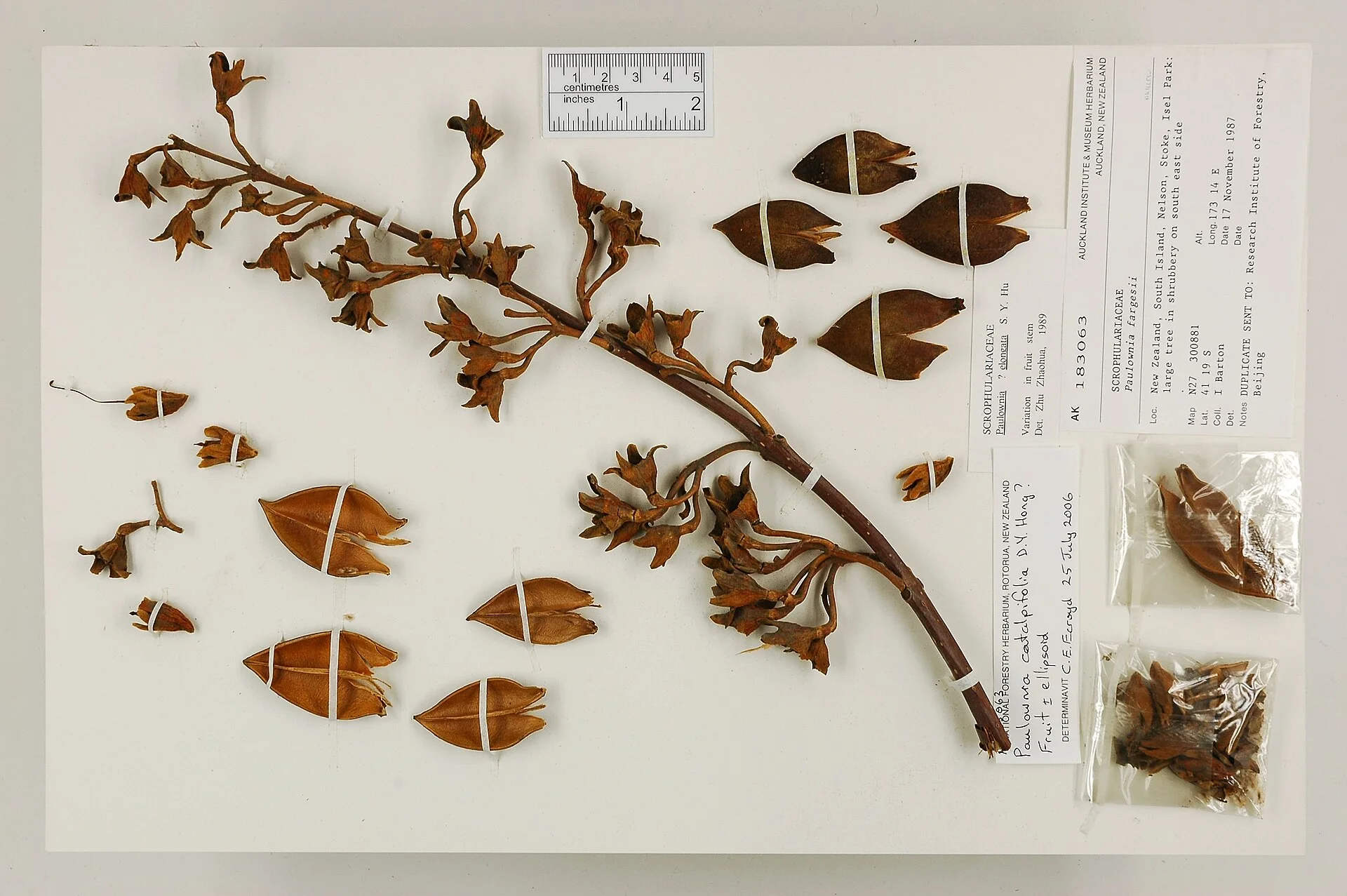
Rising rapidly above the forest canopy of China's Shandong province, this remarkable tree showcases an astonishing growth rate that has captured the attention of foresters worldwide. This species is capable of producing high-quality timber in just a fraction of the time required by traditional hardwoods.
As a member of the family Paulowniaceae, Paulownia catalpifolia stands out due to its unique leaf structure that closely resembles that of the Catalpa tree. This deciduous species is highly valued in its native range for both ecological reforestation and commercial wood production.
In recent years, its cultivation has spread beyond East Asia, with successful introductions to countries such as Hungary. This expansion highlights the tree's adaptability and growing global significance as a sustainable timber source.
Paulownia catalpifolia is a medium to large deciduous tree that typically reaches heights of 15 to 20 meters. It develops a broad, rounded crown with sturdy branches that support a dense canopy of large foliage.
The botanical features of this species include:
Flowering occurs in mid to late spring, typically during April and May, before the leaves fully emerge.
The primary economic value of Paulownia catalpifolia lies in its economic utility as a high-quality timber source. The wood is lightweight, warp-resistant, and displays excellent resonance, making it highly sought after for manufacturing traditional musical instruments, furniture, and veneer.
In addition to industrial uses, this species plays a vital role in ecological restoration. Its extensive root system helps prevent soil erosion, while its rapid biomass production makes it an ideal candidate for carbon sequestration projects and agroforestry systems.
The following details highlight the cultural and ecological significance of this species:
Paulownia tomentosa
Paulownia tomentosa, known as the empress tree, is an exceptionally fast-growing deciduous tree famous for …

Paulownia fortunei
A fast-growing deciduous tree native to East Asia, cultivated for its lightweight timber and showy …

Paulownia kawakamii
A critically endangered deciduous tree native to Taiwan and southern China, highly valued for its …

Paulownia elongata
A remarkably fast-growing deciduous tree native to East Asia, cultivated for its lightweight timber, biomass …