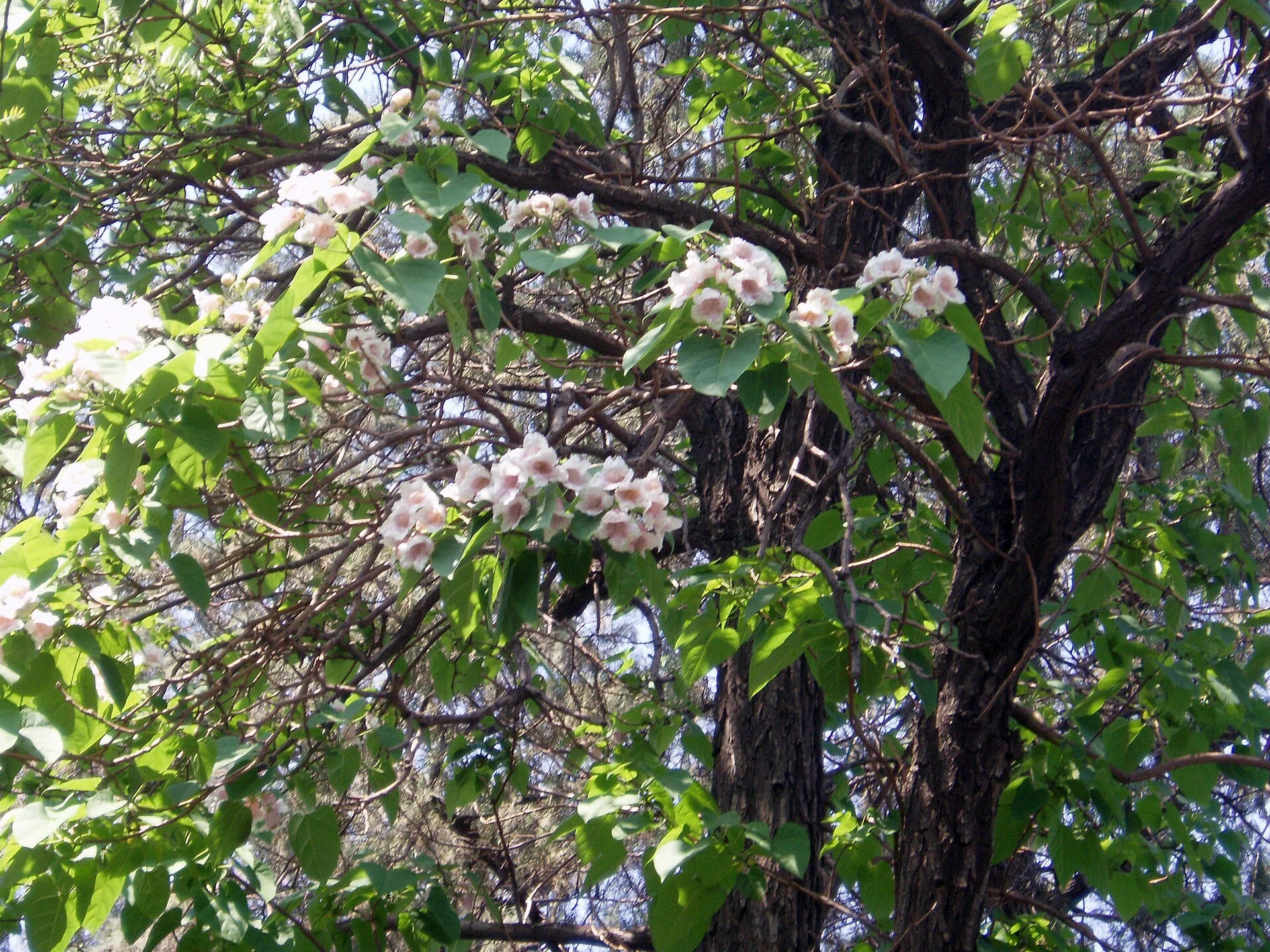
Southeastern China, Laos, and Vietnam serve as the native range for Paulownia fortunei, a deciduous tree renowned for its rapid growth rate and high-quality timber. This species occupies a prominent place in forestry due to its capability for rapid carbon sequestration. Cultivators also value it as an ornamental specimen in parks and large gardens.
This deciduous tree typically develops a conical crown and can reach heights between 8 and 30 meters. The large, heart-shaped leaves are light green and emerge shortly after the flowering period. Large clusters measuring 30 to 50 centimeters in length hold the showy flowers.
The bark is generally smooth and greyish-brown, becoming slightly fissured with age. The wood is exceptionally light, strong, and resistant to warping. These structural traits make it highly desirable for various wood-carving applications.
Flowering season
Spring
Jan
Feb
Mar
Apr
May
Jun
Jul
Aug
Sep
Oct
Name
Dec
Care parameters
Light
Prefers full sun for optimal growth
Watering
Requires regular watering when young; drought-tolerant once established
Temperature
Hardy in USDA zones 7 to 10, tolerating temperatures down to -15°C
Humidity
Highly adaptable to moderate and low humidity levels
Toxicity
Non-toxic to humans and common pets
Applications
The lightweight yet durable wood serves as a primary material for manufacturing furniture, musical instruments, and shipping chests. Additionally, foresters plant this species for phytoremediation projects to reclaim contaminated soils. Its rapid biomass production makes it an excellent candidate for carbon offset initiatives and honey production.
Interesting facts
The specific epithet honors the Scottish botanist Robert Fortune, who introduced numerous Chinese plants to Europe. Unlike its close relative Paulownia tomentosa, this species exhibits a much lower potential to become dangerously invasive in non-native habitats. Some research suggests its leaves can also be harvested as nutrient-rich animal fodder.
Varieties and cultivars
The cultivar 'Fast Blue' (also distributed under the trade name 'Minfast') is highly popular in horticulture. It is distinguished by its upright habit and intense violet-blue flowers. This selection has received the prestigious Award of Garden Merit from the Royal Horticultural Society.