
Princess tree
Paulownia tomentosa
Paulownia tomentosa, known as the empress tree, is an exceptionally fast-growing deciduous tree famous for …
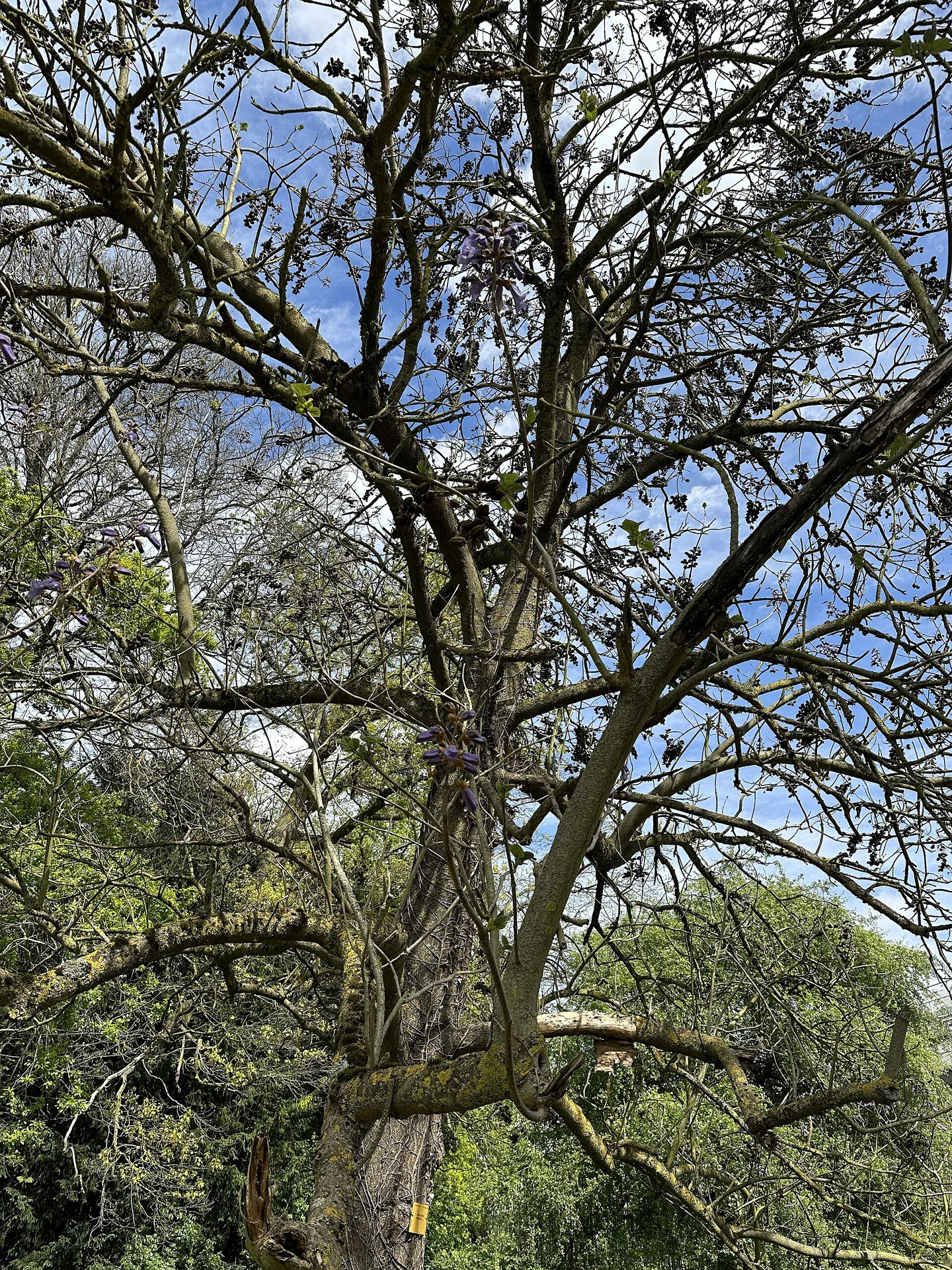
Reaching majestic heights in the mountain forests of China and Vietnam, this deciduous tree stands out for its rapid growth and spectacular spring flowering.
The species grows at elevations between 1200 and 3000 meters above sea level. It plays a significant ecological role in its native habitats and is cultivated for its lightweight wood.
Paulownia fargesii is a deciduous tree growing up to 20 meters tall, featuring a conical crown and purplish-brown to brownish-gray shoots dotted with prominent lenticels.
Key morphological features include:
April to May
This tree is highly valued for its lightweight yet sturdy timber, which is used in manufacturing and construction. Additionally, its rapid growth makes it an excellent candidate for reforestation projects and soil stabilization in mountainous regions.
This species is named in honor of Paul Guillaume Farges, a French missionary and plant collector who gathered numerous botanical specimens in China during the late 19th century.
It is capable of thriving at high elevations, with some wild populations recorded at altitudes up to 3000 meters.
Paulownia tomentosa
Paulownia tomentosa, known as the empress tree, is an exceptionally fast-growing deciduous tree famous for …

Paulownia fortunei
A fast-growing deciduous tree native to East Asia, cultivated for its lightweight timber and showy …

Paulownia kawakamii
A critically endangered deciduous tree native to Taiwan and southern China, highly valued for its …

Paulownia elongata
A remarkably fast-growing deciduous tree native to East Asia, cultivated for its lightweight timber, biomass …