
Princess tree
Paulownia tomentosa
Paulownia tomentosa, known as the empress tree, is an exceptionally fast-growing deciduous tree famous for …
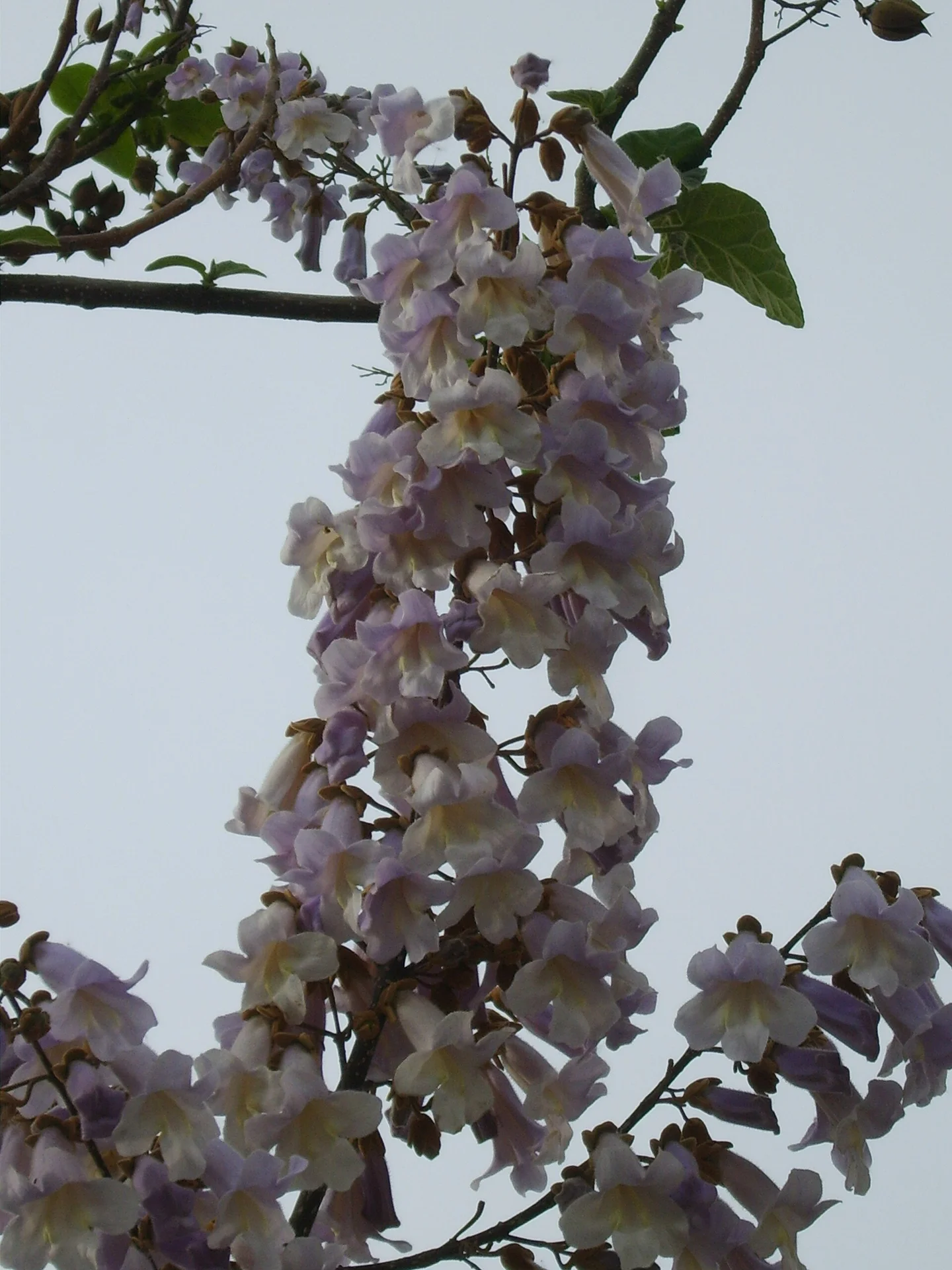
South Korea's native landscapes host Paulownia coreana, a deciduous tree highly celebrated for its cultural and practical significance. This fast-growing species is cultivated extensively in the southern regions of the Korean Peninsula. It plays an important role in traditional agroforestry and ecological management.
Known for its pale purple blossoms, the tree provides a spectacular spring display before its large leaves emerge. The species is highly valued for its light, warp-resistant timber.
Paulownia coreana develops into a tall, broadleaf deciduous tree, reaching heights of 15 to 20 meters with a trunk diameter of up to 75 centimeters. The large, opposite leaves measure 15 to 23 centimeters in length and 12.5 to 28 centimeters in width, featuring distinct netted venation. A long leafstalk, covered in small, puffy hairs, supports each leaf blade.
Light purple flowers emerge in late spring, characterized by five divided petals measuring 5 to 7.5 centimeters. Unlike the closely related Paulownia tomentosa, these blossoms do not exhibit interior purple stripes. The tree later produces elliptical, light brown seed capsules that ripen in late autumn.
Late spring
The lightweight and easily workable wood of Paulownia coreana makes it an exceptional choice for premium lumber. Craftsmen use it to build traditional Korean string instruments, such as the geomungo and the gayageum, due to its superior acoustic resonance. It is also utilized in crafting household furniture and athletic goods.
Beyond timber, the species serves several secondary applications. The leaves contain compounds used as a natural insecticide, while the bark is harvested for natural dye and traditional oriental medicine formulations.
In Korean folklore, families traditionally planted a Paulownia coreana tree when a daughter was born to ensure high-quality wood for her wedding chest later in life. The plant is also featured prominently in the traditional Korean card game Hwatu, representing the month of November. Its fast growth allows it to reach harvestable size in just ten years.
Paulownia tomentosa
Paulownia tomentosa, known as the empress tree, is an exceptionally fast-growing deciduous tree famous for …

Paulownia fortunei
A fast-growing deciduous tree native to East Asia, cultivated for its lightweight timber and showy …

Paulownia kawakamii
A critically endangered deciduous tree native to Taiwan and southern China, highly valued for its …

Paulownia elongata
A remarkably fast-growing deciduous tree native to East Asia, cultivated for its lightweight timber, biomass …