
Princess tree
Paulownia tomentosa
Paulownia tomentosa, known as the empress tree, is an exceptionally fast-growing deciduous tree famous for …
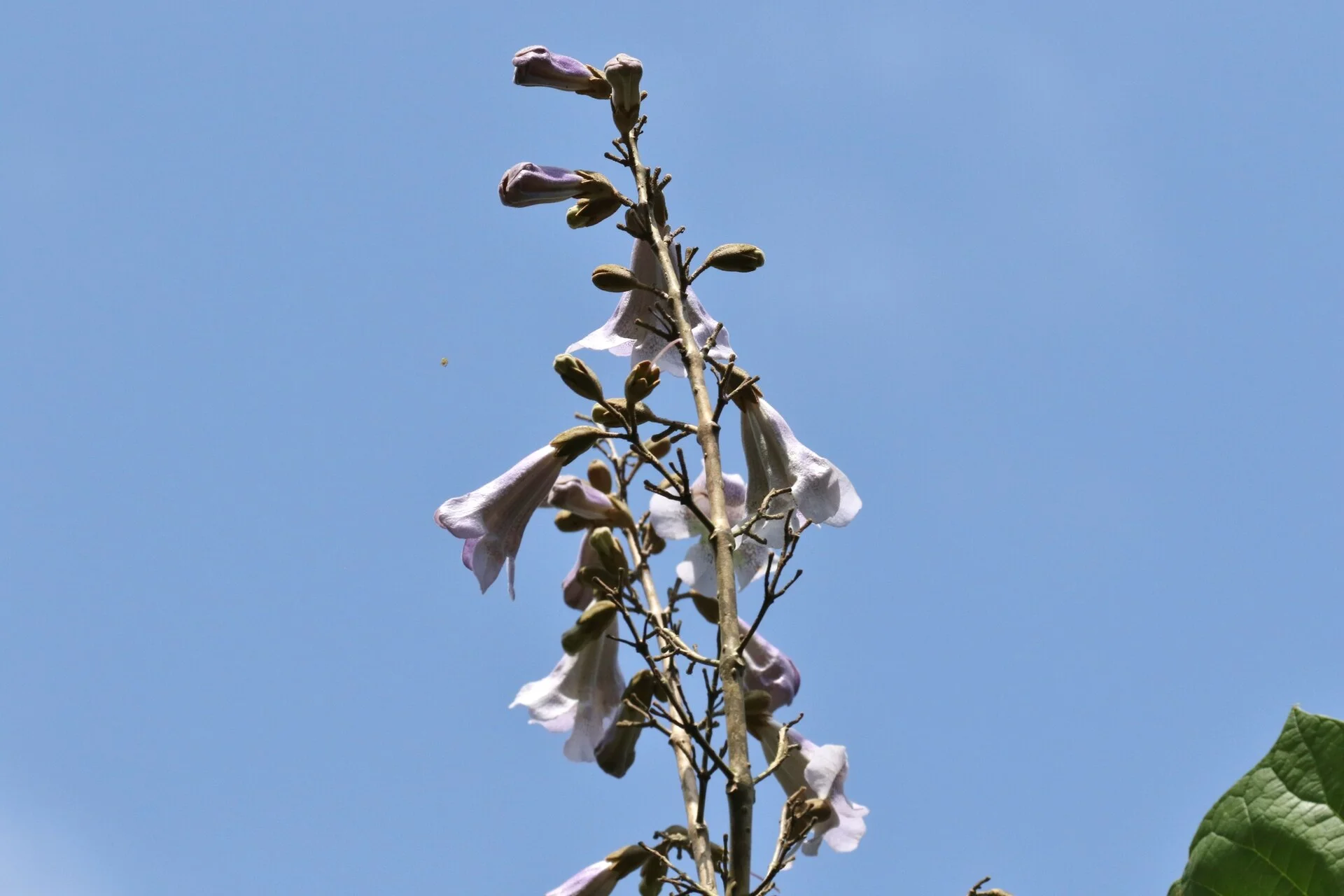
Native to the forests of East Asia, Paulownia taiwaniana stands out for its rapid growth rate and light timber. This species thrives in subtropical regions, where it contributes to forestry and local ecological restoration projects. Its distinctive purple-hued blossoms cover the canopy before new leaves emerge in the spring.
Known as a hybrid of natural origin or a distinct taxon depending on the botanical source, it plays a key role in wood production due to its lightweight and warp-resistant wood. Cultivation of this tree helps combat soil erosion in mountainous terrains.
Paulownia taiwaniana exhibits robust structural features characteristic of its genus. The tree typically reaches heights of 10 to 20 meters, developing a broad, rounded crown supported by a straight trunk. Large, heart-shaped leaves are arranged oppositely along the branches, often covered with fine, sticky hairs on the lower surface.
During the spring, the tree produces dense panicles of bell-shaped flowers. These blossoms display a pale purple or lavender coloration, attracting various pollinators to the canopy. The subsequent fruit is an oval, woody capsule that splits open at maturity to release thousands of tiny, winged seeds.
Spring
The lightweight timber harvested from Paulownia taiwaniana is highly valued for crafting traditional musical instruments, light furniture, and specialty veneer. Its wood possesses natural resistance to warping and moisture, making it ideal for precision woodwork. Additionally, the species is planted for reforestation to stabilize slopes and improve soil quality.
This species is sometimes classified as a natural hybrid, Paulownia × taiwaniana, representing a cross between other local species. Its rapid biomass accumulation has made it a subject of research for sustainable timber production and carbon sequestration. The large leaves function as efficient dust filters, improving air quality in areas where it is planted.
Paulownia tomentosa
Paulownia tomentosa, known as the empress tree, is an exceptionally fast-growing deciduous tree famous for …

Paulownia fortunei
A fast-growing deciduous tree native to East Asia, cultivated for its lightweight timber and showy …

Paulownia kawakamii
A critically endangered deciduous tree native to Taiwan and southern China, highly valued for its …

Paulownia elongata
A remarkably fast-growing deciduous tree native to East Asia, cultivated for its lightweight timber, biomass …