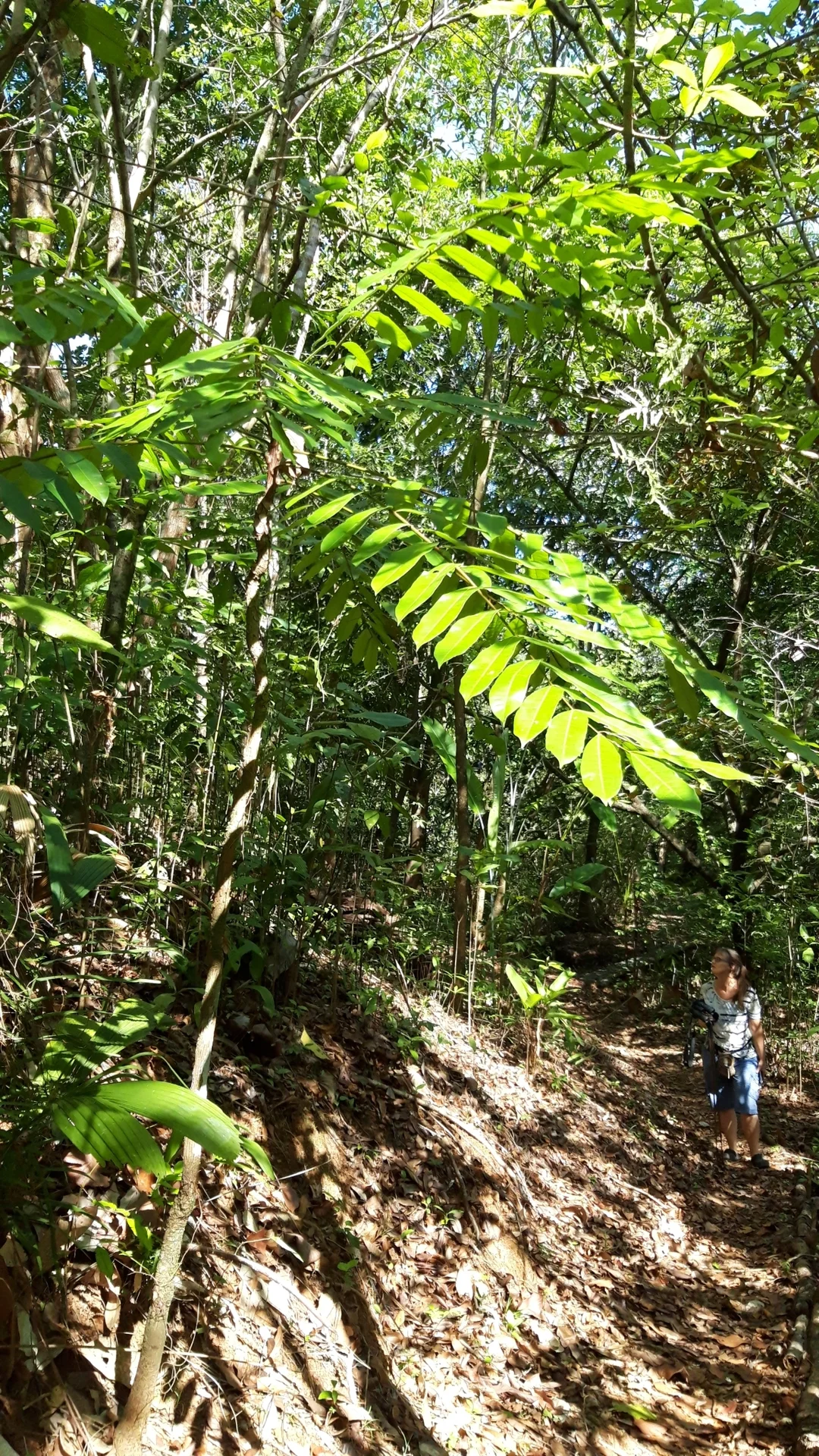
Native to the humid tropical forests of Central and South America, Homalolepis cedron attracts botanical interest due to its therapeutic properties. This species thrives in countries like Costa Rica, Colombia, Ecuador, Peru, and Brazil. Its seeds, historically referred to as "cedron beans," contain potent bitter compounds that have long been utilized by indigenous communities.
This plant typically develops as a small tree or large shrub, reaching several meters in height. The branches bear large, pinnately compound leaves that form a dense canopy. Its small, greenish-yellow flowers are arranged in large, terminal panicles that emit a faint scent.
The fruits of Homalolepis cedron are large, egg-shaped drupes containing a single, large seed. This seed is exceptionally bitter and contains quassinoids, specifically cedronin, which serve as the primary bioactive components. The seed coat is tough, protecting the embryo within humid forest environments.
Applications
The primary application of this species lies in traditional medicine and pharmacology. Historically, the bitter seeds were ground and administered as a treatment for malaria, fevers, and snake bites. Modern scientific studies have investigated these claims, focusing on the anti-inflammatory and anti-parasitic properties of its quassinoid compounds.
Antimalarial use: Used historically as an alternative to quinine in South America.
Antivenom therapy: Traditionally applied topically or ingested as an antidote for venomous snakebites.
Digestive aid: Infusions of the bark and seeds have been used to address stomach disorders.
Interesting facts
The seeds of Homalolepis cedron are so bitter that they were historically traded as a precious commodity under the name "cedron beans."
Early European travelers in Colombia and Panama wrote extensive reports about the plant's efficacy against venomous snake bites.
The species was originally described as Simaba cedron by the French botanist Jules Émile Planchon in 1846 before being reclassified into the genus Homalolepis in 2018.
Geography of distribution
Costa Rica
Colombia
Ecuador
Peru
Venezuela
Brazil
Sources
Plants of the World Online (POWO): Botanical database of the Royal Botanic Gardens, Kew.
Global Biodiversity Information Facility (GBIF): International network for biodiversity data.
Tropicos: Nomenclature database of the Missouri Botanical Garden.