Cupuaçu (Theobroma grandiflorum)

cupuassu cupuazú cupu assu copoazu large-flowered cocoa
Вызывает наименьшие опасения
#BAA576
#E3CD7E
#7C5B36
#A38A4E
#EEDA9C

Theobroma grandiflorum: The Aromatic Cupuaçu Tree

Deep within the humid canopy of the Amazon rainforest, a rich, exotic aroma of chocolate and pineapple signals the presence of a remarkable tropical treasure. This is the habitat of Theobroma grandiflorum, a majestic canopy-dwelling relative of cacao that has been cherished by indigenous communities for millennia.

Long before modern cultivation, native Amazonian peoples domesticating the tree selected it for its exceptionally thick, creamy, and fragrant pulp. Today, this species, commonly known as cupuaçu, plays a vital role in both local culinary traditions and sustainable agroforestry systems across South America.

The fruit's unique chemistry offers a stimulating experience without the high caffeine levels found in traditional cocoa. Its rising global popularity is transforming it from a rainforest secret into a celebrated superstar of modern gastronomy and natural cosmetics.

Taxonomy

  • царство Plantae
  • division Tracheophytes (Vascular Plants)
  • subdivision Spermatophytes (Seed plants)
  • Angiosperms
  • mesangiosperms (Core angiosperms)
  • eudicots
  • Superrosids
  • rosids
  • malvids
  • order Malvales
  • family Malvaceae
  • subfamily Byttnerioideae
  • genus Theobroma (Cacao trees)
  • species Theobroma grandiflorum (Cupuaçu)

Living Pulse

Morphology

Theobroma grandiflorum is a medium-sized tree characterized by its structural complexity and adaptations to the tropical understory. The vegetative and reproductive features of the species demonstrate its close relationship to the common cacao tree.

  • Growth Habit and Bark: The tree typically reaches heights of 5 to 15 meters, though wild specimens in the dense forest canopy can grow up to 20 meters. It features a distinct branching pattern where the orthotropic trunk splits into plagiotropic horizontal branches, covered in smooth brown bark.
  • Foliage: The large, coriaceous leaves are oblong to ovate, measuring 15 to 60 centimeters in length and 7 to 15 centimeters in width. Mature leaves are dark green and velvety above, and pale gray with fine trichomes beneath, while young emerging leaves exhibit a striking pinkish-red coloration.
  • Inflorescence and Flowers: Structurally complex, the deep red to purple-violet flowers are cauliflorous, emerging in small cymes directly from the trunk and thick branches. Each flower is pentamerous, featuring five sepals, five cup-like petals with spoon-shaped ligules, five fertile stamens, and five sterile staminodes.
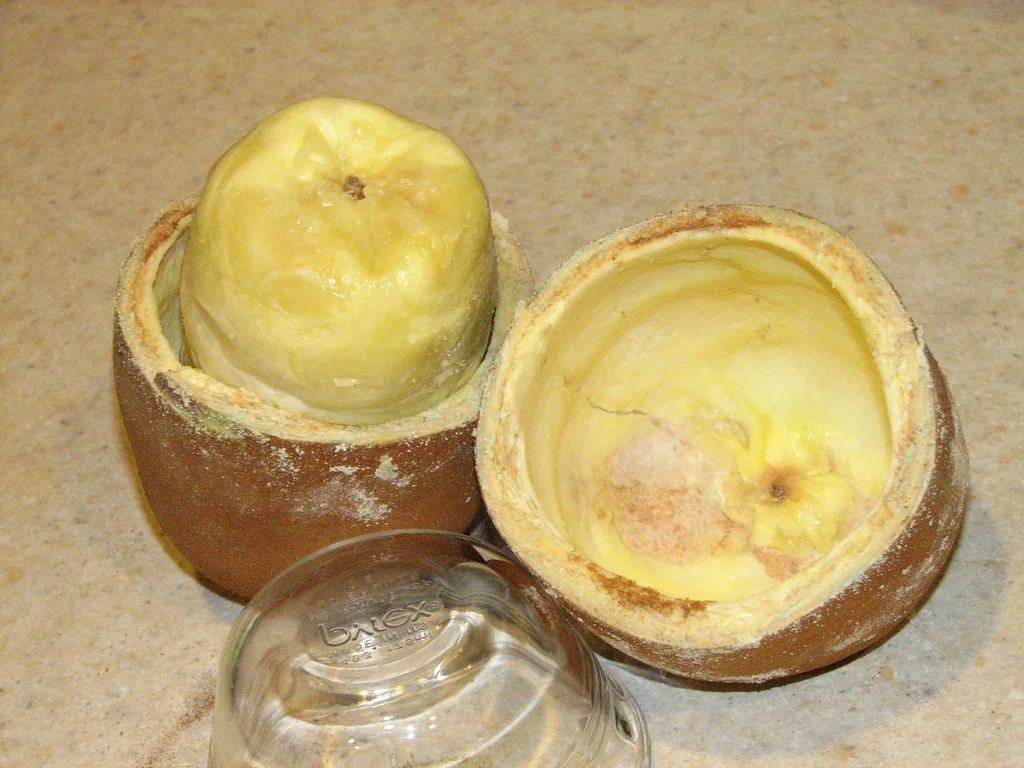
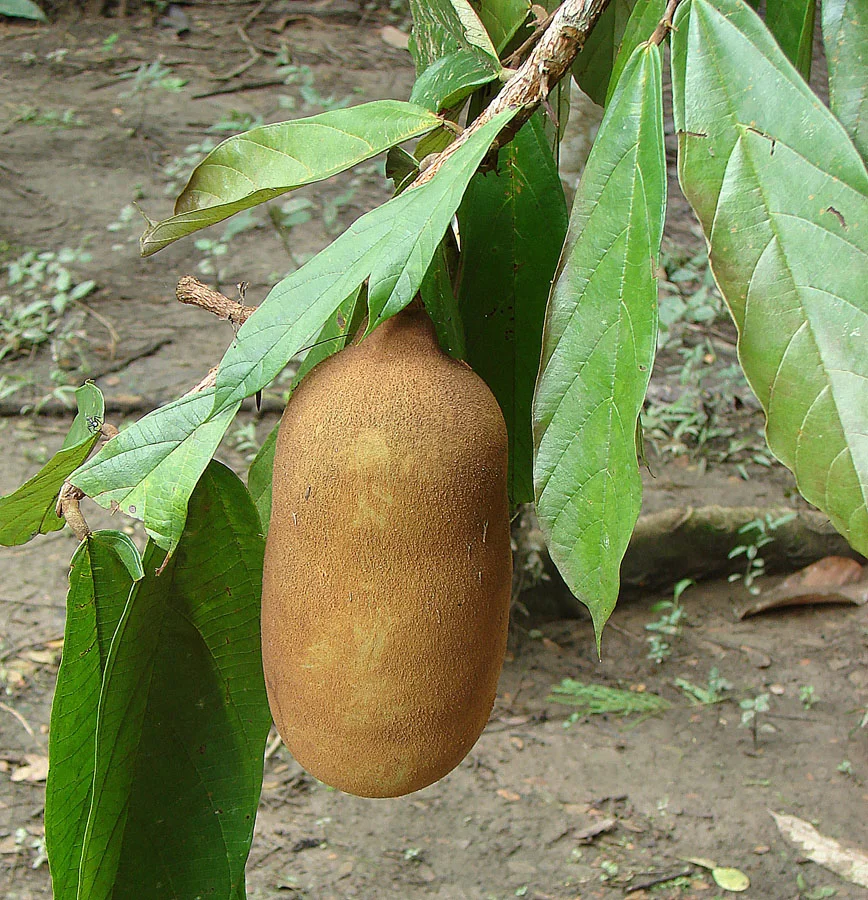
  • Fruit and Seeds: The massive, oblong fruit is a woody berry covered in dense brown fuzz, measuring up to 35 centimeters in length and weighing between 0.5 to 2.5 kilograms. Inside, a thick exocarp encloses 25 to 50 large, flat seeds arranged in five segments and enveloped in a creamy, highly aromatic, acid-sweet white pulp.

Flowering season

The tree flowers in response to rainfall patterns, with the primary blooming occurring at the start of the wet season in October and November, followed by a secondary period in July and August.

Jan
Feb
Mar
Apr
May
Jun
Jul
Aug
Sep
Oct
Name
Dec

Applications

The versatile properties of Theobroma grandiflorum make it highly valuable across multiple industries. Both the edible pulp and the oil-rich seeds serve as critical resources in South American economies.

  • Gastronomy and Culinary Arts: The aromatic white pulp is eaten fresh or processed into juices, ice creams, smoothies, marmalades, and liqueurs. Additionally, the seeds are fermented and roasted to produce cupulate, a heat-resistant chocolate alternative that does not melt easily in warm climates.
  • Cosmetics and Skincare: Extracted from the seeds, cupuaçu butter is a premium emollient prized for its low melting point of 30°C, which allows it to melt instantly upon skin contact. Rich in phytosterols (especially beta-sitosterol) and vitamin E, it is widely used in moisturizing lotions, skin balms, and hair conditioners.
  • Traditional Medicine: Shamanic traditions and local communities use the nutrient-rich pulp to ease difficult births and soothe stomach pains. Leaf extracts are also prepared as teas to treat renal, respiratory, and gastrointestinal issues, while the seed butter is applied topically for wound healing and dermatitis.
  • Sustainable Agroforestry and Timber: The woody exocarp of the fruit is recycled as organic compost, and the medium-heavy timber is occasionally harvested for local furniture manufacturing and construction.

Interesting facts

The rich cultural history and botanical uniqueness of Theobroma grandiflorum have made it the subject of ecological study and international debate. Its relationship with humans spans thousands of years of Amazonian history.

  • Ancient Domestication: Genetic studies reveal that this tree was domesticated by indigenous Amazonian peoples approximately 8,000 years ago from its wild ancestor, the cupuí. Its distribution is closely linked to historical human settlements throughout the basin.
  • The Battle Against Biopiracy: In the early 2000s, a Japanese corporation attempted to trademark the name "cupuaçu" and patent the extraction of seed fat. Joint protests by Brazilian NGOs and government bodies led to the cancellation of these patents, preserving the intellectual property of the Amazonian nations.
  • Unique Chemical Profile: Unlike the cacao tree, which relies heavily on caffeine and theobromine, the pulp of this fruit is rich in theacrine, a purine alkaloid that provides a mild, clean energy boost without the jittery side effects.
  • Struggling Pollinators: The complex structure of the flowers requires pollination by stingless bees and weevils. Because these insects cannot fly in heavy tropical downpours, a mere five percent of the flowers successfully develop into mature fruits.
  • Tupi Etymology: The common name derives from the indigenous Nheengatu or Tupi language, stemming from words that translate to the "great tree of the cupy bee," reflecting the ancient ecological connections of the forest.

Geography of distribution

  • Brazil
  • Colombia
  • Bolivia
  • Peru
  • Venezuela
  • Ecuador
  • Guyana
  • Costa Rica
  • Mexico

Technical Information

External Databases: GBIF, POWO, Tropicos

Смотрите также

Cacao Tree

Cacao Tree

Theobroma cacao

Theobroma cacao, commonly known as the cacao or cocoa tree, is a tropical evergreen species …

Mocambo tree

Mocambo tree

Theobroma bicolor

Theobroma bicolor, commonly known as the mocambo or jaguar tree, is a wild and cultivated …

Cupui Cacao

Cupui Cacao

Theobroma subincanum

A medium-sized wild tree native to the Amazon rainforest, producing sweet edible fruits and closely …