Theobroma cacao: The Sacred Cocoa Tree and Its History
Deep within the humid, shaded understory of the Mesoamerican rainforests, the ancient Maya and Aztec civilizations once revered a tree that would change the culinary history of the world forever. Theobroma cacao, whose generic name translates to "food of the gods," produces the precious seeds that are the foundational ingredient of modern chocolate.
This small evergreen species thrives in warm, wet climates within twenty degrees of the equator, growing under the canopy of larger rainforest giants. Today, millions of smallholders worldwide cultivate the species, with West Africa leading global production of the beans.
The unique biological characteristics of the tree, including flowers that grow directly from the woody trunk, continue to fascinate botanists and agricultural scientists. Understanding its genetics and cultivation history remains essential for protecting the species from shifting global climates.
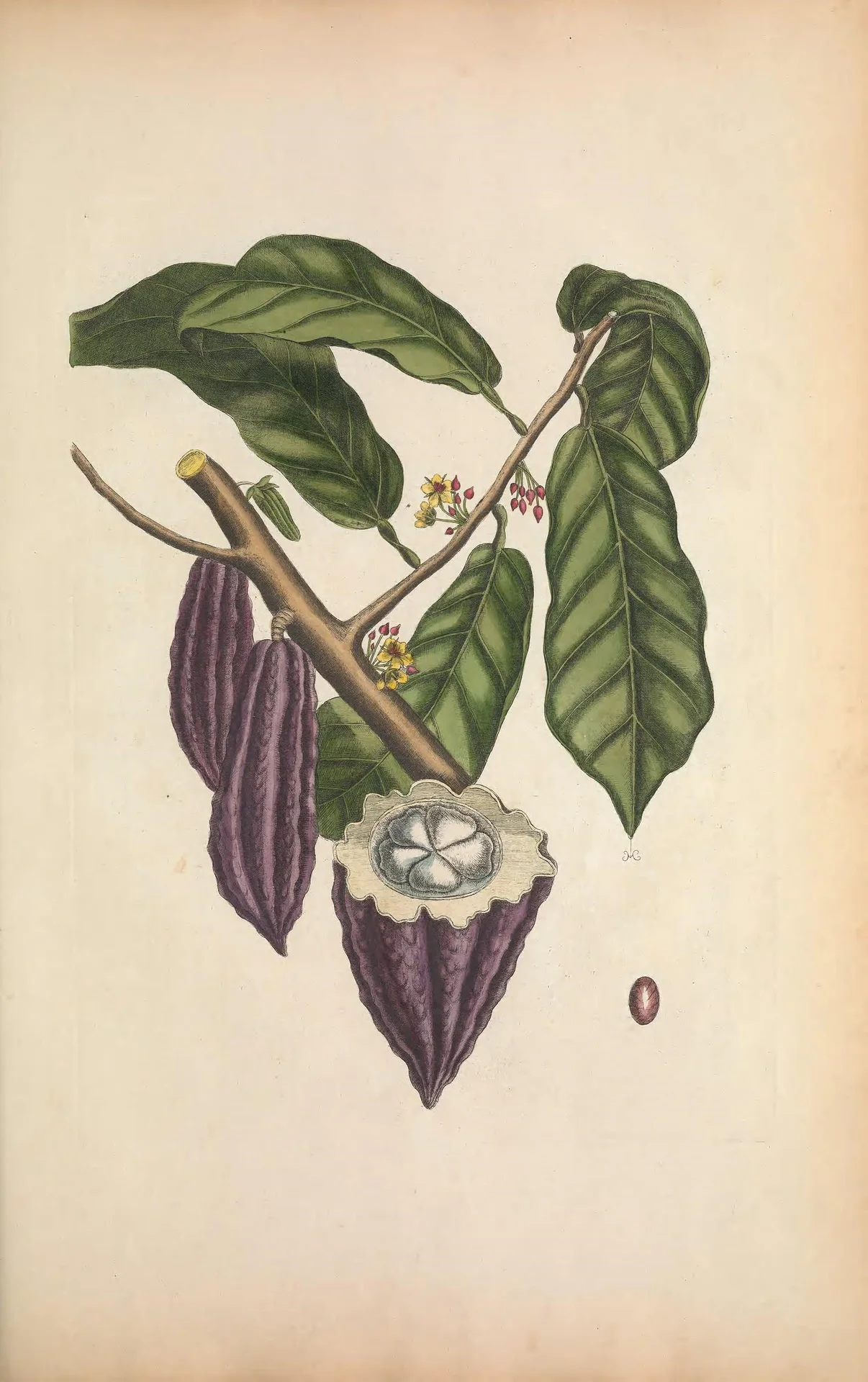
Botanical illustration
Фото: BioDivLibrary / Лицензия: Public Domain Mark
Morphology
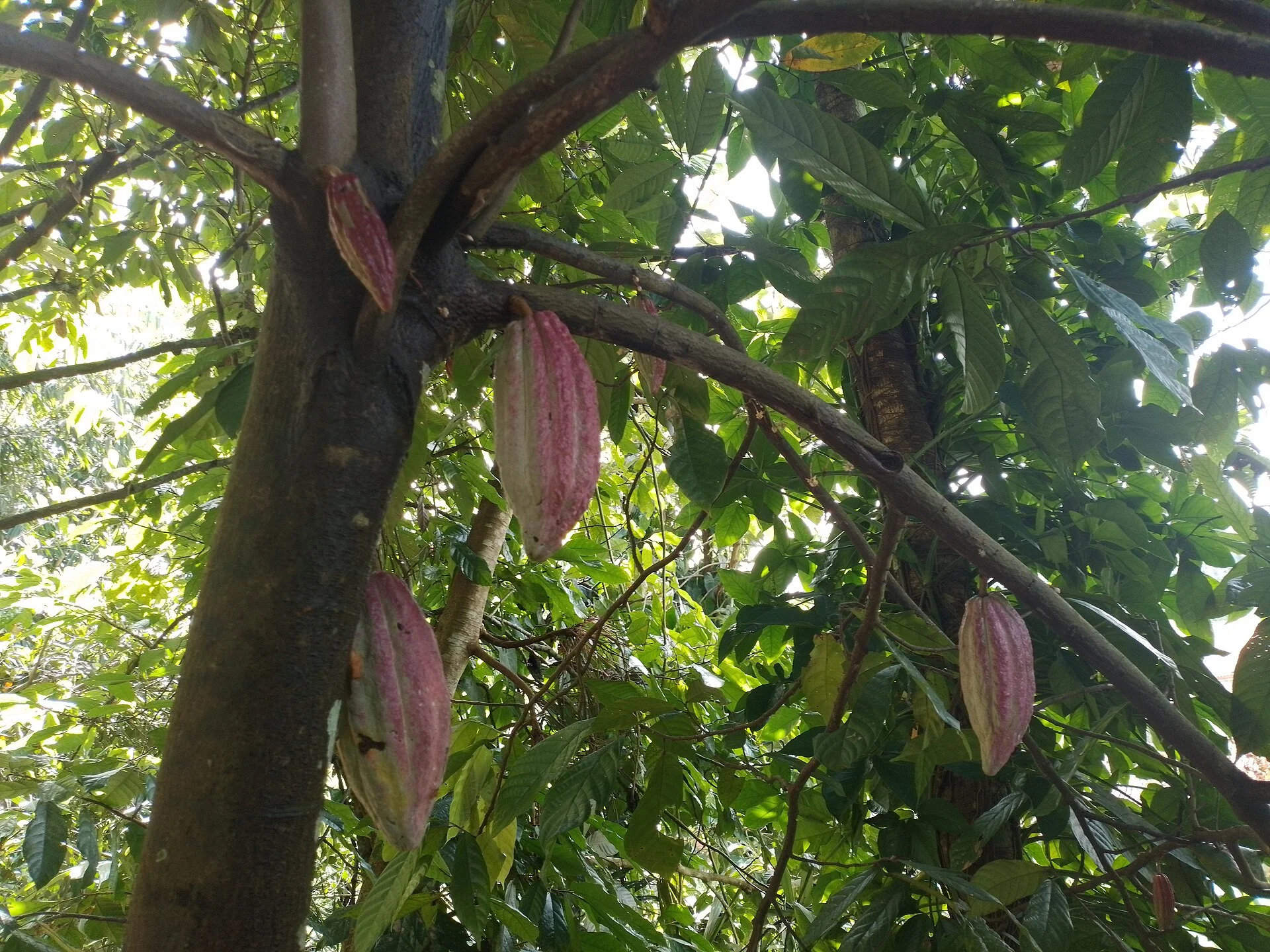
Theobroma cacao is a small, evergreen understory tree that typically reaches heights of 6 to 12 meters in the wild, though it is often pruned to about 6 meters in cultivation for easier harvesting. The leaves are arranged alternately along the branches and are thin, entire, and oblong-elliptic, measuring 10 to 50 centimeters in length and 5 to 10 centimeters in width.
A striking botanical feature of this species is cauliflory, where clusters of small flowers emerge directly from the trunk and older woody branches. These delicate flowers are about 1 to 2 centimeters in diameter, featuring a pink calyx and five petals with pocket-like base structures. They are pollinated primarily by tiny biting midges in the genus Forcipomyia rather than bees.
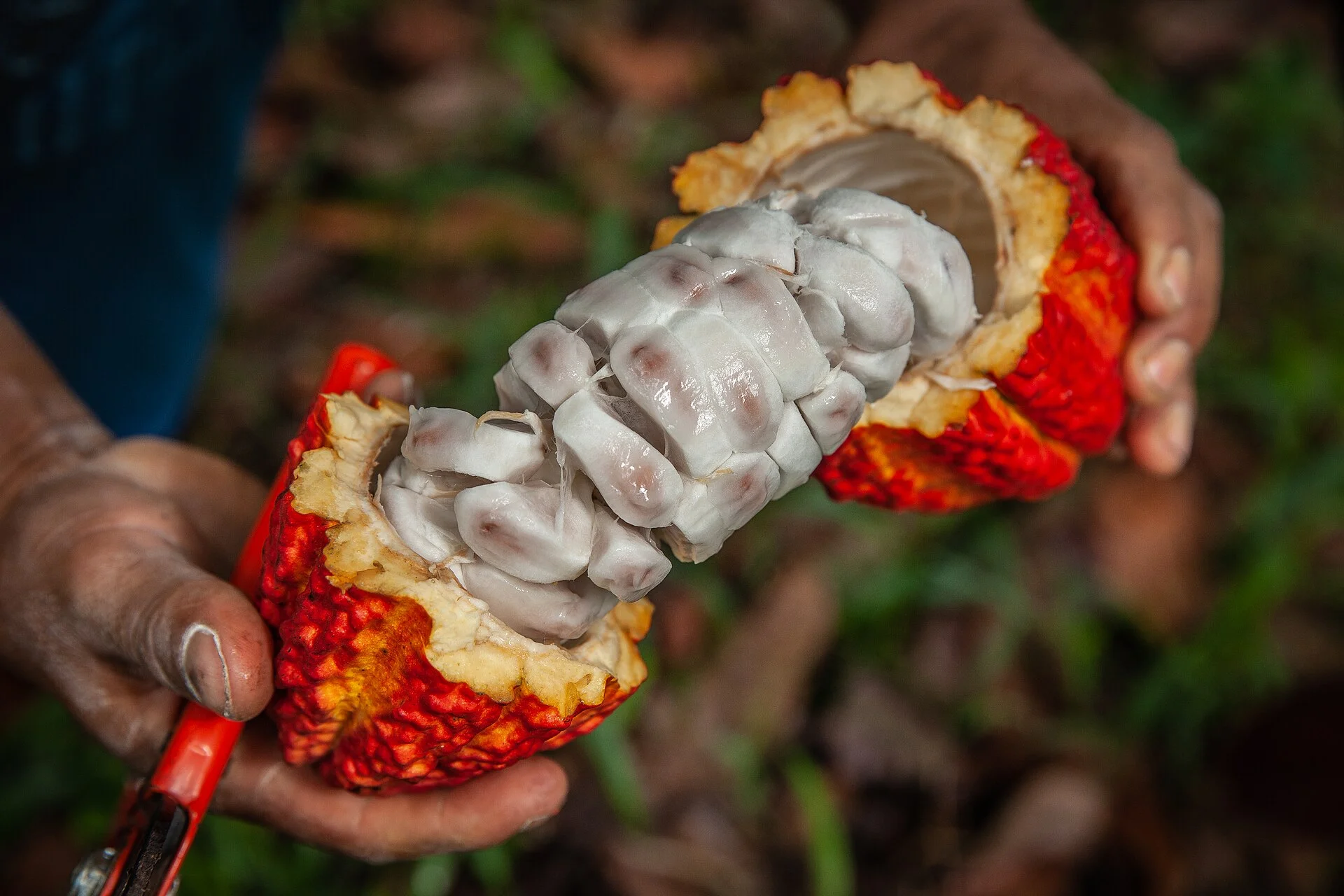
The fruit, known as a cacao pod, is a large, thick-skinned, ovoid berry resembling a ridged cucumber or elongated melon. It measures 15 to 30 centimeters in length, weighs approximately 500 grams, and turns from green to yellow or orange as it ripens. Inside, it contains 20 to 60 large seeds embedded in a sweet, mucilaginous white pulp that tastes like lychee or tropical melon.
Flowering season
Under favorable tropical conditions, the tree blooms and bears fruit continuously throughout the entire year.
Jan
Feb
Mar
Apr
May
Jun
Jul
Aug
Sep
Oct
Name
Dec
Applications
The primary culinary application of Theobroma cacao is the production of chocolate, cocoa powder, and cocoa butter from its fermented and roasted seeds. Additionally, the sweet white pulp surrounding the seeds is used in South America to make juices, smoothies, jellies, and even distilled alcoholic beverages.
In cosmetics and pharmaceuticals, cocoa butter is highly valued as an emollient for skin creams and ointments, as well as a base for suppositories due to its melting point close to human body temperature. The seeds also contain theobromine, a mild nervous system stimulant and bronchodilator historically used to treat coughs and support cardiovascular health.
Traditional uses include the Mesoamerican beverage tejate, where maize and fermented cacao are blended into a refreshing foam-topped drink. The nutrient-rich outer shell of the seeds, known as cocoa shell or shell meal, is also processed as animal feed.
Interesting facts
The history of Theobroma cacao is filled with fascinating cultural, economic, and botanical milestones:
Ancient Domestication: DNA analysis indicates that the tree was first cultivated over 5,300 years ago in the upper Amazon basin of Ecuador by the Mayo-Chinchipe-Marañón culture, long before its introduction to Mesoamerica.
Currency of Empires: In the Aztec Empire, cacao beans were used as a major currency system where a slave could be purchased for about 100 high-quality beans, and counterfeiters even tried to create fake beans.
Sacred Offerings: The Maya honored Ek Chuah, the patron deity of cacao, with an annual festival featuring offerings of feathers, incense, and the sacrifice of a dog with cacao-colored markings.
The Aztec Recipe: Unlike sweet modern chocolate, the traditional Aztec beverage was a bitter, spicy mixture of water, ground cacao, maize, chili peppers, vanilla, and salt, which was consumed exclusively by the elite.
The Solid Chocolate Revolution: In 1828, Dutch inventor Coenraad van Houten patented a method for pressing cocoa butter from the beans, paving the way for the creation of solid chocolate bars.
Varieties and cultivars
Growers and chocolatiers categorize Theobroma cacao into several traditional cultivar groups and modern genetic clusters:
Criollo: The rarest and most expensive variety, famous for its delicate aroma and low bitterness, representing only about 10% of global chocolate production.
Forastero: The most widely cultivated group, accounting for roughly 80% of world production, valued for its hardiness and strong resistance to disease.
Trinitario: A natural hybrid of Criollo and Forastero that originated in Trinidad, combining the aromatic qualities of the former with the resilience of the latter.
Nacional: A unique Ecuadorian variety belonging to the Forastero group, highly prized for its floral aroma and rich flavor profile.