
Curaray cacao
Theobroma cacao ‘Curaray’
A rare genetic cluster of cacao trees native to the Curaray River basin in Ecuador, …
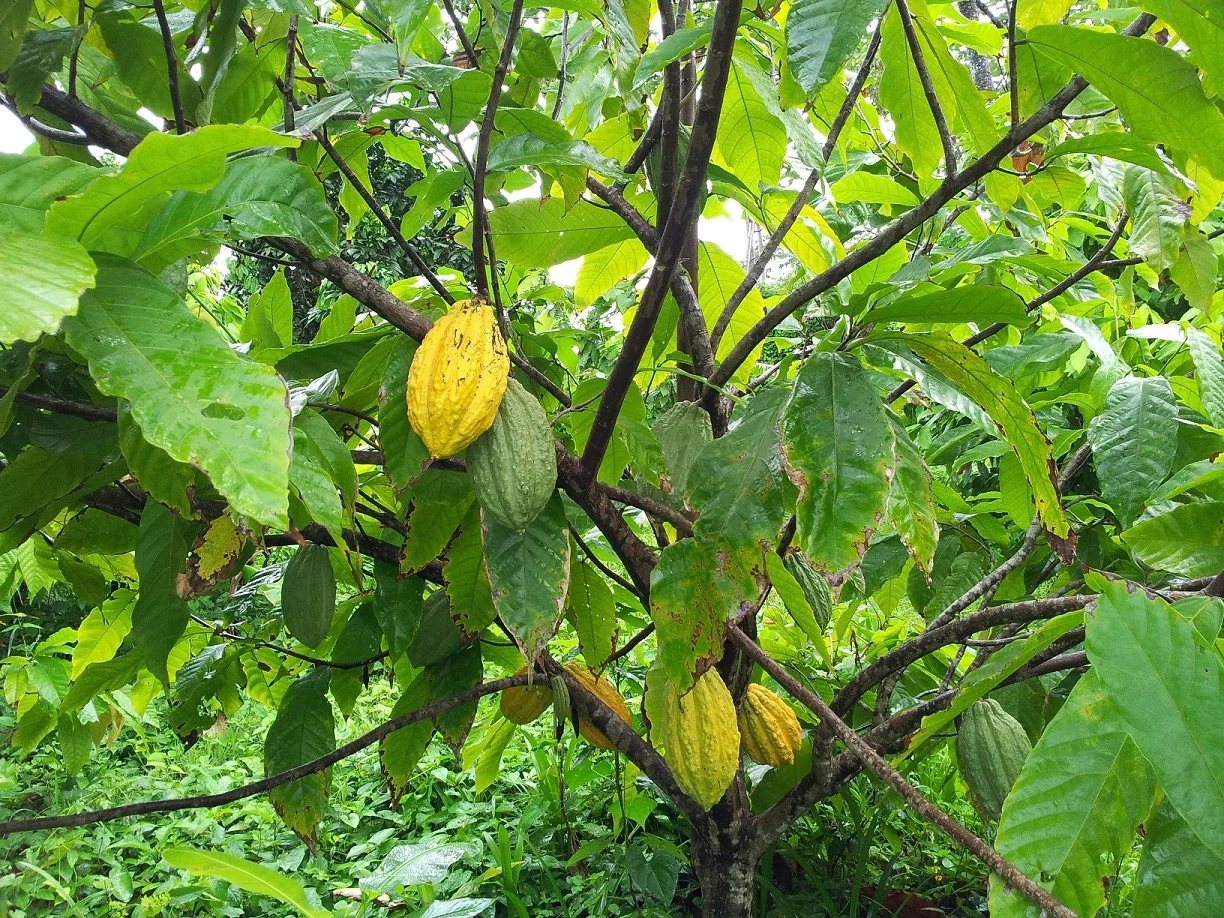
Discovered in 1729 in the understory of French Guiana, Theobroma cacao 'Guiana' forms one of the ten fundamental genetic groups of the cacao tree. This population survived in isolated forest refugia during Quaternary climatic fluctuations, resulting in a unique evolutionary trajectory.
Modern genetic analysis confirms its distinct status, separating it from the traditional Criollo, Forastero, and Trinitario classifications. It serves as a vital resource for studying the evolutionary history of wild cacao populations.
This evergreen understory tree can reach an impressive height of up to 25 meters in its natural habitat. The foliage consists of large, persistent leaves that capture filtered sunlight beneath the dense forest canopy.
The fruit pods, commonly known as cabosses, display distinctive morphological features:
This wild genetic group plays a crucial role in modern cacao breeding programs. Agronomists value these trees for their potential to introduce desirable traits into cultivated varieties.
Key applications in agricultural research include:
French military expeditions along the border with Brazil helped collect the first specimens of this cacao for scientific study in 1985. The original discovery, however, dates back to a French sergeant who encountered the trees while searching for the legendary city of Eldorado.
The botanical station at Pointe-Combi in Sinnamary maintains a living collection of these unique trees. Researchers preserve nearly two hundred mother-trees representing distinct river basin populations.
Theobroma cacao ‘Curaray’
A rare genetic cluster of cacao trees native to the Curaray River basin in Ecuador, …

Picrasma
A genus of deciduous trees and shrubs known for their extremely bitter bark and medicinal …

Araucaria humboldtensis
A small, critically endangered coniferous tree native strictly to the high-altitude mountain peaks of southern …

Araucaria sect. Araucaria
Araucaria sect. Araucaria is a botanical section of evergreen conifers native to South America. It …