Alfredia cernua: nodding giant of the Siberian tall-herb forests
Alfredia cernua is a monumental perennial herb native to the mountain forests and subalpine tall-herb meadows of southern Siberia, eastern Kazakhstan, and northwestern China. Reaching up to 3 meters in height, it stands out for its heavy, downward-tilting yellow flower heads, a posture directly reflected in its Latin epithet cernua, meaning nodding or facing the earth.
Classified within the family Asteraceae (tribe Cardueae), the species was first described by Carl Linnaeus as Cnicus cernuus before French botanist Alexandre Henri Gabriel de Cassini established the genus Alfredia for it in 1815. Today, Alfredia cernua is the accepted name, replacing historical synonyms such as Carduus cernuus and Silybum cernuum.
The thick, grooved, upright stem grows 1.5 to 3 meters tall and is lightly coated in fine, cobwebby hairs. Unlike many of its spiny thistle relatives, the plant is unarmed and relies on rapid vertical growth rather than sharp armor.
The basal and lower stem leaves are vast, heart-shaped blades measuring up to 50 centimeters long on winged petioles (leaf stalks). Their upper surfaces are dark green and nearly smooth, whereas the undersides are covered in a dense, whitish-gray tomentum—a felt-like mat of tangled hairs.
Capitula (flower heads) and fruits
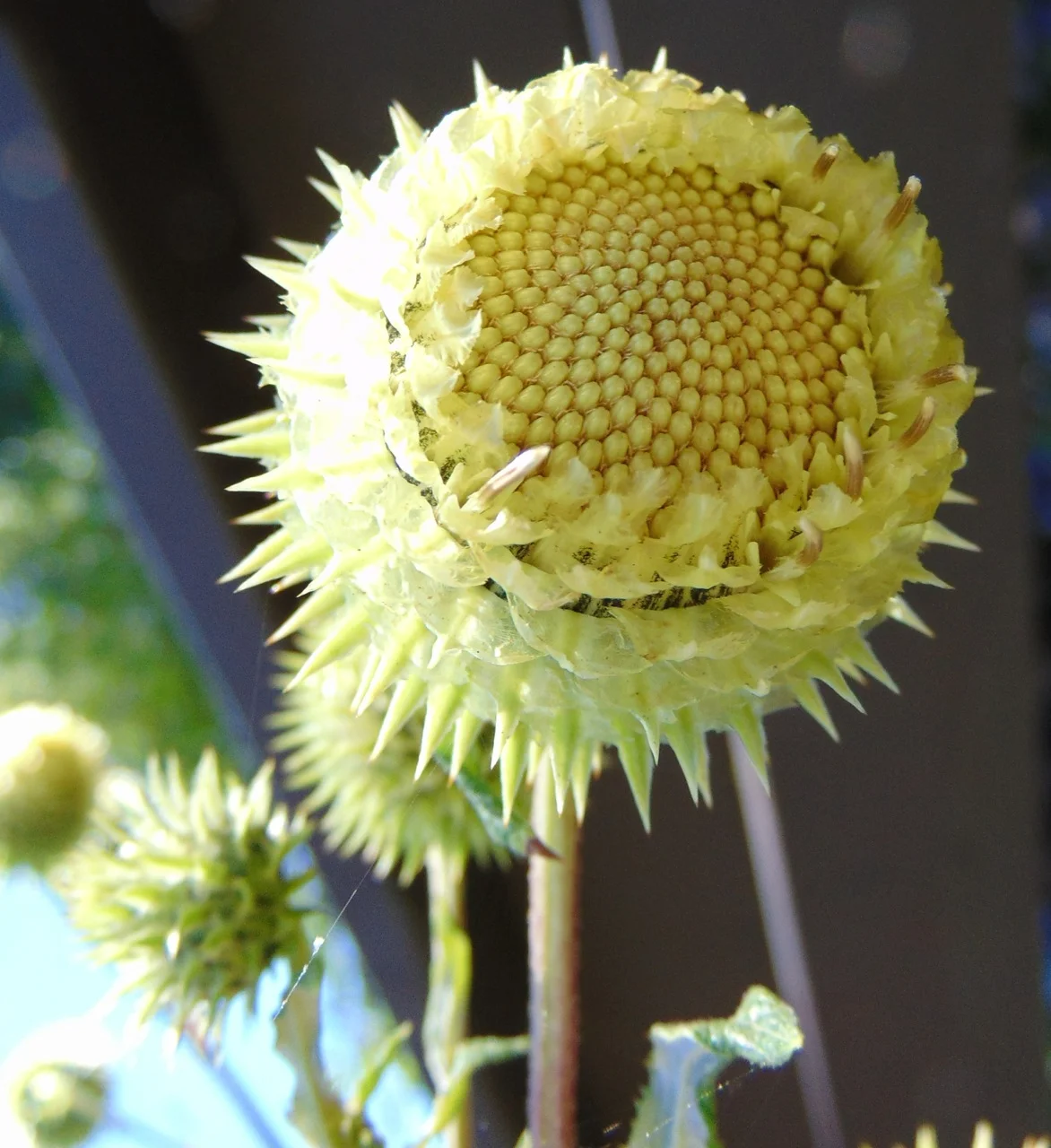
Nodding heads: Solitary at the ends of thick branches, the hemispherical capitula (composite flower heads) measure 4 to 7 centimeters in diameter and tilt distinctively downward.
Involucral bracts: The protective cup around the head is formed by overlapping phyllaries (modified bracts) furnished with papery, golden-membranous, lacerate appendages that rustle when dry.
Florets and achenes: Tubular pale-yellow florets give way to compressed, faintly ribbed achenes (single-seeded dry fruits) crowned by a stiff, multi-layered pappus of rough, tawny bristles up to 2 centimeters long.
Flowering season
Flowers in mid to late summer, mainly from July to August.
Jan
Feb
Mar
Apr
May
Jun
Jul
Aug
Sep
Oct
Name
Dec
Applications
Phytomedicine and neuropharmacology
In traditional Siberian medicine and modern pharmacological research in Russia, aerial parts of Alfredia cernua are studied for their rich profile of flavonoids, phenolic acids, sesquiterpene lactones, and triterpene compounds. Standardized extracts have been investigated as mild nootropic, anxiolytic, and anticonvulsant agents aimed at supporting cognitive function and nervous system resilience.
Melliferous and botanical value
Apiculture: Blooming abundantly in mid-summer across Altai and Sayan forest glades, the large heads produce substantial nectar and pollen, making the species a productive summer honey plant for regional beekeeping.
Botanical collections: Because of its architectural stature and nodding heads, it is grown in cold-climate botanical gardens as a specimen of the Siberian tall-herb ecosystem (chernevaya taiga).
Interesting facts
An inverted umbrella for rainy mountain summers
In the humid "dark-conifer" taiga of the Altai and Kuznetsk Alatau mountains, summer brings frequent heavy downpours coupled with sudden sunshine. For a composite plant with hundreds of packed tubular florets, rainwater collecting inside an upright flower cup would dilute nectar, burst pollen grains through osmotic shock, and invite fungal rot.
Gravitational rain shield: By curving the upper peduncle (flower stalk) just before bloom, Alfredia cernua flips the entire massive head upside down, turning the overlapping, papery involucral bracts into a shingled roof that sheds water away from the fertile florets.
Thermal chamber for bumblebees: The downward-facing dome traps rising warm air and shields visiting bumblebees from cold mountain drizzle, allowing pollination to continue even during overcast weather.
Hygroscopic release: Once the seeds mature in late summer, the papery bract appendages dry and reflex outward as air humidity drops, opening the bottom of the basket so wind currents can catch the bristly pappus parachutes.